
Courtly love: medieval ideals of chivalry, praise, and ennobling devotion
Courtly love was a medieval European cultural code pairing chivalric service with poetic praise of an often unattainable noblewoman; it shaped troubadour song and much medieval literature.
Overview
Courtly love describes a set of social and literary conventions that developed in medieval Europe to express romantic admiration and desire through ritualized behavior and art. Rather than a simple romantic feeling, it was framed as a noble practice: a lover performed worthy deeds and composed elegant verses or songs in service of an idealized lady. The setting for these practices was often the household or court of a ruler, where manners and reputation mattered.
Image gallery
5 Images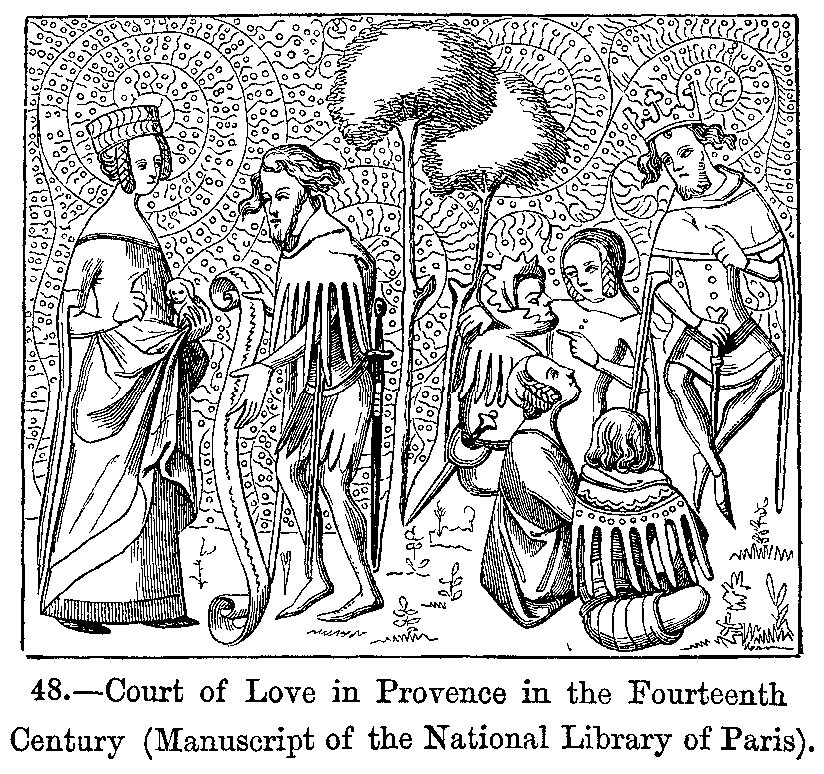


Typical characteristics
- Adoration from afar: the beloved is frequently socially superior or otherwise unattainable, making longing a principal motive.
- Service and testing: the suitor proves worth through chivalric acts, bravery, or poetic skill.
- Stylized language: hyperbole, metaphor, and elaborate compliments governed expressions of love.
- Secrecy and discretion: affairs were often conducted in private and bound by codes of honor.
- Ambivalence toward physical consummation: some traditions valorized restraint, while others tolerated or implied sexual relations.
Origins and development
Scholars trace early forms of courtly love to the lyric poetry of the Occitan troubadours and the culture of twelfth- and thirteenth-century courts in southern France and beyond. From there the vocabulary and tropes spread northward into the poetry of the trouvères, the German minnesingers, and the prose and verse of later medieval writers. Courts served as cultural hubs where patronage, performance, and ritualized behavior reinforced the ideal.
Literary expression and influence
Courtly love became a central motif in a wide range of medieval texts and continued to influence Renaissance and later writers. It appears in lyric songs, chivalric romances, and narrative poems where the dynamics of praise, service, and moral testing structure plots and character relations. Over time the concept influenced evolving ideas of romantic love and social conduct.
Further reading and key names
- courtly love (concept)
- Europe (regional context)
- Middle Ages (historical period)
- court (setting and patronage)
- princes (patrons)
- dukes (noble households)
- peasant (social contrast)
- king (court culture)
- love songs and troubadour tradition
- literature (genre influence)
- Geoffrey Chaucer (English verse)
- Walther von der Vogelweide (German minnesang)
- William Shakespeare (later echoes)
Courtly love functioned as both a literary device and a social practice, shaping manners, poetry, and expectations around gender and honor in medieval society. While not a single uniform institution, its recurring motifs remain recognizable in many works from the period and in the later imagination of romantic love.
Questions and answers
Q: What is courtly love?
A: Courtly love is a special idea of love that people had in Europe in the Middle Ages.
Q: What does the word "court" mean in courtly love?
A: The word "court" means the courts where princes or dukes lived.
Q: Who usually falls in love in courtly love?
A: Usually, a young man who may be a peasant or even a simple King falls in love in courtly love.
Q: What does the young man do in courtly love to make himself worthy of the lady he loves?
A: The young man in courtly love tries to make himself worthy of the lady he loves by doing brave things or by singing beautiful love songs.
Q: Where can the idea of courtly love be found?
A: The idea of courtly love can be found in a lot of literature, for example, in works by Geoffrey Chaucer, Dante, Gottfried von Strassburg, Walther von der Vogelweide, Wolfram von Eschenbach, Malory, and William Shakespeare.
Q: When did the idea of courtly love come about?
A: The idea of courtly love came about in Europe during the Middle Ages.
Q: What did people in the Middle Ages mean by courtly love?
A: People in the Middle Ages meant by courtly love the idea that a young man could fall in love with a rich lady and try to make himself worthy of her by doing brave things or by singing beautiful love songs.
Tags
Related articles
Author
AlegsaOnline.com Courtly love: medieval ideals of chivalry, praise, and ennobling devotion Leandro Alegsa
URL: https://en.alegsaonline.com/art/23648