
Tropical Storm Jerry (1995)
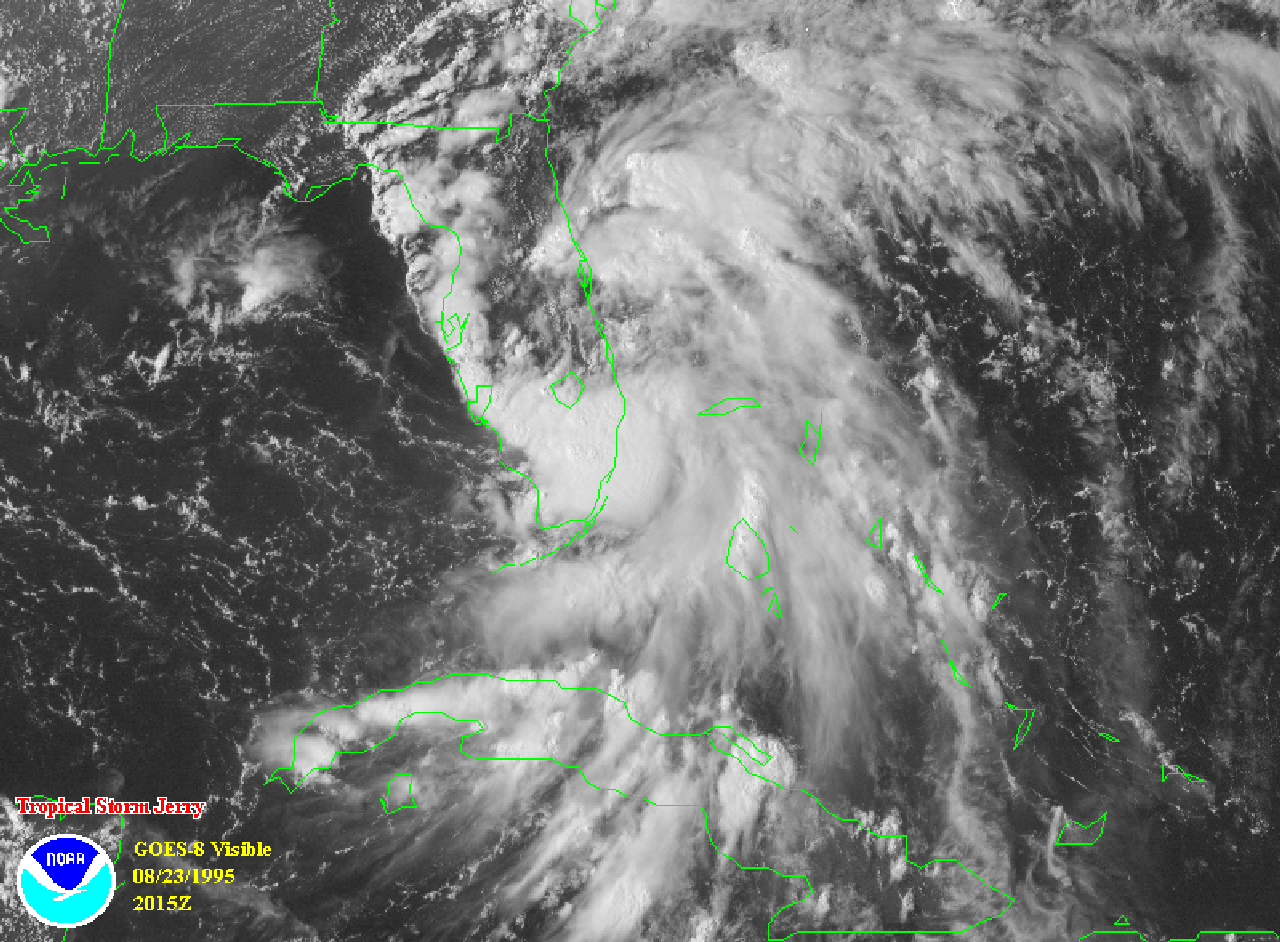
Tropical Storm Jerry was a short-lived but deadly storm of the very active 1995 Atlantic hurricane season, making landfall in Florida and causing eight deaths and about $40 million in damage.
Tropical Storm Jerry was a relatively weak but consequential tropical cyclone that formed during the very active 1995 Atlantic hurricane season. Although it did not reach hurricane strength, Jerry produced destructive rainfall, coastal impacts, and deadly flooding in parts of Florida. It is remembered for its human toll and the fact that it occurred while several other notable cyclones were active in the Atlantic basin.
Image gallery
7 Images


Overview and context
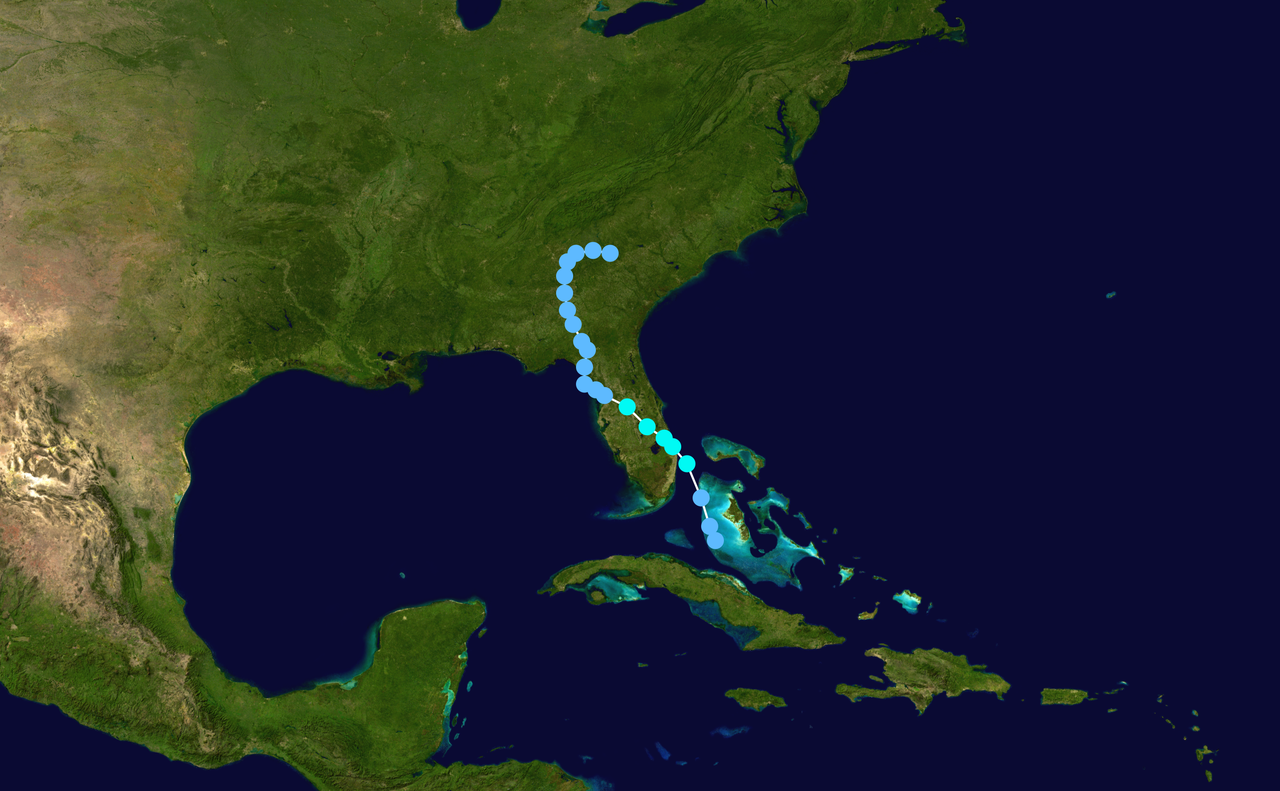
Jerry developed as part of the string of storms in 1995 that made the season unusually busy. For a summary of that season, see the 1995 Atlantic hurricane season. Jerry tracked toward the southeastern United States and made landfall on the east coast of Florida near the town of Jupiter before moving across the state and reaching the Gulf Coast in the vicinity of Dixie County; both locations reported wind damage and flooding. At the time of Jerry's activity, several other storms—such as Humberto, Iris, Luis, and Karen—were also present in the Atlantic basin, illustrating the season's high level of activity (concurrent cyclones; see also Luis).
Meteorological characteristics
Jerry remained a tropical storm rather than intensifying into a hurricane. Its core featured tropical-storm-force winds and a modest organized circulation. The storm's primary hazards were heavy rainfall and localized coastal surge rather than prolonged extreme winds. Because Jerry was comparatively small and short-lived, its impacts were concentrated along its immediate path through Florida rather than across a broad region.
Impacts and consequences
Despite its limited intensity, Jerry caused notable damage and loss of life. Reports attributed eight fatalities to the storm and estimated total damage at roughly $40 million, largely from flooding, wind effects on structures, and storm-related accidents. Coastal communities near the landfall points experienced beach erosion and damage to small craft, while some inland areas saw flash flooding and road closures. Emergency services and utilities in affected counties responded to restore infrastructure and assist residents.
Aftermath, naming, and notable facts
Because the overall damage and fatalities, while tragic, did not meet the threshold used by the World Meteorological Organization for retiring storm names, the name Jerry remained on the rotating Atlantic list. It was subsequently reused in later seasons (name reuse and lists). The event is sometimes referenced in regional histories of Florida tropical cyclone impacts and in overviews that compare storms from the busy 1995 season.
See also
- Jupiter, Florida — site of the initial landfall and local reports of damage.
- Contemporaneous storms: Humberto, Iris, and others from 1995.
For detailed operational reports, post-storm analyses, and local historical accounts, consult meteorological summaries and regional emergency management records linked above. Contextualizing Jerry within the broader 1995 season helps explain how multiple systems can strain forecasting, preparedness, and response efforts when they occur in close succession.
Related articles
Author
AlegsaOnline.com Tropical Storm Jerry (1995) Leandro Alegsa
URL: https://en.alegsaonline.com/art/101716
Sources
- nhc.noaa.gov : "Tropical Storm Jerry Report"
- commons.wikimedia.org : Commons