
Trnovac (Vrbanja) — stream in Central Bosnia
Trnovac (Трновац) is a small right-bank tributary of the Vrbanja River in central Bosnia and Herzegovina, known for its local mills, the Trnovac excursion site and its course through several villages and plains.
Trnovac (Cyrillic: Трновац) is a minor river or stream in central Bosnia and Herzegovina and a right-hand tributary of the Vrbanja River. It is one of several small mountain-fed streams contributing to the Vrbanja basin and is best known locally for the wooded excursion area at its confluence and for a number of traditional watermills recorded along its course in the mid-20th century.
Image gallery
1 Image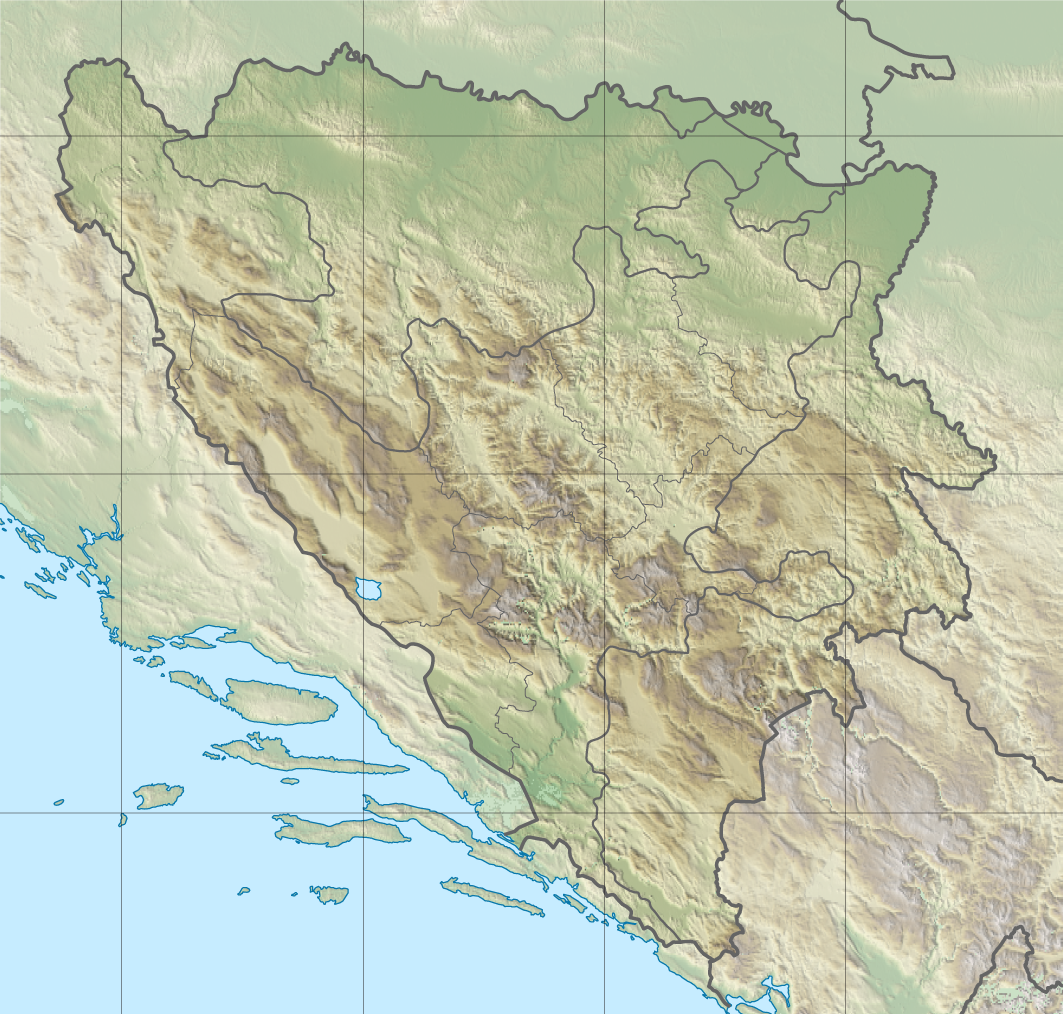
Course and physical features
The stream rises in the upland hills of the region and flows predominantly in an east–west direction. Its lower course meets the Vrbanja at the popular Trnovac excursion site at approximately 546 metres above sea level. In its upper reaches the Trnovac receives water from several small springs and rivulets: before reaching the village of Hajdarovići it is joined by six right‑hand tributaries (and two smaller left‑hand ones), which increase its volume seasonally. For much of its length it runs roughly parallel to other Vrbanja tributaries, notably Crkvenica and Lopača, reflecting the local ridge-and-valley topography.
Surroundings, settlements and landforms
The Trnovac valley lies between Šipraško hill and the village of Kurušići to the north, and the Orahova ravan (a low plain) with the village of Gelići to the south. Small rural settlements and scattered farmsteads use the valley for pasture, small-scale agriculture and access to forest resources. The river corridor, with its mixed deciduous cover and riparian vegetation, has traditionally provided local communities with water and sites for seasonal activities.
Human use, history and cultural notes
Historically the Trnovac supported a number of water-driven mills that served nearby villages. Surveys and local accounts indicate there were around 12 watermills in the valley in the 1960s, half of them associated with Hajdarovići and its tributaries. These mills were part of a wider rural economy where grain milling and small-scale processing relied on stream power. The lower confluence area is used as an excursion and picnic site, attracting local visitors in warmer months and giving the name Trnovac some recognition beyond the immediate valley.
Ecology and notable facts
The stream contributes to the hydrological network of the Vrbanja basin and plays a modest ecological role as a corridor for aquatic and semi‑aquatic species typical of central Bosnian uplands. Like many small streams in the region, it is sensitive to land‑use change, erosion and pollution from settlements and roads. Conservation of such tributaries is important for maintaining water quality downstream and for preserving traditional cultural landscapes.
- Local name: Trnovac (Трновац).
- Confluence altitude: about 546 m.
- Nearby streams: runs parallel to Crkvenica and Lopača.
- Historical mills: roughly 12 watermills recorded in the 1960s; see traditional watermills for context.
- Region link: general information about the area is available via Central Bosnia.
While Trnovac is not a large or widely known river beyond its locality, it illustrates the pattern of small tributaries that shape Bosnia's upland landscape and rural heritage. Its valley remains a part of local recreational life and a fragment of the historical rural economy centred on stream‑powered mills.
Related articles
Author
AlegsaOnline.com Trnovac (Vrbanja) — stream in Central Bosnia Leandro Alegsa
URL: https://en.alegsaonline.com/art/101604
Sources
- google.ie : "Google Maps"
- kartabih.com : "Karta BiH - Karta Bosne i Hercegovine"
- tools.wmflabs.org : 44°46′N 17°13′E / 44.767°N 17.217°E / 44.767; 17.217