
Trebuchet — medieval siege engine and its origins
A trebuchet is a siege engine that hurls heavy projectiles by means of a swinging arm driven by human traction or a counterweight. It originated in ancient China and became prominent in medieval Europe.
A trebuchet is a type of heavy siege engine that uses a pivoting beam to throw projectiles. Unlike smaller torsion or tension devices, the trebuchet relies on either human pull (traction) or a heavy counterweight to swing a long arm and release a sling, converting potential energy to high-speed motion. Trebuchets were prominent in warfare and in prolonged war operations, especially during sieges where they provided a way to batter fortifications or deliver materials over walls in the siege context.
Image gallery
10 Images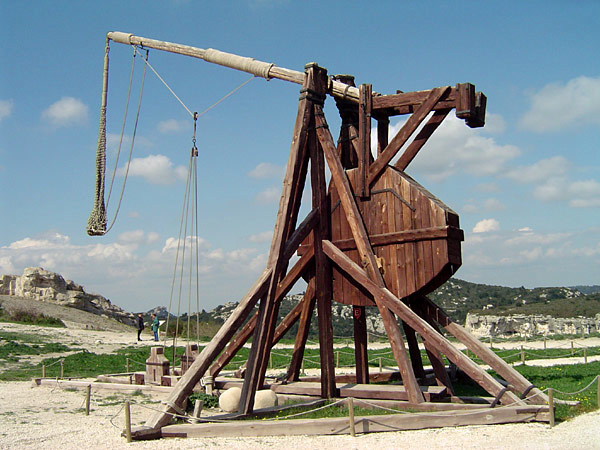




Design and main components
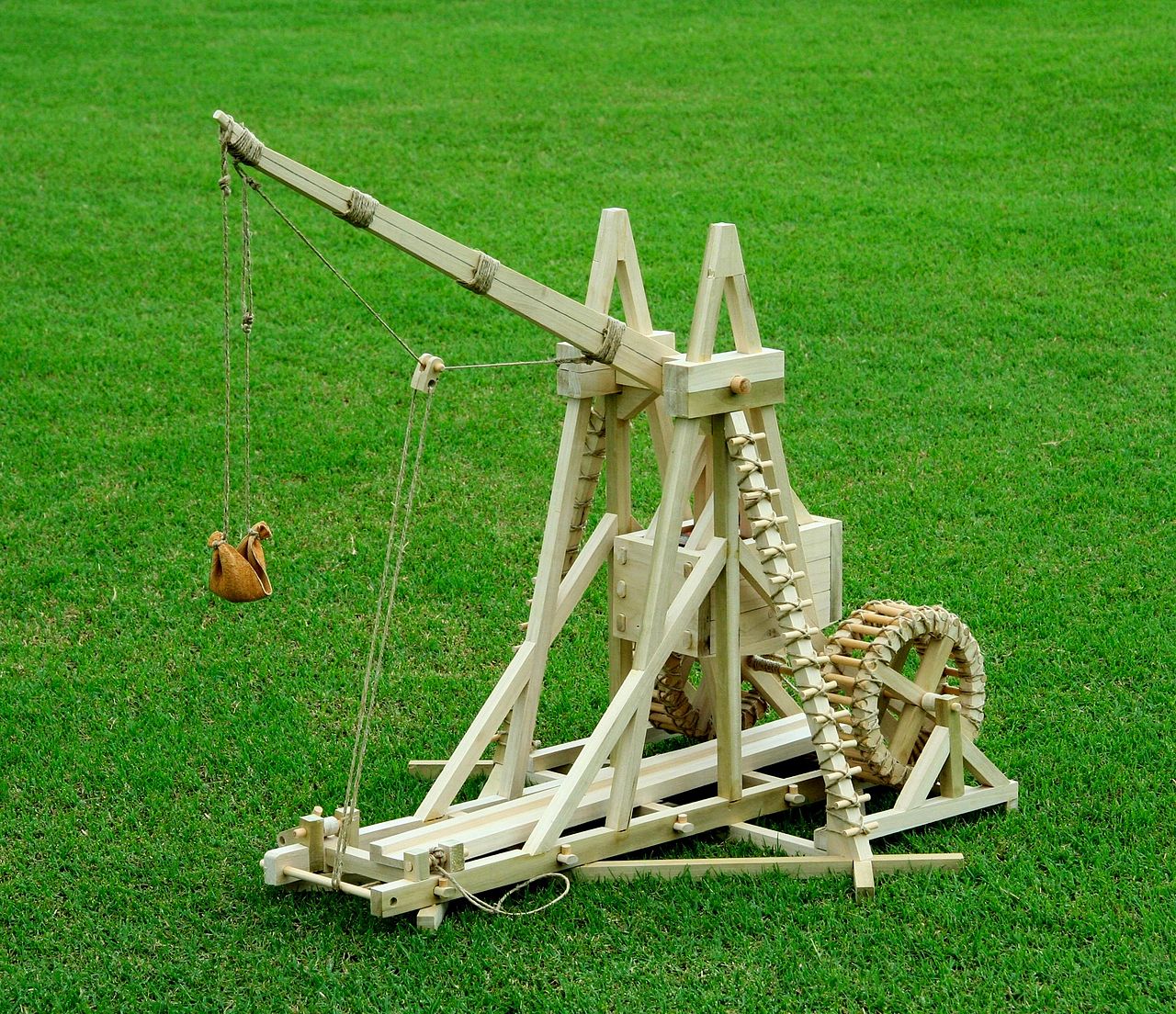
The basic structure of a trebuchet includes a sturdy frame, a pivot or axle, the throwing arm, a sling that holds the projectile, and the driving element: either a team of pullers or a heavy counterweight. Common parts and features are:
- Frame: a rigid base that supports the pivot and absorbs recoil.
- Beam/arm: mounted on an axle, with a short and long end for balance.
- Sling: a flexible pouch and two cords that extend release velocity.
- Counterweight or traction: mass that supplies the energy to swing the arm.
History and development
Origins of trebuchet technology trace back to ancient China, where early traction-style machines appear in historical sources. Over centuries the concept spread and evolved: traction trebuchets were common in East Asia and the Mediterranean for many centuries, while the larger counterweight trebuchet emerged later and became a defining siege weapon of the European Middle Ages. The counterweight design allowed much greater ranges and heavier projectiles than many contemporary engines.
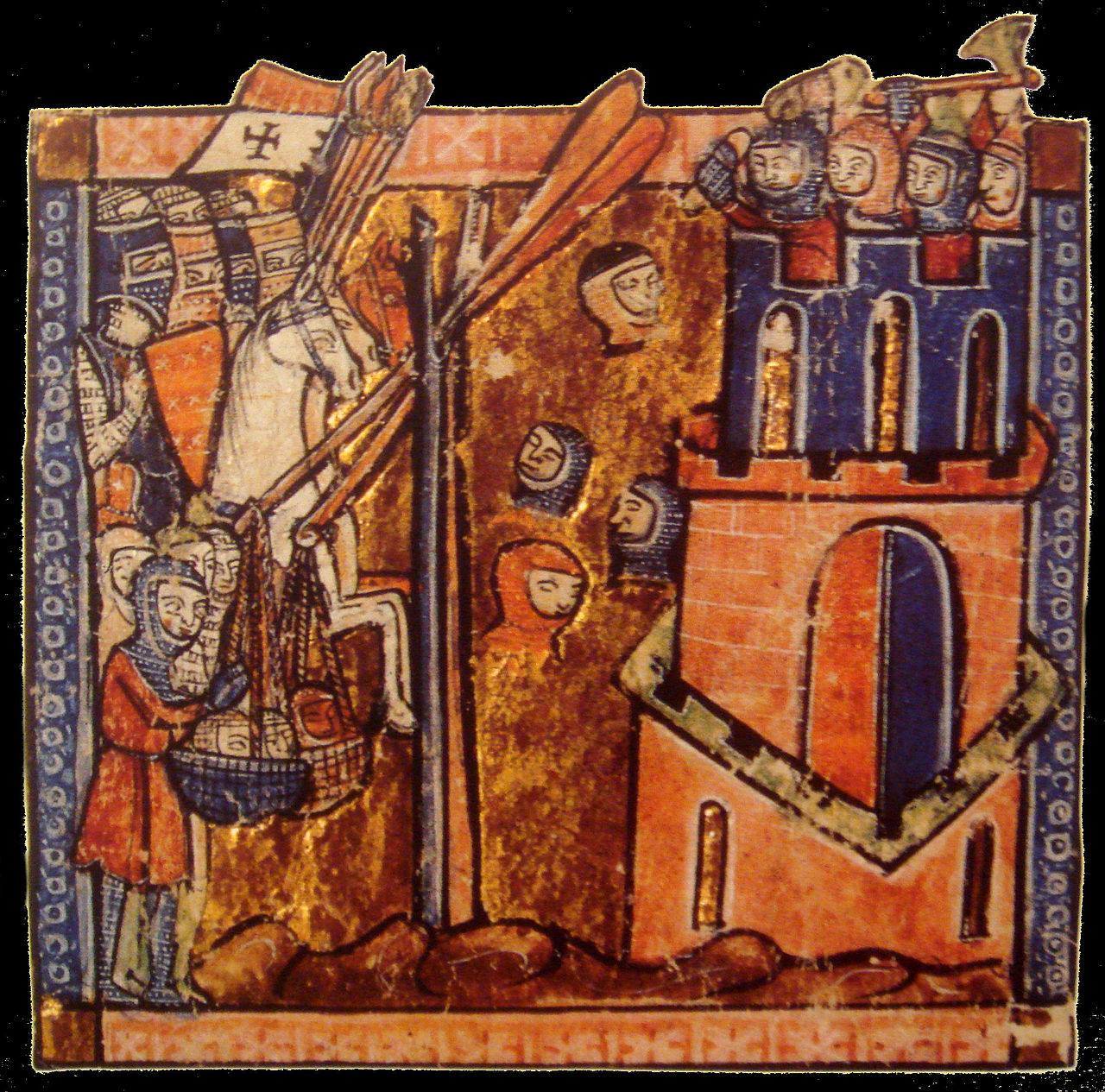
Trebuchets were typically more accurate than some other mechanical artillery of the period, and they could be scaled from mobile field machines to massive engines capable of throwing hundred-kilogram stones. They were used to breach walls, to demolish towers, and to throw incendiary or otherwise noxious payloads into defended areas.
Uses, impact and distinctions
In practice a trebuchet could hurl stones, pots of burning oil or pitch, and — in notorious cases — carcasses or disease-bearing materials to demoralize or infect defenders. Compared with other medieval catapults, the trebuchet's long arm and sling gave smoother acceleration and better accuracy. Its size and setup time made it most useful in planned sieges rather than rapid field battles.
Today trebuchets are studied by historians and hobbyists, reconstructed for education, and featured in experimental archaeology and demonstrations. They illustrate principles of mechanics, energy transfer and siegecraft and remain one of the most recognizable machines of pre-modern warfare.
war | siege | Middle Ages | other catapults
Related articles
Author
AlegsaOnline.com Trebuchet — medieval siege engine and its origins Leandro Alegsa
URL: https://en.alegsaonline.com/art/101330