
Tollense River — geography, ecology and archaeological importance
The Tollense is a 68 km river in Mecklenburg-Western Pomerania, Germany, running from the Tollensesee in Neubrandenburg to the Peene at Demmin. It is notable for its landscape, ecology and a Bronze Age battlefield site.
Overview
The Tollense (German pronunciation: [tɔˈlɛnzə]) is a river in northeastern Germany, located in the state of Mecklenburg-Western Pomerania. It is a right-hand tributary of the Peene river. The Tollense begins as the outflow of the Tollensesee in the city of Neubrandenburg, travels roughly 68 km (about 42 mi) through lowland terrain, and joins the Peene in the town of Demmin. Despite its modest length, the river and its valley play a distinct role in regional hydrology, ecology and cultural history.
Image gallery
2 Images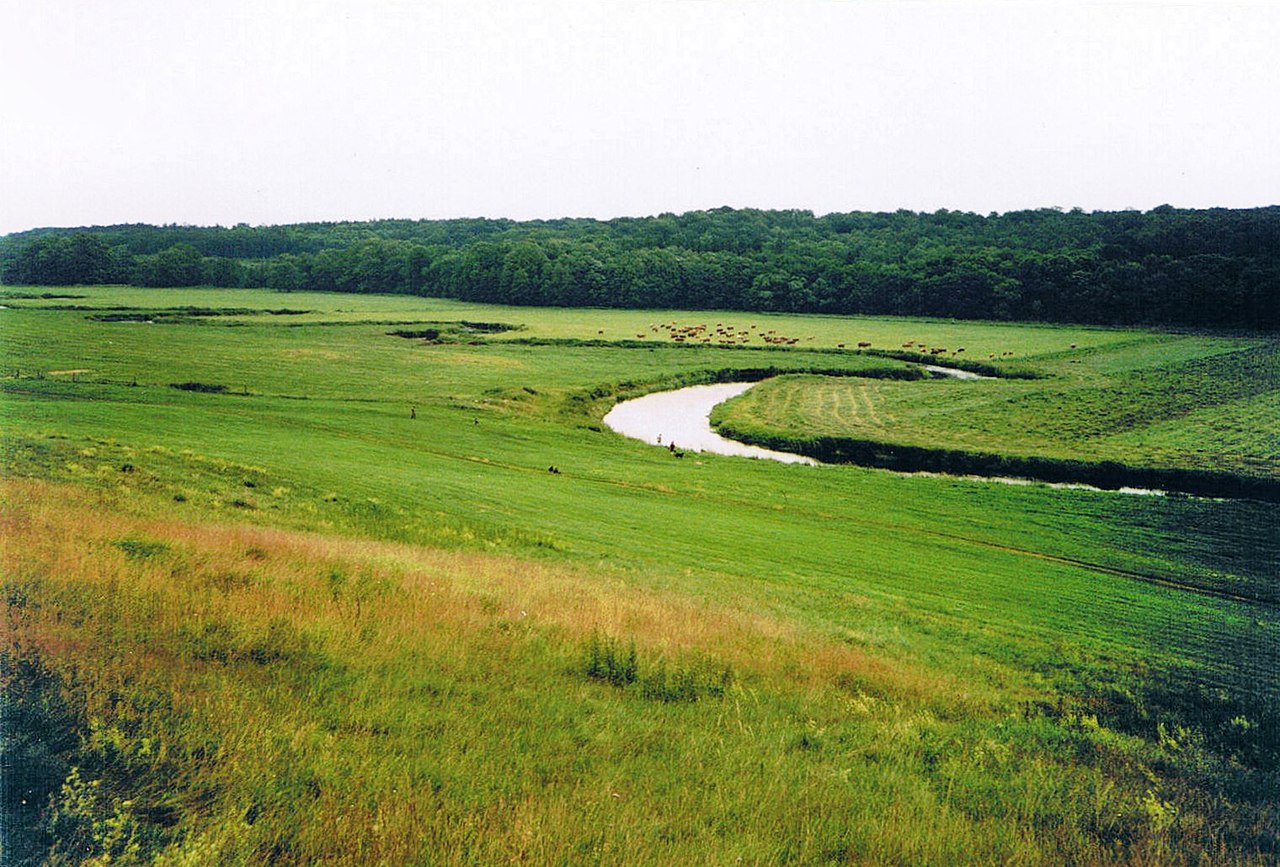

Course and physical characteristics
The stream issues from Tollensesee and runs generally northwest toward the Peene. Its channel crosses wetlands, meadows and small woodlands typical of Mecklenburg-Vorpommern. Width and flow vary seasonally and with local groundwater conditions; in places the floodplain broadens into marshes that recharge aquifers and support biodiversity. The river is not a major navigation route but is accessible to small craft and is integrated into local water management and flood-control systems.
Ecology and human uses
The Tollense valley supports a mosaic of habitats: slow-flowing river sections, reed beds, alder carrs and riparian meadows. These areas provide refuge for fish, amphibians, waterfowl and a variety of plant species. Along its banks are agricultural fields and scattered towns; people use the river for angling, canoeing, nature observation and low-impact recreation. Local authorities monitor water quality and manage sections for conservation and sustainable public access.
Archaeological significance
The Tollense valley has attracted scientific attention because of a major Bronze Age archaeological site discovered in the river floodplain. Excavations have revealed human remains and artifacts that archaeologists interpret as evidence of large-scale violent conflict in the late Bronze Age. This find has broadened understanding of prehistoric warfare, mobility and long-distance connections in northern Europe and has made the valley an important focus for research and heritage interpretation.
Conservation, recreation and local importance
Parts of the Tollense corridor are subject to conservation measures that balance habitat protection with public access. Trails, birdwatching points and canoe launches allow visitors to experience the river landscape. The watercourse contributes to local identity—linking urban Neubrandenburg with rural communities and historic Demmin—and supports a modest tourism economy based on outdoor activities and archaeological interest.
Further reading and resources
Related articles
Author
AlegsaOnline.com Tollense River — geography, ecology and archaeological importance Leandro Alegsa
URL: https://en.alegsaonline.com/art/100349
Sources
- spiegel.de : Massacre at the Tollense, Spiegel Online (German)
- commons.wikimedia.org : Tollense