
Tombouctou Region (Timbuktu) — northern region of Mali
Northern administrative region of Mali centered on Timbuktu: a semi‑desert landscape, historic Islamic learning center and former trans‑Saharan trade hub with notable cultural heritage and contemporary challenges.
Overview
The Tombouctou Region, often spelled Timbuktu, is an administrative region in northern Mali. It occupies a largely arid zone at the transition between the Sahara and the Sahel. The city of Timbuktu serves as the region's principal urban center and historically has been the best‑known settlement, celebrated for its medieval role as a crossroads of trade and Islamic scholarship.
Image gallery
2 Images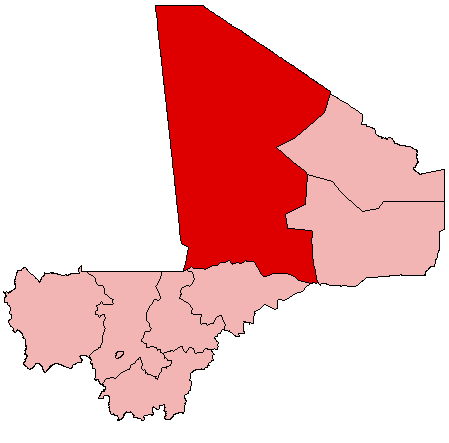

Geography and environment
The region comprises extensive sand plains, rocky plateaus and seasonal floodplains associated with the Niger River and its inland delta arms. Vegetation is sparse in much of the territory, with irrigated agriculture and gardens concentrated where groundwater or seasonal flooding permit cultivation. Oases and pastoral grazing areas support nomadic and semi‑nomadic communities.
Administrative divisions and population
Tombouctou Region is subdivided into several cercles, which include the areas surrounding the city of Timbuktu and other towns such as Goundam, Diré and Gourma‑Rharous. Population density is low and uneven: urban centers host markets and services, while many inhabitants live in small villages or move seasonally with herds. Ethnic groups commonly found in the region include Songhai, Tuareg, Fulani (Peul), and Arabic‑speaking communities, each contributing to local languages and customs.
History and cultural importance
From the medieval period onward, Timbuktu gained fame as a hub on trans‑Saharan trade routes, linking West Africa to North Africa and beyond. It became renowned for its mosques, madrasas and manuscript collections, which preserved religious, legal and scientific texts. Several sites in the region are recognized as World Heritage sites for their cultural value. In recent decades, heritage preservation has faced threats from environmental change and armed conflict that damaged some historic structures and collections.
Economy and contemporary issues
The regional economy combines small‑scale agriculture, pastoralism, fishing in floodplain areas, local trade and tourism focused on historic sites. Challenges include limited infrastructure, desertification, periodic drought, and political instability that has at times disrupted life and economic activity. International and local efforts aim to protect cultural heritage and support resilient local livelihoods.
Notable facts
- Timbuktu's legacy rests on scholarship and manuscripts that influenced Islamic learning in West Africa.
- The region illustrates environmental contrasts where the Sahara meets the Sahel and the Niger's seasonal waters.
- Cultural preservation and sustainable development remain priorities amid regional security and climate pressures.
Related articles
Author
AlegsaOnline.com Tombouctou Region (Timbuktu) — northern region of Mali Leandro Alegsa
URL: https://en.alegsaonline.com/art/100443