
Tigger (fictional character from A. A. Milne)
Tigger is a fictional tiger-like character from A. A. Milne's Winnie-the-Pooh stories, famous for his orange-and-black appearance, springy tail and exuberant, bouncing personality.
Tigger is a playful, tiger-like character created by A. A. Milne for his later Winnie-the-Pooh tales. Introduced in the book The House at Pooh Corner, he quickly became one of the best-known members of the Hundred Acre Wood. Tigger is described and drawn as an energetic tiger-figure with a distinctive voice and a love of bouncing. In the original stories he, like other creatures in the series, was inspired by one of Christopher Robin's toys.
Image gallery
5 Images
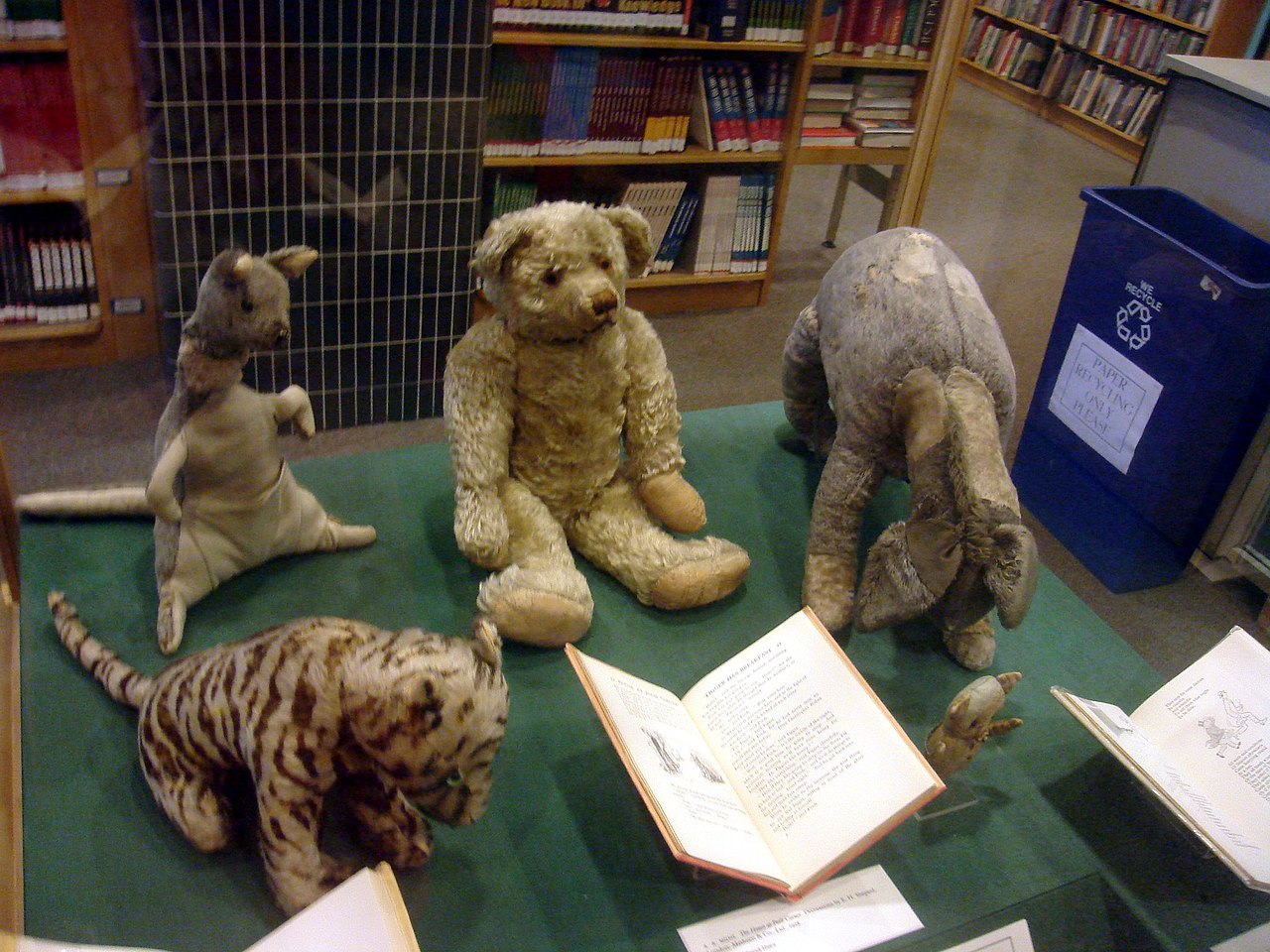


Appearance and mannerisms
Tigger's visible traits are simple and instantly recognizable. Commonly noted features include:
- Orange fur with prominent black stripes.
- A long, springy tail that he uses for bouncing and balance.
- Beady eyes, a long chin and a broad grin that convey confidence.
- A bold, boastful manner and a tendency to speak in energetic, repetitive phrases.
Origins and development
Milne introduced Tigger as a new, exuberant friend who contrasts with quieter characters like Pooh and Piglet. The character grew from Milne's private world of toys into published fiction and later into many adaptations. In the original books Tigger behaves in a friendly, if occasionally clumsy, fashion and repeatedly asserts that "bouncing is what Tiggers do best," a line that became closely associated with his persona.
Adaptations and cultural role
Beyond the books, Tigger achieved wider fame through stage productions, recordings and animated versions produced by later license-holders. These adaptations emphasized his comic timing and physical comedy: he is often used to inject energy and optimism into scenes. As part of the larger cast of Pooh characters, Tigger interacts with friends such as Pooh, Piglet, Rabbit and Eeyore, and his behavior is frequently used in children’s media to explore themes of individuality, friendship and exuberance.
Notable facts and distinctions
Although modeled on a stuffed toy, Tigger behaves like an anthropomorphized animal and is treated as a fully fledged personality within the stories. He is sometimes described simply as a fictional feline, but his name and manner—"Tigger" rather than "Tiger"—mark him as a specific invented character rather than a generic animal. His popularity has made him a subject of merchandise, stage revivals and frequent reference in discussions about Milne's work.
For more information about the original stories, characters and legacy, readers can consult dedicated resources and collections that document the books' publication history and their adaptation into other media. Tigger's energetic character continues to make him a favorite of children and adults who enjoy the whimsical world Milne created.
Stripes and small details about costume and illustration have varied across editions and productions, but his essential traits remain unchanged. Scholarly and popular treatments alike note the way Tigger's confidence and buoyant nature function within the group dynamics of the Hundred Acre Wood. For further reading, see materials that cover the series' characters and origins, including sources that discuss Christopher Robin's toy and the place of Tigger among the wider cast. Additional background can be found in overviews of the books and in analyses of how the characters were adapted for stage and screen: Milne's text and later interpretive works offer differing perspectives on his lasting appeal.
Readers interested in visual and production histories may follow links in curated guides and archives that document how the image of Tigger has been rendered by illustrators, animators and performers. These materials often track small changes—such as the length of his tail or the number and placement of his stripes—that reflect the needs of various media while preserving the core notion of bouncing joyfully through the stories.
Related articles
Author
AlegsaOnline.com Tigger (fictional character from A. A. Milne) Leandro Alegsa
URL: https://en.alegsaonline.com/art/99834