
Winnie the Pooh: origins, characters, adaptations, and cultural influence
Overview of A. A. Milne’s Winnie-the-Pooh: creation, principal characters, publication history, major adaptations (including Disney), themes, and the character’s cultural legacy.
Overview
Winnie-the-Pooh, commonly called Pooh Bear, is a fictional anthropomorphic teddy bear created by the English writer A. A. Milne. The character first appeared in stories and poems published in the 1920s and quickly became a central figure in children’s literature. Milne based Pooh on a stuffed toy owned by his son, Christopher Robin Milne, and combined that name with the real bear known as Winnie, who lived at the London Zoo, and a family pet name, Pooh. The original tales are set around the pastoral Hundred Acre Wood and are known for their gentle humor and warm depiction of friendship.
Image gallery
10 Images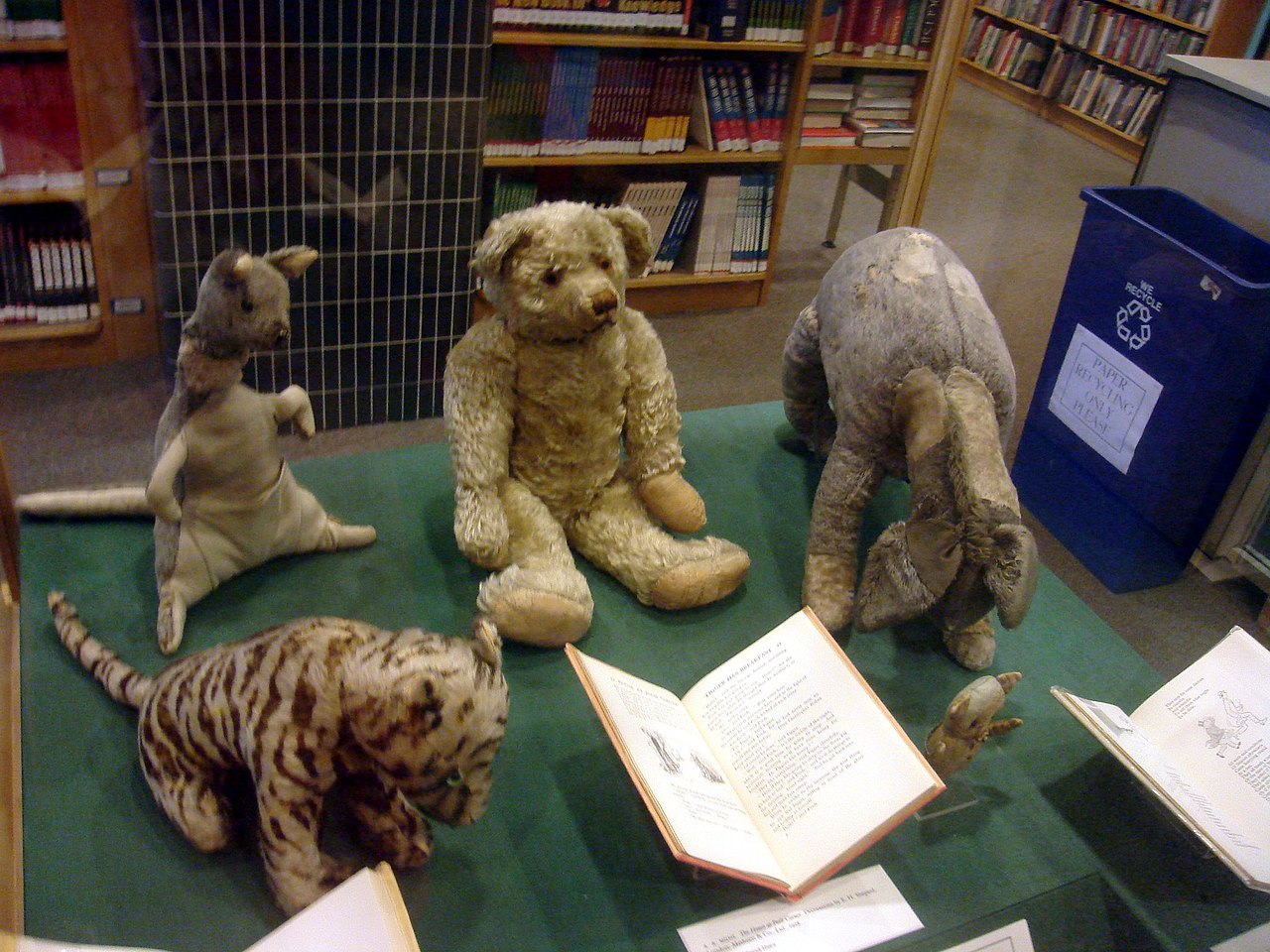




Origins and publication history
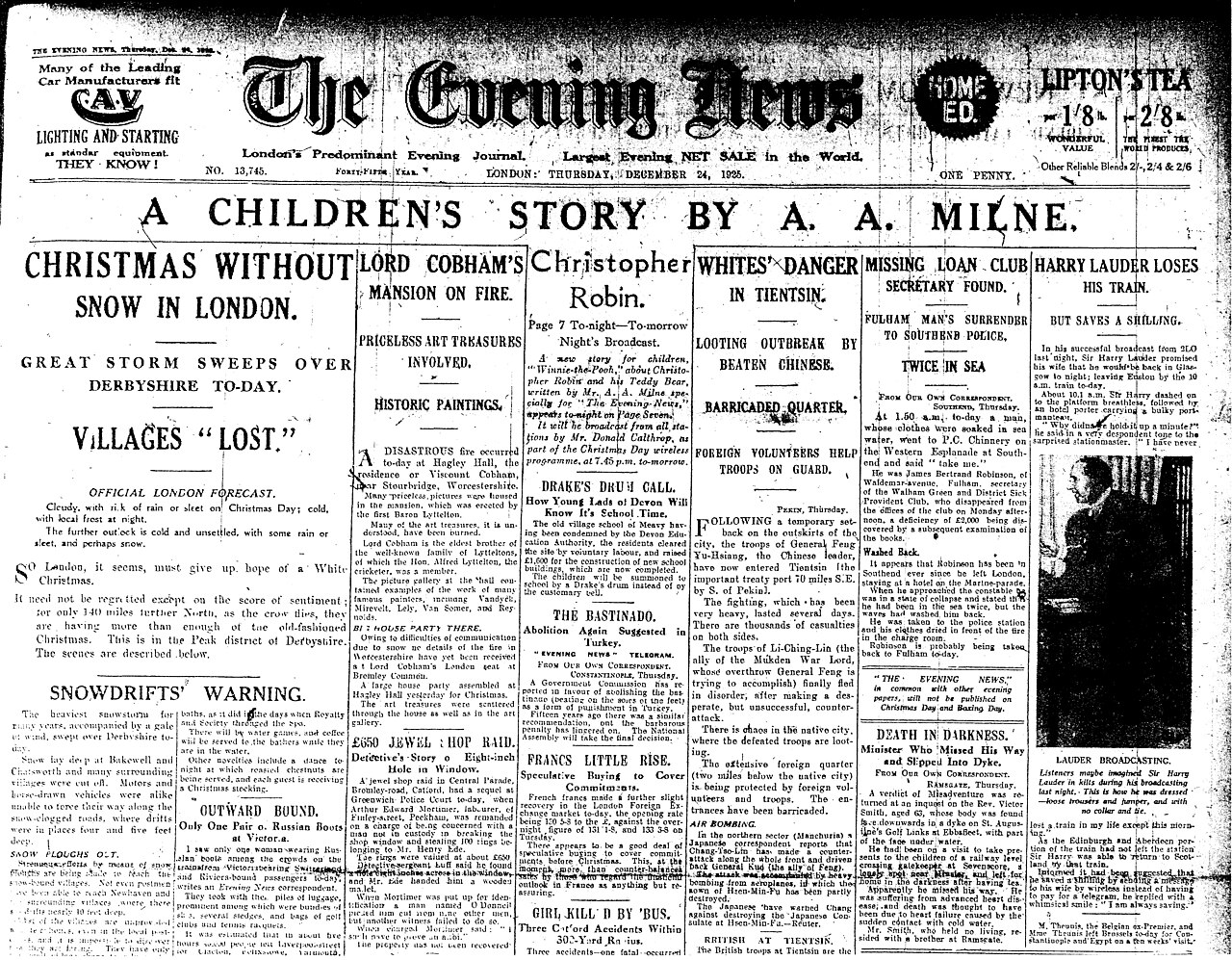
Milne’s writing about Christopher Robin and his toys first appeared in poetry collections and later as two illustrated storybooks. The best-known volumes, Winnie-the-Pooh (1926) and The House at Pooh Corner (1928), collect short episodes focused on the animals of the Hundred Acre Wood. Milne also published poetry collections in the 1920s that include related verses. Since their release, the stories have been reprinted in many editions, translated into numerous languages, and commemorated by later authorized contributions and anniversary volumes.
Illustration and the toy that inspired Pooh
The original books were illustrated by E. H. Shepard, whose line drawings became closely associated with Milne’s text and helped define the visual identity of the characters for generations of readers. The stuffed toys that inspired the stories have been displayed and discussed in biographies and museum exhibits; they remain objects of public interest in the material history of the books.
Appearance, temperament, and small pleasures
Pooh is usually portrayed as a small, golden-colored bear with a fondness for honey and a simple, affectionate view of the world. In many modern illustrations and adaptations he is shown wearing a small red shirt, a detail that postdates the earliest book illustrations but is widely recognized. Pooh’s personality is steady, kind, and sometimes slow to understand complexities; he values friendship and routine and often expresses his concerns in plain, food-centered terms. He is also credited with inventing the pastime known as "Poohsticks," a simple game played using sticks and a bridge in the stories.
Main characters and setting
The fictional Hundred Acre Wood is populated by animals who have distinct personalities and relationships with Pooh:
- Piglet – a small, timid pig and close friend of Pooh.
- Eeyore – a melancholy donkey, thoughtful and slow to cheer up.
- Tigger – a bouncy, exuberant tiger who loves to spring and play.
- Rabbit – practical, sometimes fussy, and focused on order.
- Kanga and Roo – a caring mother and her young joey.
- Owl – bookish and a little pompous about knowledge.
- Christopher Robin – the human child who befriends the animals and often helps or narrates their concerns.
Themes and interpretation
Milne’s stories are celebrated for their nuanced, low-key approach to childhood: they treat small fears and everyday problems with kindness and wry observation rather than didactic lessons. Critics and scholars have explored the books’ depictions of imagination, play, language, and friendship. The characters’ distinct temperaments make the collection useful for gentle explorations of personality and social relationships in early childhood literature.
Adaptations and the Disney era
Milne’s tales have been adapted for radio, stage, television, and film. From the mid-20th century, the Walt Disney Company obtained rights to produce animated adaptations and popularized a visual and character model that became familiar worldwide. Disney produced a series of animated featurettes that were later compiled into films such as The Many Adventures of Winnie the Pooh, and more recent cinematic and television projects have kept Pooh in the public eye. A live-action film, Christopher Robin, drew on Milne’s characters and presented them in a modern, nostalgic context. Other non-Disney adaptations and stage productions have also interpreted the stories in diverse ways.
Legal status, licensing, and public domain notes
Rights in illustrations, adaptations, and specific editions have been handled separately from the original texts, and some adaptations are subject to trademark or licensing held by media companies. In several jurisdictions the earliest Pooh stories have begun to enter the public domain, while specific illustrations, later books, and character designs remain protected or controlled by rights holders; the exact status varies by country and by the nature of the material. Readers seeking authorized editions or adaptations should consult publishers and rights holders for guidance.
Legacy and cultural influence
Winnie-the-Pooh endures as a symbol of gentle childhood storytelling. The books are valued for their charm, humor, and subtle psychological portraiture. Pooh and his friends appear in merchandise, educational materials, theme-park attractions, and scholarly work about play and memory. The stories continue to be a touchstone for parents, educators, and readers who appreciate their blend of simplicity and wit.
Further reading and resources
For primary texts and authoritative information, consult original editions, scholarly studies of children’s literature, and official materials from publishers and rights holders. Selected topics and sources include background material on the character (background), the author (A. A. Milne), the real bear and zoo connection (Winnie, London Zoo), and the biographical context of Christopher Robin. Further topics of interest include the original stuffed toy, Disney adaptations (Disney, rights, animations), character studies such as Tigger and related profiles, motifs like honey and the iconic red shirt, and film treatments including classic compilations and recent movies (Christopher Robin). For broader context, see publisher pages, archives, and museum exhibits that document the books’ production and reception (origin note).
Explore authorized collections and reliable secondary literature to follow developments in publication, adaptation, and scholarship on Winnie-the-Pooh and the Hundred Acre Wood.
Questions and answers
Q: Who created Winnie the Pooh?
A: Winnie the Pooh was created by A. A. Milne.
Q: What is Winnie the Pooh's favorite food?
A: Winnie the Pooh's favorite food is honey.
Q: How tall is Winnie the Pooh?
A: Winnie the Pooh is nearly 22 inches (560 mm) tall.
Q: What does he wear?
A: He wears an old red t-shirt.
Q: What game did he invent?
A: He invented a game called "Poohsticks".
Q: When was The House at Pooh Corner published?
A: The House at Pooh Corner was published on October 11, 1928.
Q: What year did Disney release a movie about him?
A:Disney released a movie about him in March 1977 entitled The Many Adventures of Winnie the Pooh.
Related articles
Author
AlegsaOnline.com Winnie the Pooh: origins, characters, adaptations, and cultural influence Leandro Alegsa
URL: https://en.alegsaonline.com/art/108604