
Tiger salamander (Ambystoma tigrinum): overview and conservation
A widespread North American mole salamander known for bold markings, a mixed aquatic-terrestrial life cycle, and ecological importance; varies regionally and faces habitat threats and disease.
Overview
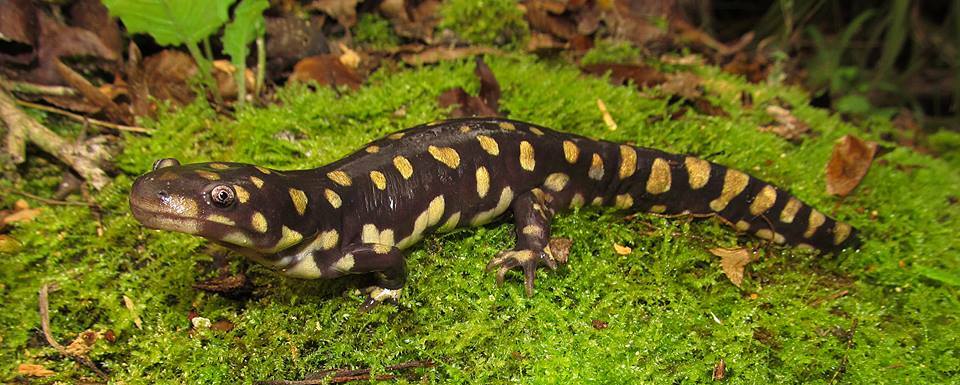
The tiger salamander is a common name for a group of large, robust North American salamanders in the Ambystoma tigrinum species complex. They belong to the burrowing mole salamanders and are often called the eastern tiger salamander in parts of their range. For general taxonomic information see the species page and the broader mole salamander grouping. Another regional name is the eastern tiger salamander, used where its range overlaps eastern North America.
Image gallery
6 Images



Characteristics and life cycle
Tiger salamanders are notable for their stout bodies, wide heads, and patterning of dark and lighter blotches or stripes. Adults are relatively large for terrestrial salamanders and have a primarily carnivorous diet, feeding on insects, worms, and small vertebrates. Reproduction is tied to ponds, seasonal pools or other still water, where aquatic larvae hatch and grow before metamorphosing into land-adapted adults. In some populations, especially where permanent water exists, individuals may remain in larval form and reproduce while retaining gills (a condition called paedomorphosis).
Habitat and behavior
These salamanders are adapted to a mixed life. Adults spend much time underground, occupying rodent burrows and other subterranean refuges, which earned them the common name 'mole salamander.' Breeding migrations to ponds often occur in spring or after heavy rains. They are primarily nocturnal and are important predators of soil and leaf‑litter invertebrates.
Conservation and human interactions
- Threats: habitat loss, road mortality during migration, pollution of breeding ponds, and emerging diseases such as ranaviruses.
- Uses and importance: they help control invertebrate populations, serve as prey for larger animals, and are sometimes kept in the pet trade or studied in ecological and developmental research.
- Status: while widespread and locally abundant in many areas, some regional populations and subspecies face decline; local conservation depends on protecting breeding wetlands and terrestrial habitat.
Distinguishing notes
The tiger salamander complex includes several regional forms that vary in size, coloration, and life‑history traits. They are closely related to other Ambystoma species, such as the axolotl, but differ in typical habitat and developmental outcomes. Observed behaviors like paedomorphosis and burrowing make them a useful example of amphibian adaptability to variable environments.
Related articles
Author
AlegsaOnline.com Tiger salamander (Ambystoma tigrinum): overview and conservation Leandro Alegsa
URL: https://en.alegsaonline.com/art/99830