
Tiger snake (Notechis scutatus): description, behavior, and medical importance
A venomous Australasian snake (Notechis scutatus) found in southern Australia and Tasmania; variable in color and pattern and medically significant due to potent venom and frequent human encounters.
Not to be confused with the tiger keelback, the tiger snake (Notechis scutatus) is a venomous snake native to southern Australia and many of its coastal islands, including Tasmania. It is well known for its variable banded or plain coloration, stout body and close association with wetland and coastal habitats.
Image gallery
10 Images

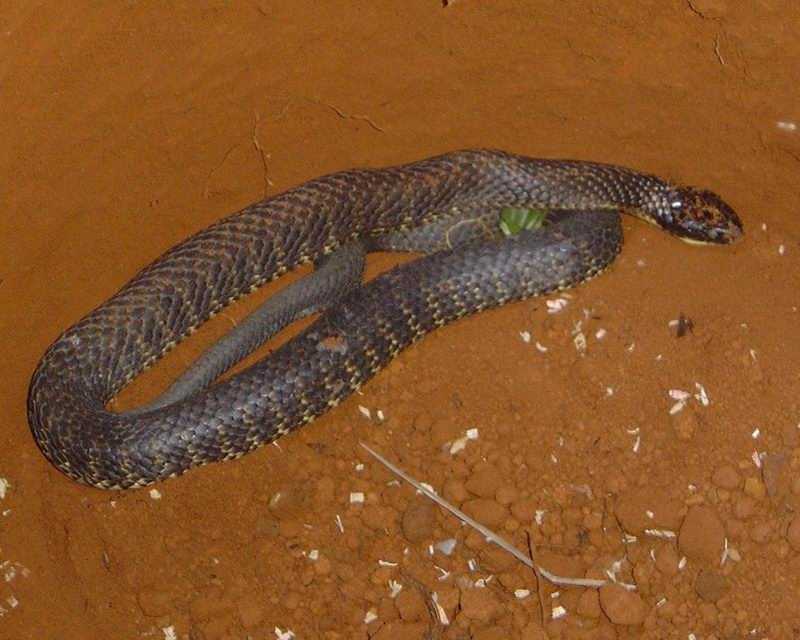


Description and identification
Tiger snakes show pronounced geographic and individual variation. Many have dark banding on a lighter background but some populations are almost uniformly dark or exhibit reddish, brown or olive phases. Adults are typically medium- to large-sized, with robust bodies and relatively broad heads; sexual dimorphism is modest. Scale texture and head shape can help distinguish them from other local species.
These snakes occupy a range of habitats: marshes, riverbanks, coastal dunes, farmland and suburban edges. They are often observed near water and are skilled swimmers. Diets are opportunistic and include frogs, fish, lizards, birds and small mammals. Activity patterns vary with season and temperature; in colder regions like Tasmania they may brumate through winter.
Tiger snakes are ovoviviparous (give birth to live young) with females producing litters seasonally. Reproductive timing and litter size vary by locality and environmental conditions. Juveniles resemble adults but are smaller and may show brighter banding.
Venom and human interactions
The species is medically important: its venom contains neurotoxic and haemotoxic components and can cause serious systemic effects in humans if untreated. Envenoming is an emergency; antivenom and supportive care are effective when applied promptly. In populated areas tiger snakes are frequently encountered and sometimes persecuted, which increases the risk of accidental bites.
- Taxonomy: genus Notechis, species scutatus.
- Distribution: southern mainland Australia, many islands, and Tasmania.
- Habitat: wetlands, coastal zones, grasslands and peri-urban areas.
- Reproduction: live-bearing, seasonal litters.
- Significance: medically important; conservation status varies locally.
Conservation concerns focus on habitat loss, road mortality and persecution. Local populations may be common in suitable habitat but fragmented by development. For identification, handling or clinical guidance consult regional herpetological or medical resources rather than relying on variable coloration alone.
Related articles
Author
AlegsaOnline.com Tiger snake (Notechis scutatus): description, behavior, and medical importance Leandro Alegsa
URL: https://en.alegsaonline.com/art/99832