
Tiger quoll (spotted‑tail quoll) — mainland Australia's largest carnivorous marsupial
The tiger quoll (Dasyurus maculatus), or spotted‑tail quoll, is a nocturnal carnivorous marsupial native to eastern and southeastern Australia, known for its spotted coat, climbing ability and conservation concern.
Overview
The tiger quoll, Dasyurus maculatus, is a carnivorous marsupial in the order Dasyuromorphia. Often called the spotted‑tail quoll, it is noted as the longest living carnivorous marsupial and is mainland Australia’s largest in that category. It functions as an important mesopredator in forested landscapes, hunting on the ground and in trees and influencing populations of smaller animals.
Image gallery
10 Images


Appearance and biology
Tiger quolls have a dense coat, usually reddish to dark brown, marked with numerous pale spots that extend onto the tail. They are muscular, with a long tail that aids balance when climbing. Adults are agile climbers and possess strong jaws and sharp teeth adapted to a varied carnivorous diet. Like other marsupials, females rear their young in a pouch until the young are able to disperse from the den.
Distribution and habitat
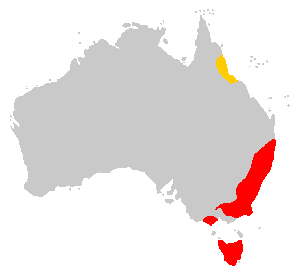
They occur in parts of eastern and southeastern Australia and in some nearby island areas. On mainland Australia they are associated with wetter forest types, including rainforest and wet sclerophyll, and with woodlands that retain hollow logs and tree cavities used as dens. Habitat loss and fragmentation have reduced their range in many regions, leaving populations isolated in remnant patches.
Behaviour and diet
Tiger quolls are primarily nocturnal and largely solitary. They hunt a broad spectrum of prey such as small to medium mammals, birds, reptiles, large invertebrates and carrion. Their climbing skills allow them to pursue arboreal prey and to rest or den above ground where available. They are territorial and use scent and vocalisations to communicate.
Conservation
Populations have declined in parts of their range and the species is the focus of conservation concern at regional levels. Main threats include habitat destruction and fragmentation, vehicle strikes on roads, competition and predation from introduced species and changes to fire regimes. Conservation measures commonly recommended and applied include habitat protection and restoration, predator control programs, road‑management strategies to reduce mortality, and monitoring to clarify population trends.
Human interactions and research
Tiger quolls are sometimes detected by camera traps and community science initiatives, which help researchers map distributions and monitor trends. They play an ecological role by helping to regulate prey populations. Continued research aims to improve understanding of their ecology and to develop practical measures that reduce human impacts while supporting habitat connectivity and long‑term viability.
Related articles
Author
AlegsaOnline.com Tiger quoll (spotted‑tail quoll) — mainland Australia's largest carnivorous marsupial Leandro Alegsa
URL: https://en.alegsaonline.com/art/99829