
Thomas Coryat (c.1577–1617) — English traveller and travel writer
English foot traveller and author whose lively accounts of early 17th‑century Europe and India influenced travel literature; remembered for Coryat's Crudities and for dying in Surat after reaching the Mughal court.
Overview
Thomas Coryat was an English traveller and writer active in the late Elizabethan and early Jacobean eras. Born around 1577, he became known for undertaking long journeys, often on foot, and for publishing the resulting accounts. His best known work, Coryat's Crudities (1611), described customs, sights and practical details from his travels and helped establish a more personal, observational style of travel writing in England. A number of later readers and antiquarians have remembered him for the energy of his journeys and for the sometimes eccentric persona he projected.
Image gallery
5 Images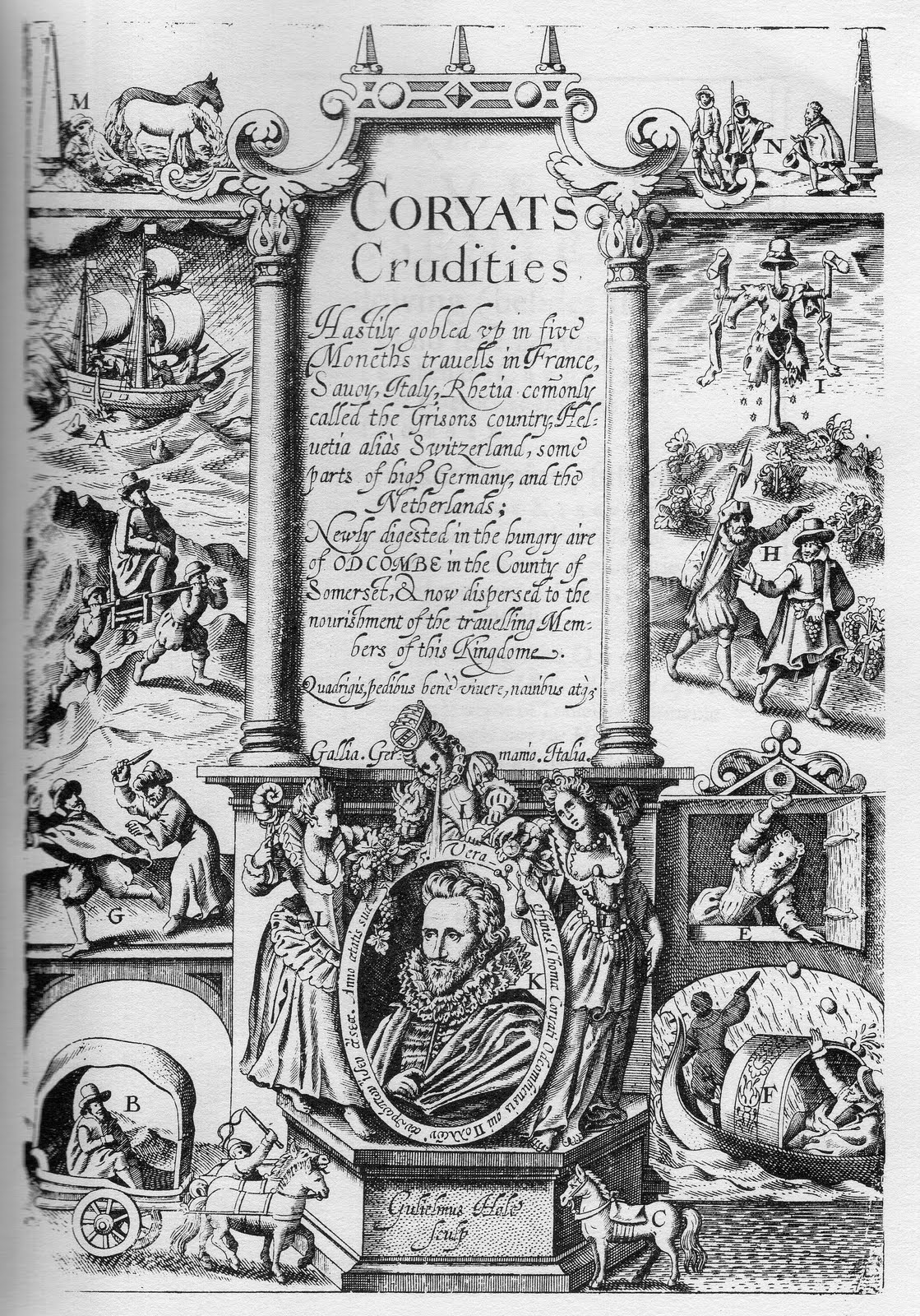


Journeys and destinations
Coryat set out from England and travelled across continental Europe, visiting towns in France, Italy and the German lands on foot and by coach. He continued eastward and ultimately reached parts of South Asia, including India. While in the Mughal territories he is said to have met the emperor Jahangir, who gave him support and money to return home. Coryat did not make it back to England; he died in the port city of Surat in the region of Gujarat in 1617.
Writings and style
His published writing combined practical information for travellers with curious anecdotes and social observation. Coryat's Crudities presented sketches of towns, comments on food and household customs, and descriptions of monuments and public life. Rather than a systematic guide, his narratives read as a lively miscellany—sometimes earnest, sometimes boastful—and they appealed to readers interested in foreign manners and new experiences. His work circulated among courtly and scholarly readers as well as a broader literate public.
Legacy and notable aspects
Coryat occupies an interesting place in the history of travel literature. He inspired both admiration for his endurance and humour at his apparent vanity; contemporaries alternately praised and teased him. Later commentators credited him with popularizing certain foreign habits—most famously the use of the table fork in England—though such claims are often simplified. His accounts remain useful to historians for the window they provide onto early 17th‑century Europe and South Asia and for the way they reflect the curiosity of an English traveller abroad.
Quick facts
- Occupation: English traveller and writer (a noted traveller).
- Active routes: long pedestrian and coach journeys across Europe and onward to India.
- Interactions: received gifts from the Mughal emperor Jahangir while in India.
- Death: died in Surat, in the province of Gujarat, in 1617 before returning to England.
- Principal publication: Coryat's Crudities (1611), a miscellany of travel notes and observations.
Related articles
Author
AlegsaOnline.com Thomas Coryat (c.1577–1617) — English traveller and travel writer Leandro Alegsa
URL: https://en.alegsaonline.com/art/99488