
Third Punic War (149–146 BC): Siege and destruction of Carthage
The Third Punic War (149–146 BC) was Rome’s final conflict with Carthage, ending in the siege, fall and razing of the city and the creation of the Roman province of Africa.
The Third Punic War (149–146 BC) was the concluding conflict in a long rivalry between Rome and Carthage. It pitted the city-state of Carthage, a former Phoenician colony, against the Roman Republic. Often considered the shortest and most one-sided of the three major Punic Wars, this campaign ended with the complete siege and destruction of Carthage and the absorption of its territory into Roman rule. The series is usually placed within the wider context of the Punic Wars between the two powers.
Image gallery
8 Images



Background and causes
The immediate causes included rising tensions after the Second Punic War, Roman concern over Carthaginian recovery, and disputes with Rome’s ally Numidia. Carthage had been left weakened by earlier treaties but gradually rebuilt its economy. Rome interpreted—or chose to interpret—Carthaginian military preparations and treaty infractions as grounds for intervention. Political and ideological factors at Rome, including popular calls for permanent elimination of a rival, also played a role.
Course of the war
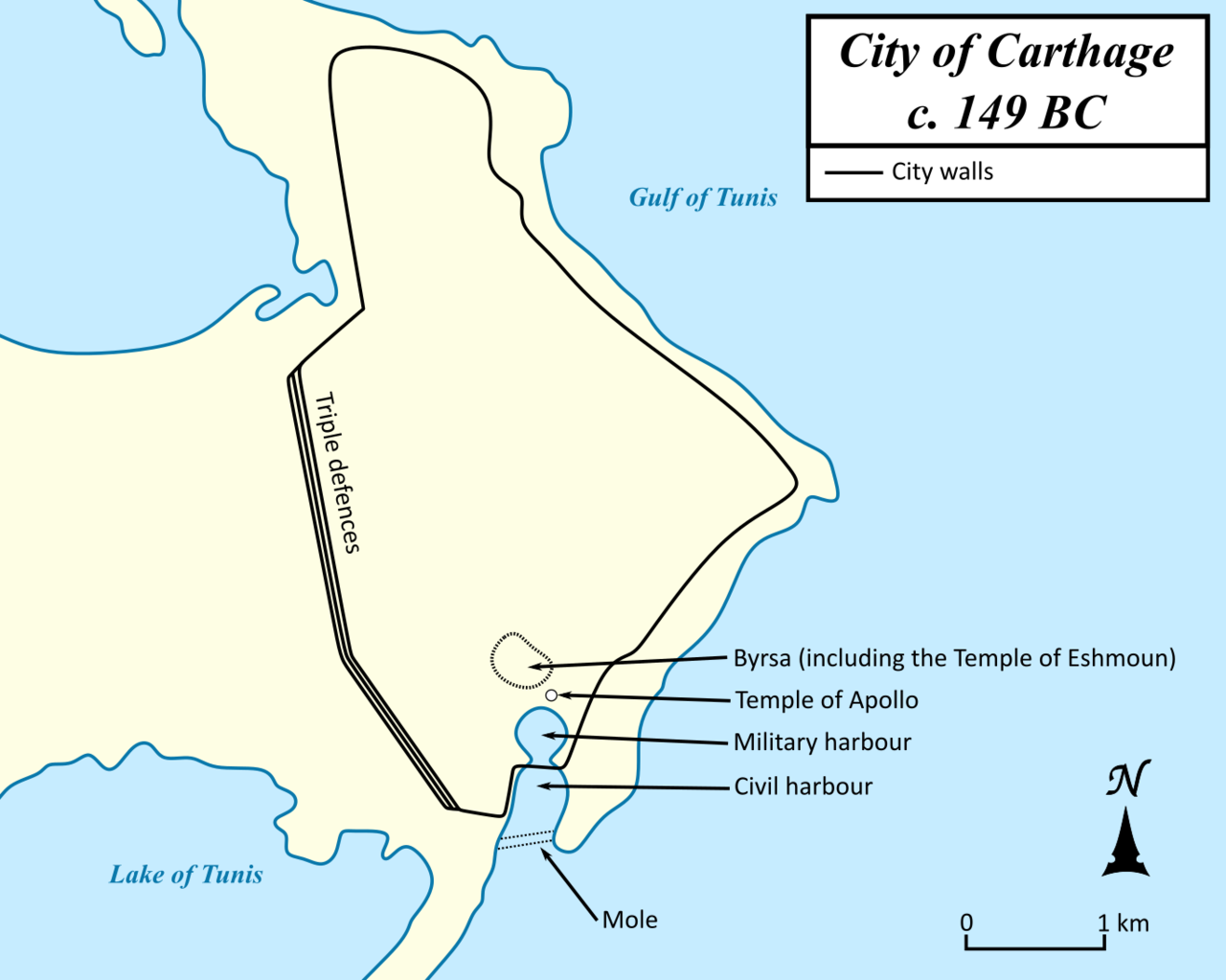
Rather than wide campaigns across the western Mediterranean, the Third Punic War focused on a prolonged siege of the city of Carthage. Roman forces, eventually commanded by Scipio Aemilianus, encircled the city and assaulted its defenses over several years. Carthaginian defenders mounted desperate resistance, building defenses, sorties, and counterattacks, but lacked the external allies and resources to break the blockade. The city finally capitulated after intense urban combat.
Aftermath and significance
When the city fell, many inhabitants were killed or enslaved and Carthage’s buildings were razed. Its territory became the Roman province of Africa, strengthening Rome’s control of the western Mediterranean and marking a turning point toward more direct Roman imperial expansion. The destruction removed a long-standing commercial and military rival and freed Rome to project power across North Africa and beyond.
Notable facts and debates
- Roman politicians such as Cato the Elder are famously associated with the slogan that Carthage must be destroyed; whether this single phrase drove policy is debated.
- Later writers claimed the Romans sowed salt into Carthage’s ruins; modern historians regard that particular detail as probably legendary rather than factual.
- The Third Punic War differs from the earlier Punic Wars in scale and focus: instead of long naval campaigns and multi-theater battles, it culminated in an intensive siege of a single city.
- The event has been studied as an example of total war in antiquity and as a step in Rome’s transition from republic to imperial power.
For broader context on the sequence of conflicts between these powers, see accounts of the Punic Wars and summaries of Carthaginian society and Roman foreign policy during the mid-Republic. For details about Carthage’s origins as a Phoenician colony and Rome’s governance after conquest, consult specialized histories and archaeological reports linked in scholarly overviews on Carthage and on the Roman Republic.
Related articles
Author
AlegsaOnline.com Third Punic War (149–146 BC): Siege and destruction of Carthage Leandro Alegsa
URL: https://en.alegsaonline.com/art/99408