
Thompson submachine gun (Tommy Gun): design, history, and legacy
Comprehensive encyclopedia entry on the Thompson submachine gun (Tommy Gun): its design, development, variants, military and law‑enforcement use, cultural impact, and collecting and preservation.
Overview
The Thompson submachine gun, commonly called the "Tommy gun," is an early and influential handheld automatic firearm designed for high‑volume close‑quarters fire. Developed in the final months of World War I but widely produced in the interwar period and during World War II, it became famous for military use, police adoption and prominent appearances in civilian life and popular culture. For information on its mechanical design and the factors behind its public appeal, read the following sections. It saw adoption by various soldiers, urban police forces and private civilian purchasers in different roles and markets.
Image gallery
10 Images


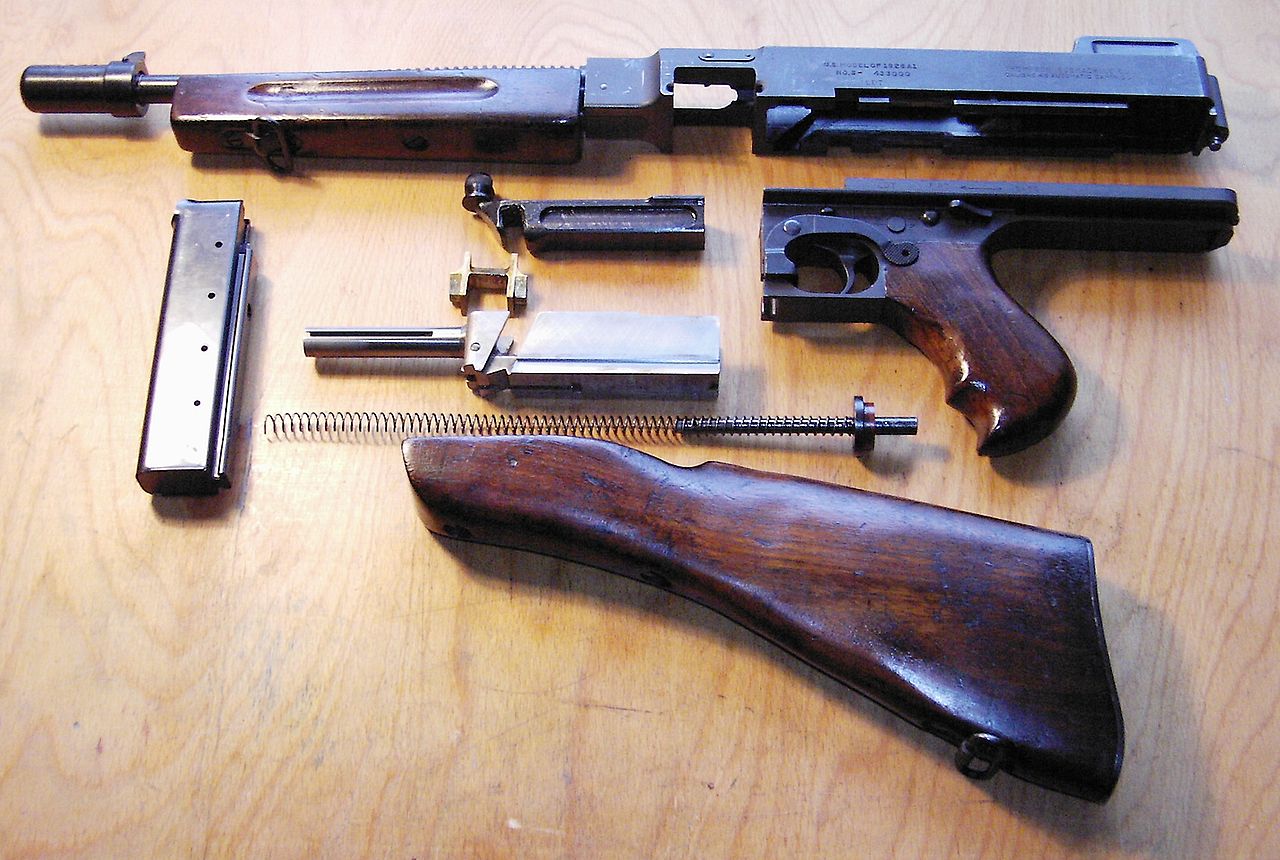
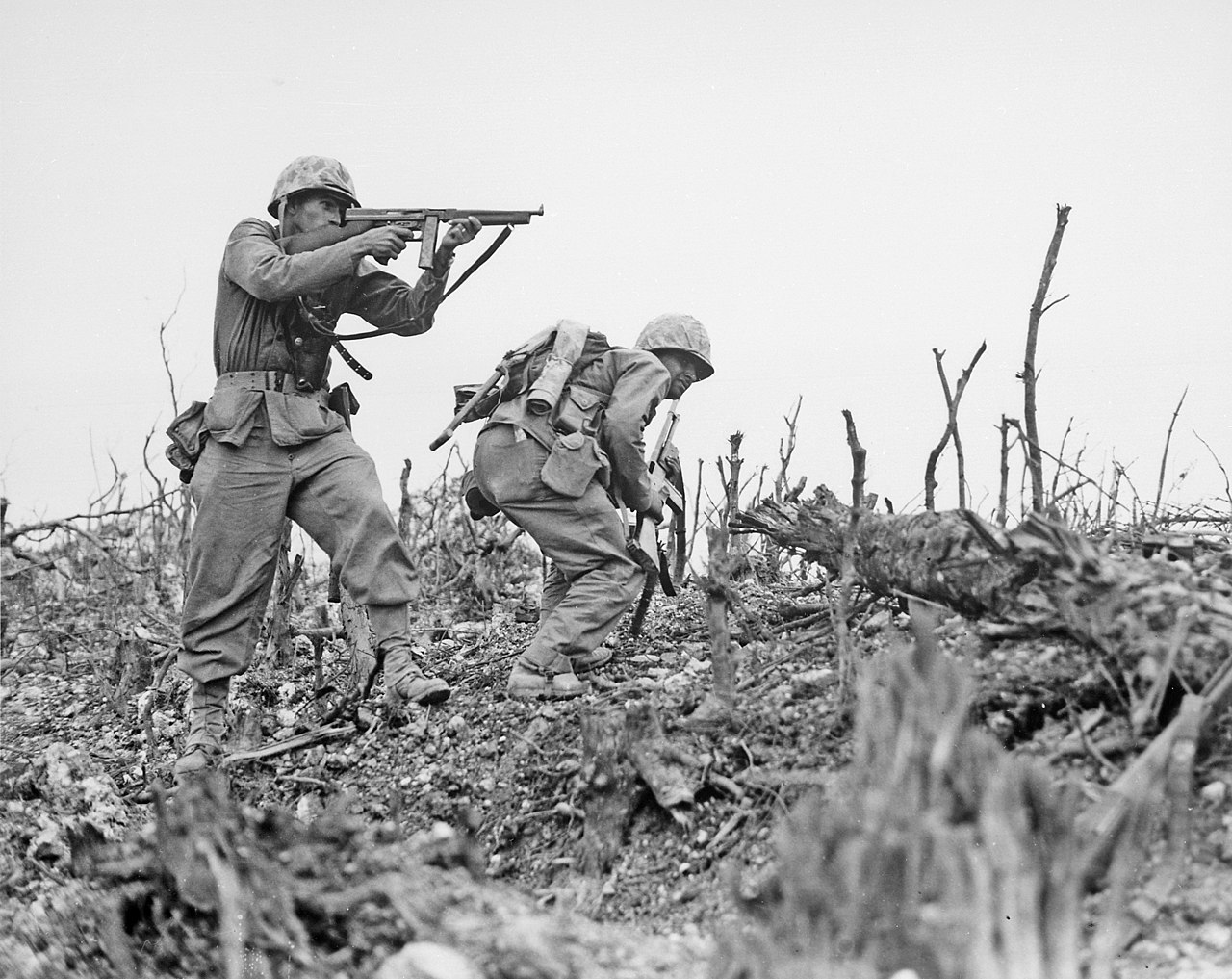


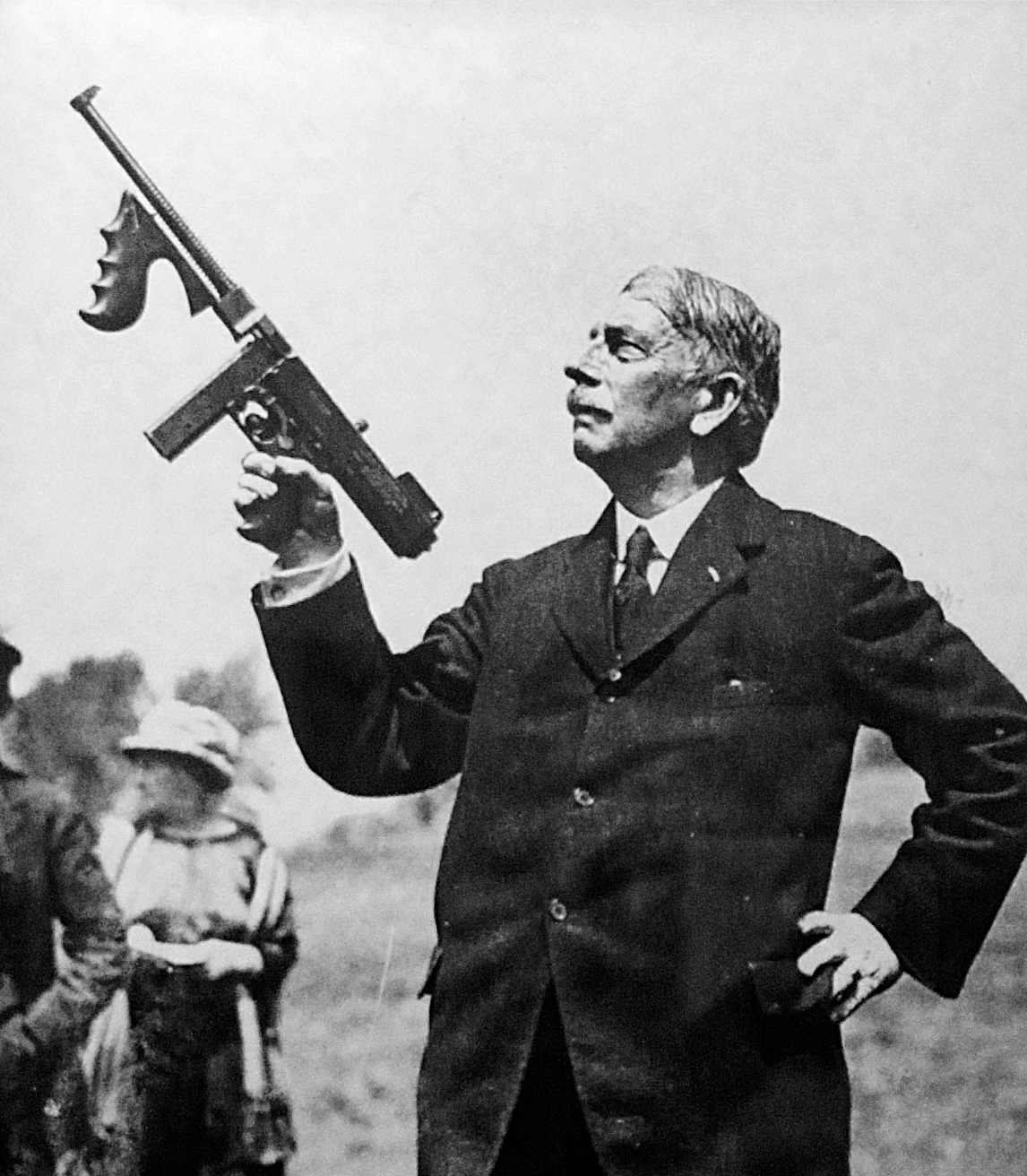
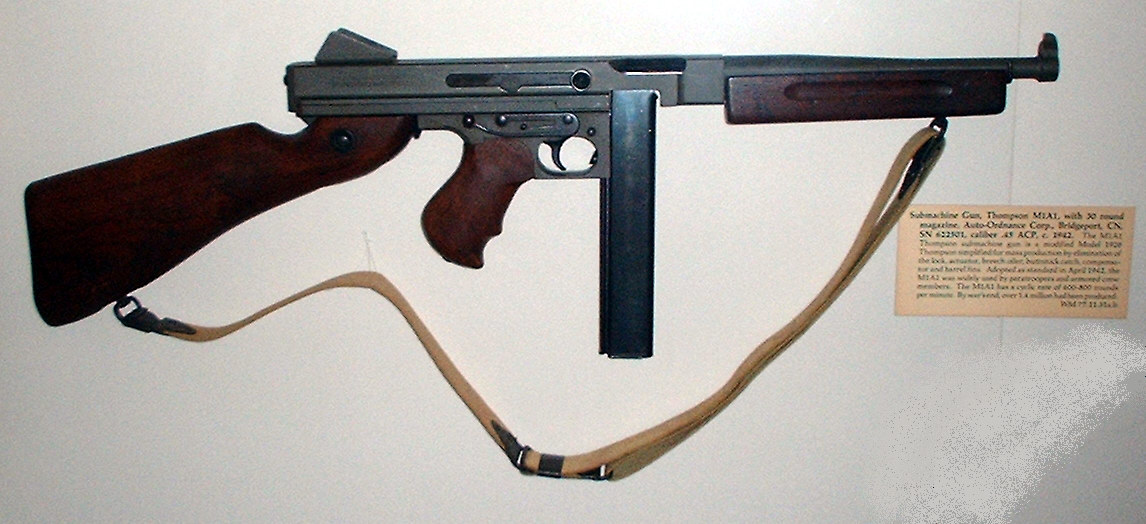
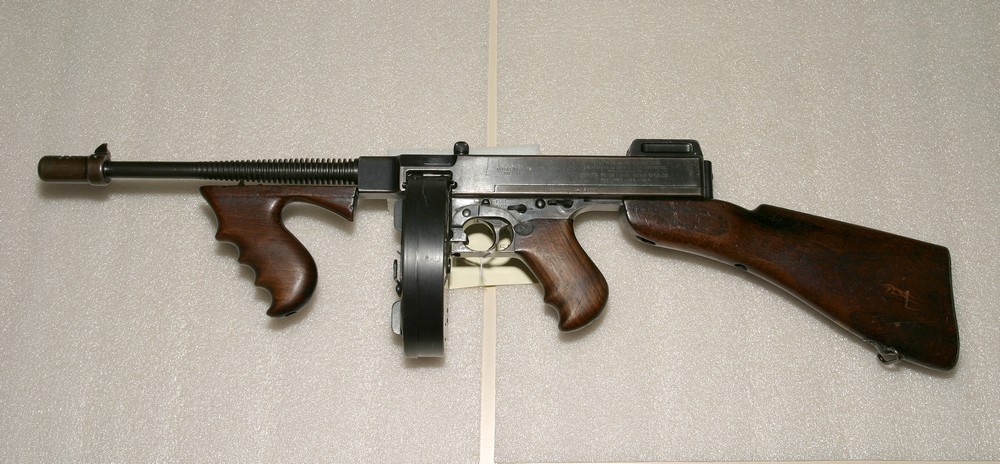
Design and technical characteristics
Conceived as a compact automatic weapon for close combat, the Thompson fires the .45 ACP pistol cartridge. The inventor, John T. Thompson, intended a weapon suitable for what contemporaries called "trench" fighting; it was part of a family of small arms proposed to address confined, short‑range engagements that characterized late World War I combat development and the notion of a "trench‑boom" weapon.
- Operation: early Thompsons used a simple blowback mechanism and fired from an open bolt, a design choice that affected controllability and reliability.
- Ammunition: chambered for the .45 ACP cartridge, a round widely regarded in its era for stopping power and chosen for both military and law‑enforcement use; see .45 ACP.
- Feeding: available with large capacity drum magazines or detachable box magazines; the drum is often associated with the model's image.
- Controls and ergonomics: wooden stocks and foregrips on early commercial models provided familiar rifle‑like handling; later military contract models simplified fittings to speed manufacture.
- Classification: typically described as a fully automatic, hand‑held firearm firing pistol ammunition.
History and development
The Thompson was developed near the end of World War I as an attempt to equip infantry with a weapon capable of delivering rapid, concentrated fire in confined spaces. The cessation of major hostilities before wide deployment — the armistice that effectively ended World War I — meant the weapon missed large‑scale combat introduction at that time; see materials on the war's end. After 1919, Thompson formed Auto‑Ordnance to produce and market the weapon commercially; the company and its successors managed design changes as they sought military contracts as well as lawful civilian sales Auto‑Ordnance.
Variants, military use and adaptations
Through the 1920s–1940s the Thompson evolved from early, hand‑fitted commercial models to simplified wartime variants intended for mass production. Military users valued the weapon for vehicle crews, rear‑area security, patrols and other duties that benefited from compact automatic fire. Formal contract models standardized certain features and materials, while collectors and historians distinguish commercial, law‑enforcement and military contract examples by markings, finishes and accessory sets.
Law enforcement, civilian ownership and public perception
In the interwar United States the Thompson was used by some police departments and was also acquired by civilians who met legal requirements of the day. Its use by organized criminal groups during the Prohibition era and by federal agents contributed to a complex public image. Popular media of the period — newsreels, newspapers and fiction — reinforced the association of the weapon with both crime and law enforcement, a duality that trained later historical and cultural attention on the Thompson.
Cultural impact, collecting and preservation
By the mid‑20th century the Thompson had become an iconic symbol in motion pictures and literature, often representing the gangster era or World War II small arms. Today it is a sought‑after item among collectors and historical reenactors; museums and private collections display surviving examples to illustrate small‑arms development. Collectors study serial numbers, factory markings and contract documentation to establish provenance and variant identification. For practical and legal reasons, modern discussion of these weapons also touches on regulation and classification in different jurisdictions.
Legacy
The Thompson helped define the submachine gun category — compact automatic firearms firing pistol cartridges for short‑range engagements — and influenced later designs. While advances in small‑arms technology and tactical doctrine reduced its frontline military role after World War II, the Thompson's distinctive appearance, technical features and historical associations have ensured a lasting place in firearms history. Its cartridge choice and effectiveness against human‑sized targets are often cited in technical summaries and historical evaluations human targets. For additional technical references and historical context consult manufacturer histories, contemporary ordnance reports and curated collections that document its design and service life.
Further reading and reference materials—technical manuals, procurement records and surviving company documents—support a fuller study of the Thompson's place in 20th‑century small‑arms development and civilian‑military transitions in arms markets.
Questions and answers
Q: What is the Thompson submachine gun?
A: The Thompson submachine gun, also known as the Tommy gun, is an early submachine gun design that was popular among soldiers, police, and civilians alike.
Q: Who invented the Thompson submachine gun?
A: The Thompson submachine gun was invented by Brigadier General John T. Thompson.
Q: What was the purpose of the Thompson submachine gun?
A: The Thompson submachine gun was designed as a "trench-boom" weapon, or a weapon that could clear out trenches quickly.
Q: Was the Thompson submachine gun used in battle during World War I?
A: No, the war ended before the submachine gun could be used in battle.
Q: Why was the Thompson submachine gun modified for civilian use in 1919?
A: Brigadier General Thompson had his company, Auto-Ordnance Company, modify the gun for civilian use after World War I ended.
Q: What is a submachine gun?
A: A submachine gun is a small, fully automatic, hand-held gun that fires pistol ammunition.
Q: What caliber bullets does the Thompson submachine gun fire?
A: The Thompson submachine gun fires .45 ACP caliber bullets, which are effective and accurate combat bullets against human targets.
Related articles
Author
AlegsaOnline.com Thompson submachine gun (Tommy Gun): design, history, and legacy Leandro Alegsa
URL: https://en.alegsaonline.com/art/99558
Sources
- auto-ordnance.com : "Thompson Submachine Gun"
- gundigest.com : "Gun Collecting: The Venerable Thompson Submachine Gun"
- 45acp.us : "45 ACP History"
- americanrifleman.org : "Thompson Submachine Gun: The Tommy Gun Goes to War"
- examiner.com : "John T. Thompson was the 'tommy' in tommy guns"
- militaryfactory.com : "M1 Thompson (Tommy Gun) Submachine Gun (1938)"
- warfarehistorynetwork.com : "The Thompson Submachine (or "Tommy") Gun"
- armedforcesmuseum.com : "Thompson Submachine Gun"
- gunblast.com : "Auto-Ordnance Model 1927 A1 Thompson Carbine"
- thetruthaboutguns.com : "Gun Review: Thompson Submachine Gun"