
Third-person shooter (video game genre)
A video game genre where the player controls a visible character from an external camera, emphasizing spatial awareness, character animation, cover mechanics, and cinematic presentation.
Overview
A third-person shooter (TPS) is a category of video games in which the player's avatar is displayed on-screen from an external camera rather than through the character's eyes. This viewpoint places the virtual camera behind, above, or to the side of the character, allowing the player to see body movement, outfit and weaponry while engaging in ranged or close-quarters combat. The perspective shapes how designers handle aiming, movement, environmental interaction and storytelling.
Image gallery
3 Images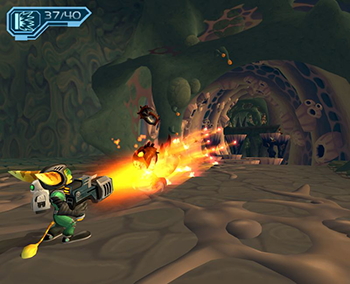


Camera perspective and gameplay differences
Compared with a first-person shooter, a third-person shooter provides increased situational awareness because the player can see more of the immediate surroundings and the character's animations. The external camera can be used to create cinematic moments, enable contextual actions such as vaulting or melee attacks, and show character customization that would be invisible in first-person. However, camera placement raises technical challenges such as occlusion (the camera being blocked by scenery) and maintaining clear sightlines for aiming.
Key mechanics and features
TPS titles often incorporate systems that take advantage of the external view. Common features include:
- Cover mechanics: the ability to snap to walls or obstacles for reduced exposure and tactical shooting.
- Third-person aiming aids: camera-relative aiming, aim-assist or over-the-shoulder targeting to balance visibility and precision.
- Contextual movement: animations for vaulting, climbing, sliding or melee that are visible and rhythmically linked to combat.
- Character-centric presentation: visible gear, clothing and scripted gestures that strengthen narrative or player identity.
History and evolution
The perspective has roots in earlier action and shooter experiments where developers placed the camera away from the avatar to show more of the character and environment. Over time the genre absorbed innovations from action-adventure and survival-horror games, adding more sophisticated animation, camera control, and cover systems. Some franchises moved fluidly between viewpoints to suit design goals, while others refined the over-the-shoulder camera to improve precision and immersion.
Examples and platforms
Well-known examples illustrate the range of the style: open-world titles such as Grand Theft Auto emphasize navigation and situational combat; narrative-driven action games and shooters incorporate cinematic camera work and choreography; historically grounded crime games like Mafia blend driving and shooting in a visible protagonist. The genre appears across consoles, PC and handhelds; portable adaptations have included entries designed for devices like the PSP, where series such as Socom and Syphon Filter experimented with handheld controls and aiming modes.
Distinctions and notable facts
Third-person shooters overlap with action-adventure and stealth titles, and they are often chosen when character identity, choreography and environmental traversal are central to the experience. Designers must balance camera freedom, responsive controls and fair visibility so combat feels precise yet dynamic. For players, the viewpoint often offers a stronger sense of character presence and cinematic spectacle than a first-person approach, at the cost of some aiming immediacy familiar to FPS fans.
For more background on the genre and related formats, see the general genre discussion and comparisons across different video game perspectives.
Related articles
Author
AlegsaOnline.com Third-person shooter (video game genre) Leandro Alegsa
URL: https://en.alegsaonline.com/art/99405