
There You Go Again (political catchphrase)
Memorable retort spoken by Ronald Reagan during the 1980 presidential campaign debate, used to deflect criticism and later cited as a classic example of debate rhetoric and political zingers.
Overview
"There you go again" is a short, dismissive retort that gained fame during the 1980 United States presidential campaign when Republican candidate Ronald Reagan used it in a televised exchange with his Democratic opponent, Jimmy Carter. The phrase is remembered for its casual tone and its ability to undercut a critic without escalating the argument.
Image gallery
2 Images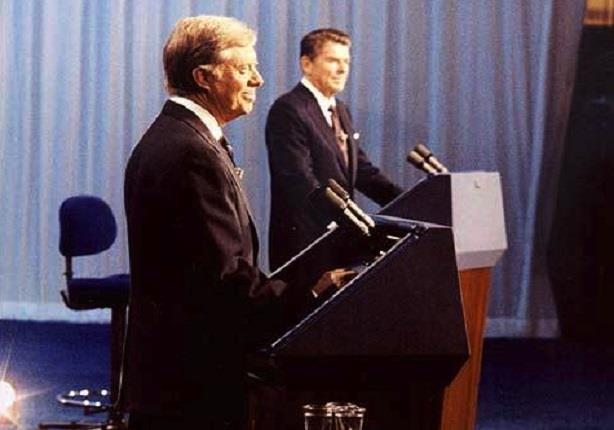

Context and delivery
Reagan deployed the line in response to a criticism from President Carter during a debate. Spoken with apparent amusement and mild reproach, the phrase treated the attack as a familiar, predictable tactic rather than a serious charge. The verbal shrug shifted attention away from the substance of the accusation and toward Reagan's persona: composed, affable, and confident.
Rhetorical function
As a rhetorical device, the line performs several functions simultaneously:
- It minimizes the opponent's point by framing it as repetitive or exaggerated.
- It projects control and self-assurance, suggesting the speaker need not take the remark seriously.
- It invites the audience to share a knowing smile, creating rapport and reducing the emotional intensity of the exchange.
History and later use
Although closely associated with that 1980 debate moment, Reagan relied on similar witticisms throughout his public life. Political commentators and historians often cite the phrase as an example of his debating style, which favored light humor and succinct countermoves over extended policy rebuttals. In subsequent years the line appeared in retrospectives, commentaries, and popular culture references as shorthand for a disarming rejoinder.
Importance and legacy
The lasting significance of "There you go again" lies less in its literal content than in what it exemplifies: how tone and timing can alter the effect of a retort. The phrase is taught and discussed in analyses of political communication as an instance of how candidates shape audience perception through demeanor as well as argument. It remains a frequent touchstone when writers describe memorable debate moments.
Notable facts and distinctions
Unlike a substantive rebuttal, a line of this kind does not address policy specifics; instead, it reframes the confrontation. It is often grouped with other famous campaign lines that had outsized influence on public impressions. Commentators point out that such zingers can be powerful when paired with a likable persona, but they are not a substitute for detailed policy discussion.
Related articles
Author
AlegsaOnline.com There You Go Again (political catchphrase) Leandro Alegsa
URL: https://en.alegsaonline.com/art/99278
Sources
- washingtonpost.com : "There You Go Again"
- usatoday.com : "Former President Ronald Reagan dies at 93"