
The Taming of the Shrew (1967 film)
Franco Zeffirelli's 1967 screen adaptation of Shakespeare's comedy, starring Richard Burton and Elizabeth Taylor, notable for its condensation of the text, vivid staging, and disputed gender themes.
Overview
Released in 1967, The Taming of the Shrew is a film adaptation of the William Shakespeare comedy that reworks stage material for the screen. Directed by Franco Zeffirelli, the picture focuses on comic clashes of temperament and courtship rituals while compressing and rearranging much of the original dialogue to suit cinematic pacing.
Image gallery
2 Images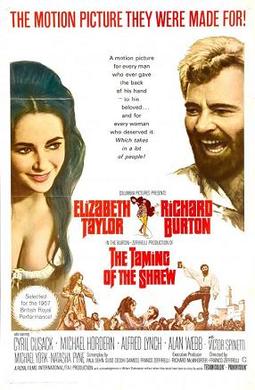

Principal cast and characters
The production drew attention through star casting: Richard Burton portrays the outspoken suitor, and Elizabeth Taylor plays the headstrong heroine. Their off-screen celebrity contributed to public interest in the film. The story itself derives from the original play by William Shakespeare, though the script trims and refocuses scenes to emphasize romantic and physical comedy.
Adaptation choices and style
Zeferelli's approach converts theatrical language into visual storytelling: outdoor locations, period costuming, and brisk editing replace long speeches and stage soliloquies. Many speeches are shortened or omitted, and the director highlights gestures, expressions, and staging to convey meaning that the play communicates through verse.
Production and release
Filmed with an eye toward spectacle and popular appeal, the movie sought to make Shakespeare accessible to mid-20th-century audiences. Casting famously married actors intensified tabloid attention at the time of release, and the film reached both cinema audiences and viewers encountering Shakespeare for the first time on screen.
Reception and legacy
Contemporary critics generally praised the film's vitality, performances, and visual design, while noting the inevitable losses caused by abridgement. In later decades the movie has been discussed both as a lively adaptation and as an artifact of its era, sparking debate about whether the "taming" element translates comfortably to modern sensibilities.
Notable facts and themes
- Adaptation: significant condensation of Shakespeare's text to fit cinematic form.
- Performance: the leads' chemistry and star status shaped audience expectations.
- Discussion: the film is often cited in conversations about gender, power, and how staging choices affect interpretation.
Related articles
Author
AlegsaOnline.com The Taming of the Shrew (1967 film) Leandro Alegsa
URL: https://en.alegsaonline.com/art/98957