
The Texas Chainsaw Massacre (2003 film)
2003 slasher remake directed by Marcus Nispel. A contemporary reimagining of Tobe Hooper’s 1974 film starring Jessica Biel, following a group of travelers who encounter Leatherface and his murderous family.
The Texas Chainsaw Massacre (2003) is an American slasher film directed by Marcus Nispel and written by Scott Kosar. Marketed as a modern update of the 1974 original, the picture places a familiar premise—the isolated farmhouse and the chainsaw-wielding killer—into a polished, higher-budget production designed for mainstream multiplex audiences. The cast is led by Jessica Biel and includes Jonathan Tucker, Erica Leerhsen, R. Lee Ermey, Mike Vogel and Eric Balfour.
Image gallery
4 Images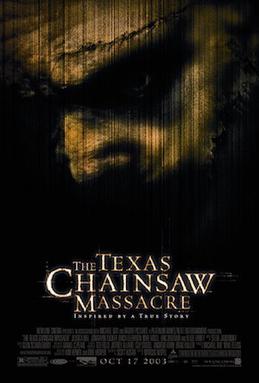


Overview
The story follows a group of young adults whose road trip across rural Texas goes catastrophically wrong when they encounter a deranged, cannibalistic family and their hulking enforcer, Leatherface. Presented as an accessible, more graphic reworking, the film was produced by the Platinum Dunes team and positioned among the early wave of studio-led horror remakes of the 2000s. It emphasizes kinetic direction, stylized cinematography and explicit shocks while retaining the basic survival premise of the original.
Plot summary
A small group of friends travel off a main highway and into isolated countryside where they stop at a rundown gas station and later a farmhouse. Stranger encounters and a succession of escalating threats lead to violent confrontations as the survivors attempt to flee the property. The narrative concentrates on tense chases, sudden bursts of brutality and the looming presence of the family’s masked killer. As in the original, the film centers on themes of isolation, predation, and the breakdown of safety in rural settings.
Cast and key contributors
The remake foregrounds a young ensemble cast anchored by Jessica Biel. Supporting roles include Erica Leerhsen, Jonathan Tucker, Mike Vogel and Eric Balfour, with veteran character actors such as R. Lee Ermey appearing in notable parts. The production also preserves an audible link to earlier entries by having John Larroquette provide the opening narration, echoing the stylistic device used in the original release.
Production and relation to the original
The 2003 picture is officially a remake of Tobe Hooper’s 1974 film and forms part of The Texas Chainsaw Massacre franchise. The filmmakers reinterpreted core elements—rural isolation, a cannibalistic family and the chainsaw as signature weapon—while increasing production values, employing contemporary special effects and altering pacing and character dynamics for a modern audience. Marcus Nispel’s direction favored a more polished visual style and heightened pace compared with the original’s minimalist terror.
Release, box office and reception
Released in the United States on October 17, 2003, the film performed strongly at the box office, earning over $100 million domestically. Its commercial success placed it among the more lucrative horror remakes of the early 21st century. Critical response was mixed: some reviewers praised the film’s atmosphere, design and technical craft, while others criticized its increased emphasis on gore and the loss of the original’s raw, documentary-like tension. Fans and scholars discuss the remake in the context of broader trends in studio horror and the retooling of established properties for new audiences.
Legacy and notable points
- The 2003 film renewed mainstream interest in the franchise and led to further sequels and related productions under the same brand.
- It kept signature franchise elements—Leatherface’s mask and the rural, decaying setting—while updating aesthetics for contemporary viewers.
- Marketing emphasized scares and spectacle, positioning the picture as a high-profile example of early-2000s horror remakes.
- The production links the new film to its predecessor through archival devices such as the opening narration by John Larroquette and direct references to Hooper’s original.
- Principal cast members including Jessica Biel and Erica Leerhsen were central to promotional campaigns, and the inclusion of actors like R. Lee Ermey added recognizable presence for broader audiences.
As a commercially successful remake, The Texas Chainsaw Massacre (2003) illustrates how an iconic horror premise can be reshaped for a new era: maintaining familiar imagery and characters while amplifying production and spectacle to meet contemporary studio and audience expectations.
Related articles
Author
AlegsaOnline.com The Texas Chainsaw Massacre (2003 film) Leandro Alegsa
URL: https://en.alegsaonline.com/art/98972