
Beijing National Stadium (Bird's Nest)
The Beijing National Stadium, nicknamed the Bird's Nest, is an iconic steel-lattice stadium in Beijing built for the 2008 Olympics. It is notable for its design, sustainable systems, and continued multiuse role.
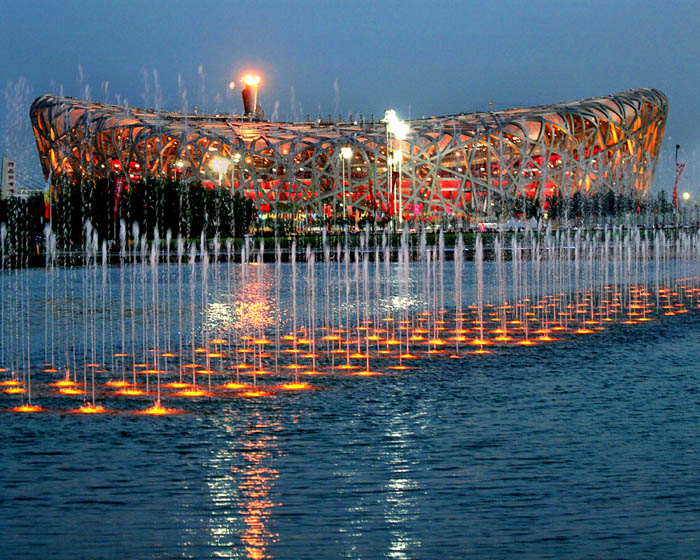
The Beijing National Stadium, commonly called the Bird's Nest (鸟巢), is the primary large-capacity sports and events arena in Beijing, China. Officially marketed as the National Stadium, it was designed as the focal venue for the 2008 Summer Olympics and the Paralympics. Its distinctive exposed steel lattice gives the structure a nest-like appearance that has become an international symbol of the 2008 Games. For more background and technical details see the stadium information page linked as the National Stadium.
Image gallery
10 Images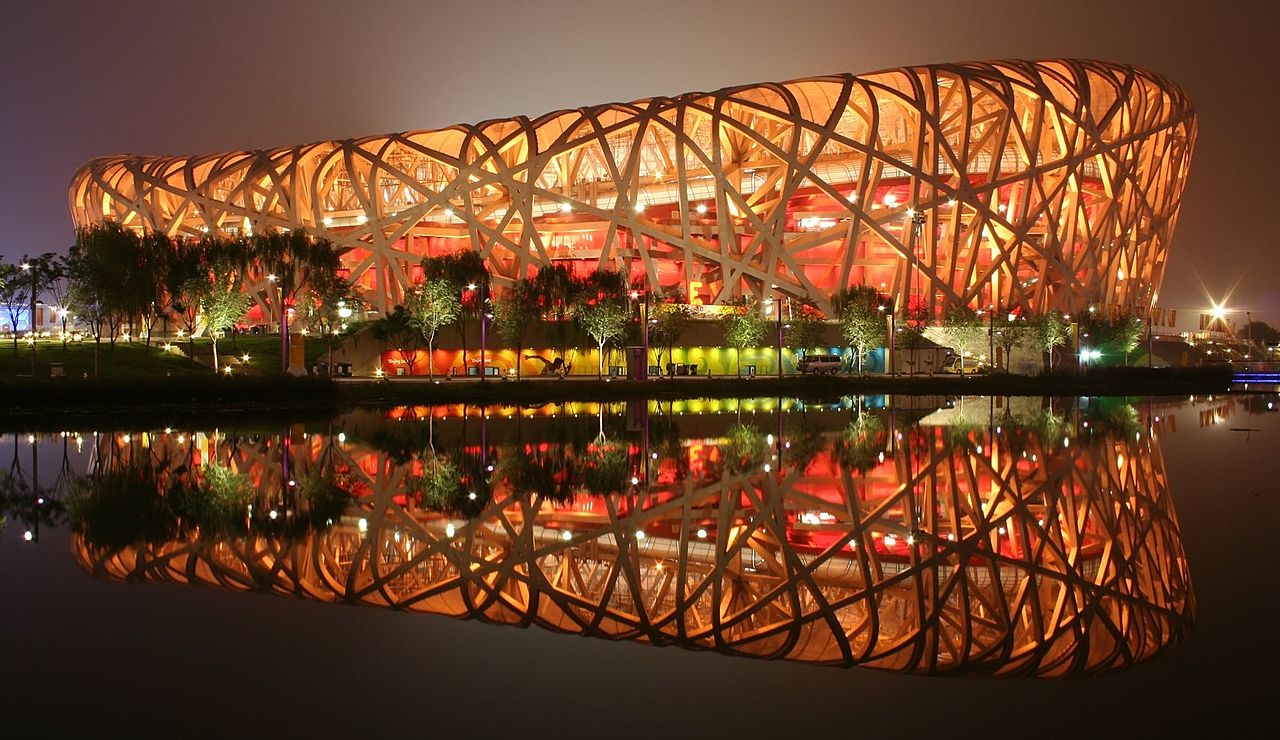


Design and structure
The stadium was conceived by Swiss architecture firm Herzog & de Meuron, with Chinese artist and consultant involvement, and combines an open bowl with an irregular outer shell of crisscrossing steel. The lattice both defines the building’s aesthetic and acts structurally, supporting seating, lighting and services. Internally the seating was arranged so that the eastern and western stands rise higher than the northern and southern sections to improve sightlines for spectators. A planned maximum of roughly 100,000 spectators was scaled down during construction: initial permanent reductions and later removal of temporary seats resulted in a typical operating capacity of about 80,000.
During planning and construction, attention was paid to sustainability and year-round comfort. Rainwater harvesting and purification systems capture runoff for reuse, and embedded piping under the playing surface can collect or redistribute ground heat to moderate temperatures seasonally. Night-time illumination and ventilation systems were integrated so the venue can host cultural events as well as sports.
History and major events
Completed in time for the 2008 Olympic ceremonies and athletics competition, the Bird's Nest staged the Games’ opening and closing spectacles and many track and field events. In the years that followed it hosted a variety of international and domestic occasions, including the 2009 Race of Champions, a 2010 friendly involving English Premier League players and local clubs, and the 2011 Supercoppa Italiana football match. It also served as the main stadium for the 2015 IAAF World Championships in Athletics and later accommodated ceremonies for the 2022 Winter Olympics. The facility has been adapted for concerts, exhibitions and occasional football matches; however, maintaining a steady calendar of high‑revenue events has been a recurring challenge.
Uses, legacy and adaptations
After the Olympics many large venues worldwide face the task of balancing maintenance costs with public use; the Bird's Nest was no exception. Proposals to add commercial uses such as retail space, restaurants and a hotel nearby were promoted as ways to increase daily activity and financial sustainability. At the same time the stadium attracts tourists and architectural interest, offering guided visits and night lighting displays. Event operators have modified the interior and auxiliary spaces to accommodate shows, corporate gatherings and seasonal sporting fixtures.
Notable facts and distinctions
- Nickname: Bird's Nest, from the interwoven steel shell.
- Primary purpose: Built for the 2008 Olympic and Paralympic Games (Olympics, Paralympics).
- Capacity: Initial designs allowed near 100,000; permanent arrangements now seat roughly 80,000.
- Cost and investment: Construction cost was reported in public sources; the complex spurred additional urban development plans to increase use.
- Sustainability: Rainwater collection, purification and ground-coupled thermal systems are incorporated into operations.
- Events: Hosted athletics world championships, international football and exhibition matches, plus high-profile ceremonies and concerts; see links on official pages and event summaries (football).
As an architectural landmark and functioning events venue, the Beijing National Stadium continues to represent a blend of celebratory symbolism and practical adaptation. Its iconic form remains one of Beijing’s most photographed modern structures while ongoing management choices determine how frequently and diversely it is used in the years after its Olympic debut.
Questions and answers
Q: What is the Beijing National Stadium also known as?
A: The Beijing National Stadium is also known as the Bird's Nest.
Q: When was the Beijing National Stadium built?
A: The Beijing National Stadium was built for use during the 2008 Summer Olympics and Paralympics.
Q: How much did the construction of the Beijing National Stadium cost?
A: The construction of the Beijing National Stadium cost US$423 million.
Q: What facilities are planned to be built near the Beijing National Stadium?
A: A shopping mall and a hotel are planned to be built near the Beijing National Stadium.
Q: Why were 9,000 seats removed from the original design of the stadium?
A: 9,000 seats were removed from the original design of the stadium in order to improve sightlines.
Q: What events have been hosted at the Beijing National Stadium after the 2008 Olympics?
A: The Beijing National Stadium has hosted events such as a friendly football match between Premier League team Birmingham City and Beijing Guoan, the Supercoppa Italiana, and the 2015 World Championships in Athletics.
Q: What future events will be hosted at the Beijing National Stadium?
A: The Beijing National Stadium will host the 2022 Winter Olympics and 2022 Winter Paralympics.
Related articles
Author
AlegsaOnline.com Beijing National Stadium (Bird's Nest) Leandro Alegsa
URL: https://en.alegsaonline.com/art/10152
Sources
- minneapolisfed.org : "Consumer Price Index (estimate) 1800–2008"
- arup.com : "Beijing National Stadium, Olympic Green"
- latimes.com : "Beijing's Olympic building boom becomes a bust"
- en.beijing2008.cn : "Architect: After-Games use is taken into consideration"
- en.beijing2008.cn : "Bird's Nest welcomes rain"
- en.beijing2008.cn : "A green Bird's Nest"
- en.beijing2008.cn : "Boxes inside 'Bird's Nest'"
- autosport.com : "Race of Champions moves to Beijing"
- iaaf.org : "Beijing selected to host 2015 World Championships"