
Big Ben — the bell, the clock and the Elizabeth Tower of Westminster
Big Ben is the popular name for the great bell in the clock tower at the Palace of Westminster. The tower is officially Elizabeth Tower; the term also refers informally to the clock and building.
Overview
"Big Ben" is commonly used to mean the great bell that sounds the hours in the clock at the north end of the Palace of Westminster in London, but the name is often applied to the whole clock and its tower. The tower that houses the clock was officially renamed Elizabeth Tower in 2012 as a tribute to the Diamond Jubilee of Queen Elizabeth II. The complex of tower, clock faces and bell has become one of the most recognisable symbols of the United Kingdom and of London in particular.
Image gallery
10 Images




Design and components
The ensemble consists of three parts commonly discussed as separate things: the bell itself, the clock mechanism and the masonry tower. The hour bell—what many people mean by "Big Ben"—hangs within the tower and is struck to mark the hours. The clock mechanism, noted for its accuracy when completed in the mid-19th century, drives four external clock dials that are visible from the surrounding area. The structure enclosing them provides the Gothic Revival exterior that makes the landmark visually distinctive.
History and naming
The clock and bell were completed in 1859 after the rebuilding of the Palace of Westminster. The clock mechanism was designed by Edmund Beckett Denison and produced by nineteenth-century clockmakers; the bell was cast and installed to sound the hourly chimes. The origin of the nickname "Big Ben" is not certain: it is widely attributed either to Sir Benjamin Hall, who oversaw public works at the time, or to the prizefighter Benjamin Caunt. Whatever its origin, the name stuck and is now used worldwide.
Operation and notable interruptions
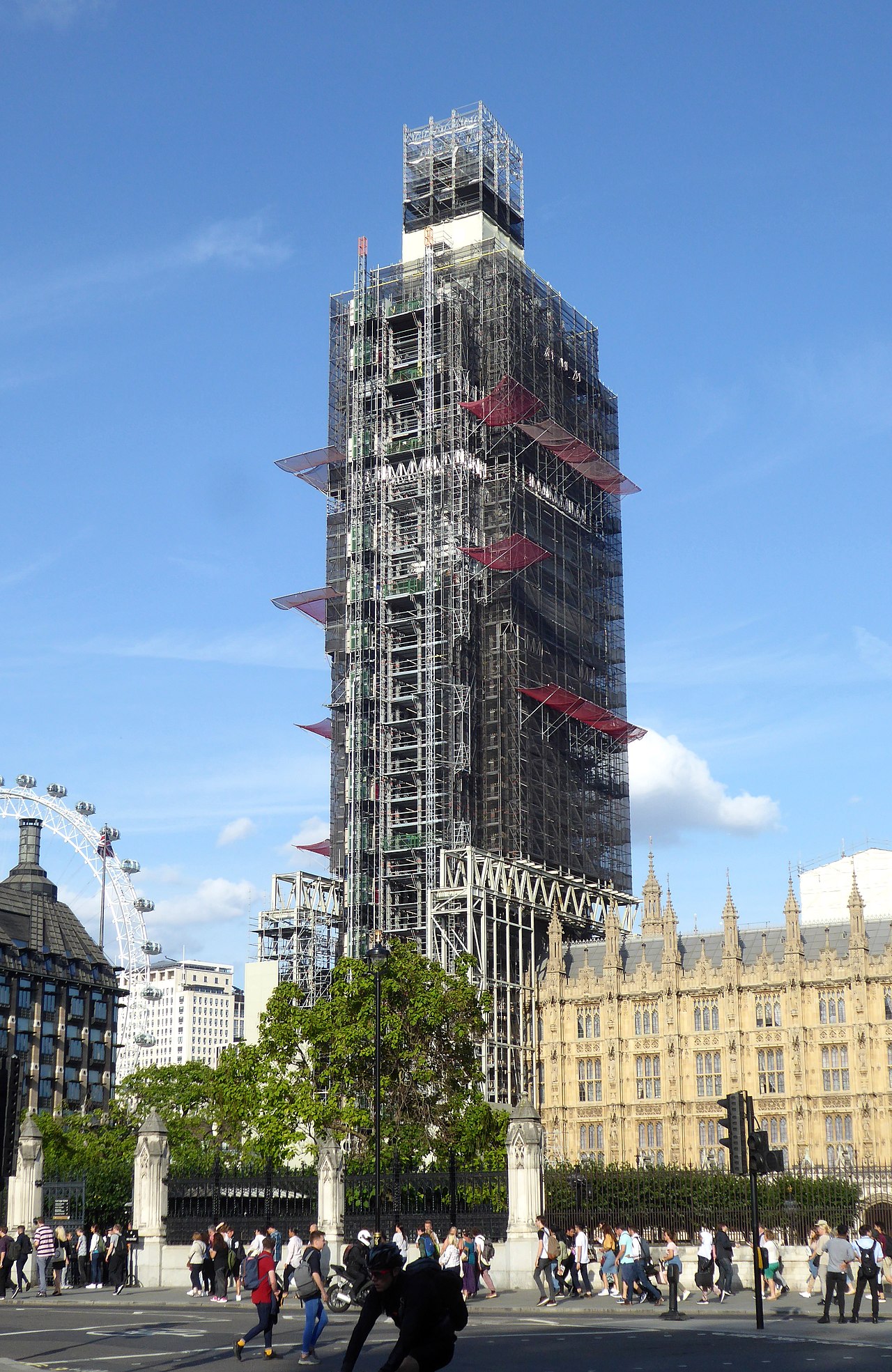
The clock has kept time for well over a century and a half, with occasional interruptions for maintenance and repair. A notable breakdown in 1976 required months of repair work. More recently, the tower underwent a major conservation project beginning in 2017 during which the regular hourly ringing of the bell was curtailed; however, the chimes were preserved for special occasions such as New Year and Remembrance Day. The careful conservation work addressed both the clock mechanism and the stonework of the tower.
Cultural significance and public access
Big Ben and the Elizabeth Tower appear frequently in film and television establishing shots of London and are invoked in speeches and media to signify the UK government or London life. The bell's sound is an audible icon recognised internationally. Access to the tower has historically been limited; tours and visits are controlled by the parliamentary authorities for safety and conservation reasons, and the site remains a major tourist attraction viewed from the exterior and surrounding precincts such as Westminster and the River Thames.
Facts, distinctions and links
- The term "Big Ben" strictly refers to the bell, but in everyday use it also denotes the clock and the tower.
- The tower's official renaming to Elizabeth Tower in 2012 marked the Diamond Jubilee of that celebration and is often cited in discussions of modern landmarks.
- The bell and clock sit at the north end of the Houses of Parliament; for information about the parliamentary complex see the Houses of Parliament and the Westminster area.
- For detailed technical and historical sources on the bell and mechanism, consult specialised accounts and archives related to the tower and its builders, including material linked from resources about the bell.
The Elizabeth Tower and its famous bell remain a focal point in discussions of architectural conservation, national identity and historic engineering. While the structure has been altered and repaired over time, its role as a civic timekeeper and cultural emblem endures.
Related articles
Author
AlegsaOnline.com Big Ben — the bell, the clock and the Elizabeth Tower of Westminster Leandro Alegsa
URL: https://en.alegsaonline.com/art/11317
Sources
- whitechapelbellfoundry.co.uk : "The story of Big Ben"
- bbc.co.uk : Clock Tower renamed Elizabeth Tower for Jubilee
- msnbc.msn.com : msnbc.msn.com/id/31002198/
- standard.co.uk : "Big Ben almost entirely covered in scaffolding as repair work gathers pace"
- post-gazette.com : "Big Ben mired in a rare slump for a winner"
- commons.wikimedia.org : Big Ben