
The Spy Who Came in from the Cold
John le Carré's 1963 Cold War novel about disillusioned agent Alec Leamas, a bleak, morally complex view of espionage that overturned glamorous spy fiction. Adapted to film in 1965 starring Richard Burton.
Overview
Published in 1963, The Spy Who Came in from the Cold established John le Carré as a leading voice in Cold War literature. Rather than glamour or gadgetry, the novel presents a hard-edged, morally ambiguous portrait of espionage focused on Alec Leamas, a burned-out British agent sent into East Germany as part of a calculated deception. The work is often cited as a corrective to romanticised spy stories of the era and helped redefine the genre as politically and psychologically grounded. For background on the Cold War setting see Cold War espionage, and for the author see John le Carré.
Image gallery
2 Images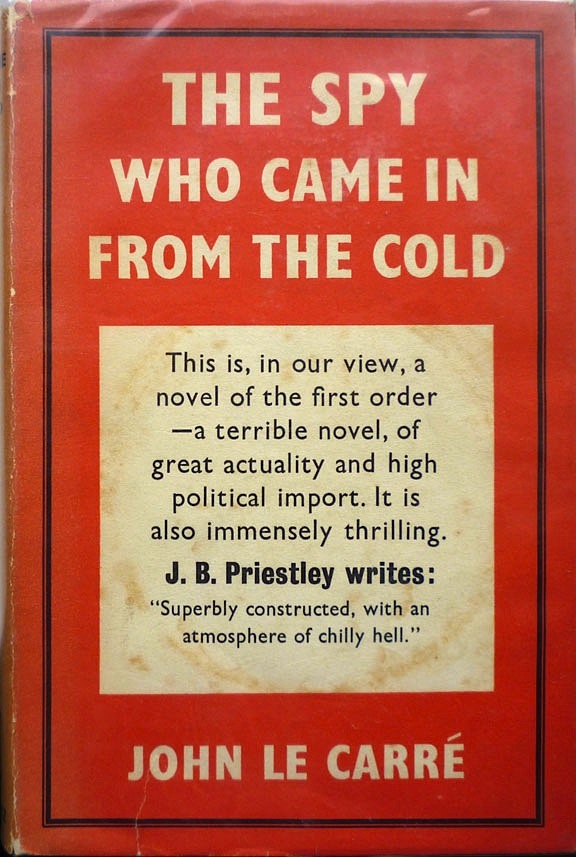
Structure and principal elements
The narrative follows Leamas through recruitment, a staged fall from grace, and an operation intended to discredit a powerful East German intelligence figure. The story emphasises process and consequence over action set pieces, and scenes often interrogate the human cost of clandestine work. The backdrop of postwar Europe and the divided German states is central to the plot; readers interested in that context may consult resources on East Germany.
Characters and notable aspects
- Alec Leamas — the novel's weary protagonist and point of moral scrutiny.
- Supporting players — colleagues, handlers and opponents who embody competing ethical stances.
- Setting and tone — bleak, procedural, and sceptical about ideology and statecraft.
Themes and style
Major themes include betrayal, the corrosion of idealism, and the expendability of individuals within state systems. Le Carré's prose is restrained and precise, favouring psychological detail and institutional critique. The novel interrogates whether ends can ever justify ruthless means and shows how truth can be obscured by layers of deception.
Publication, reception and influence
On release the book attracted widespread critical attention for its unromantic depiction of espionage. It contributed to a shift in public expectations about spy fiction, influencing later writers and film-makers who sought realism and ethical complexity rather than pure escapism.
Film adaptation
The novel was adapted for the screen in 1965 by director Martin Ritt and starred Richard Burton as Alec Leamas. The film preserved much of the book's dour mood and moral ambiguity, and it remains a frequently cited cinematic interpretation that introduced the story to a wider audience.
The Spy Who Came in from the Cold continues to be read for its uncompromising view of Cold War politics, its rich character study, and its decisive role in transforming spy fiction into a medium capable of serious moral inquiry.
Related articles
Author
AlegsaOnline.com The Spy Who Came in from the Cold Leandro Alegsa
URL: https://en.alegsaonline.com/art/98892