
The Story of the Three Bears (Goldilocks): origins, versions, and cultural impact
A concise, neutral account of the tale of the Three Bears: its plot, evolution from Southey's version to the Goldilocks figure, themes, common variants and lasting cultural influence.
Overview
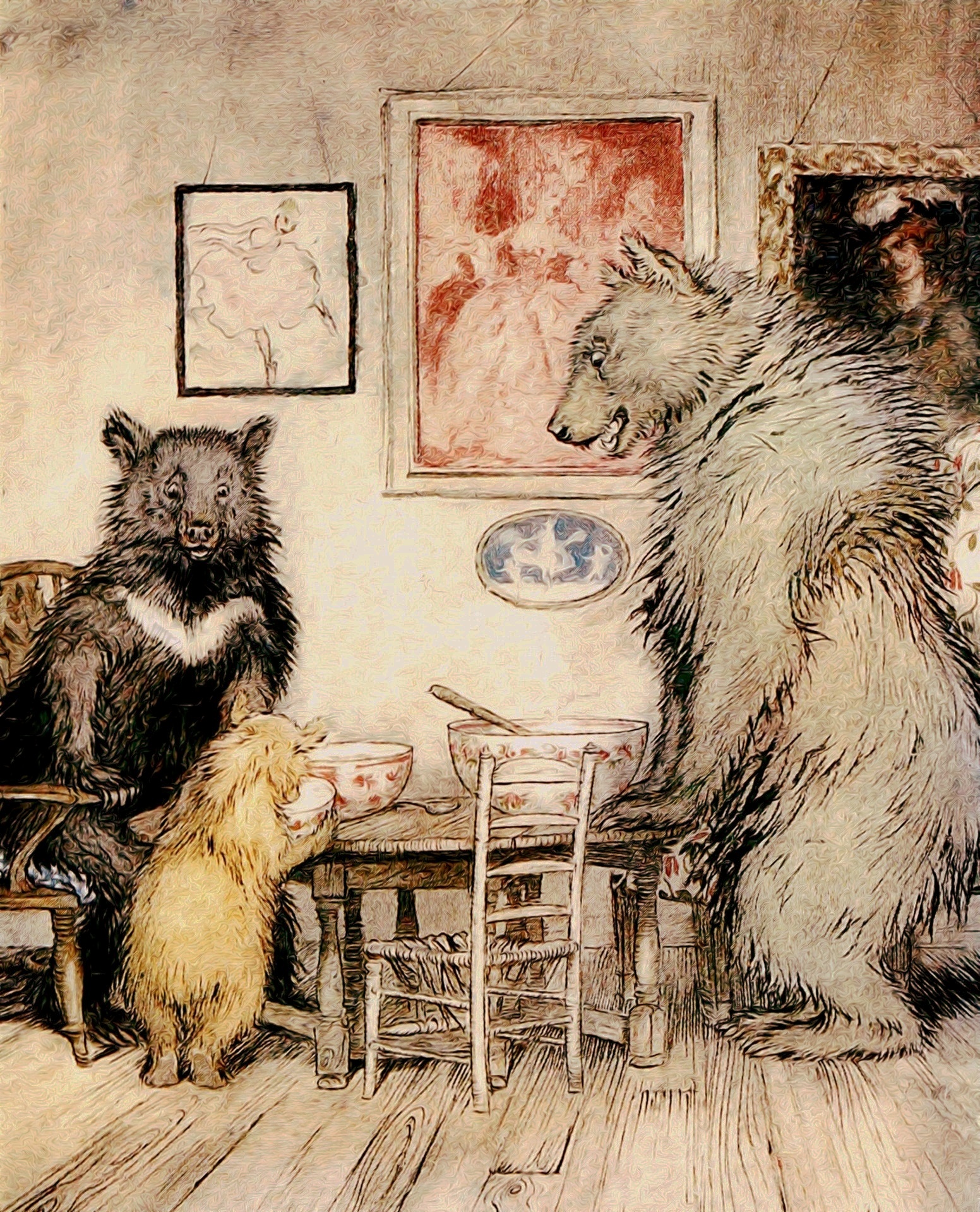
"The Story of the Three Bears" is a short fairy tale widely known in the English-speaking world. At its core the tale describes a stranger entering the home of three bears in their absence, sampling their food and furniture, and being discovered when the bears return. The basic pattern — a set of three, escalating tests (too hot/too cold, too big/too small, etc.), and a discovery — has made the story memorable and easily adaptable.
Image gallery
8 Images




Plot and common elements
The most familiar modern version features a family of three bears, often named Papa Bear, Mama Bear and Baby Bear, and a young intruder who tests porridge, chairs and beds until finding one that is "just right." Earlier forms of the tale described the intruder as an old woman; later retellings replaced her with a young girl popularly known as Goldilocks. The narrative relies on repetition and gradual variation to teach pattern recognition and to build suspense.
Origins and development
The tale circulated in oral form before being written down and revised by authors in the 19th century. A well-known printed version dates from the early 1800s and presented an older woman as the trespasser. Subsequent retellings altered characters, tone and emphasis to suit changing tastes for children’s literature, introducing the golden-haired girl and softening or sharpening the moral message depending on the edition. For readers interested in specific historical texts or scholarly discussion, see the original publications and modern commentary: original text, historical notes.
Themes, interpretations and uses
The story can be read in multiple ways: as a cautionary tale about trespass and respect for others’ property; as a domestic parable about comfort and order; or simply as a playful exercise in variation and rhythm for young listeners. Educators use the tale to teach sequencing, comparative language (too big/too small), and social boundaries. Psychologists and scientists have also borrowed the familiar phrase "Goldilocks" to describe a middle or optimal state — for example the "Goldilocks principle" in developmental psychology and the notion of a "Goldilocks zone" in astronomy, meaning conditions that are "just right" for a particular outcome.
Adaptations and cultural impact
The tale has been adapted in many media: illustrated children’s books, animated shorts, stage pieces, operatic miniatures and films that range from faithful retellings to parodies. Modern adaptations often play with perspective (telling the story from the bears’ point of view), moral tone (comic versus cautionary), or genre (mystery, fantasy, satire). Notable types of adaptations include:
- Picture-book retellings that recast the intruder as a child or emphasize domestic detail.
- Animated and live-action short films that exploit visual humor and timing.
- Theatrical and musical treatments that expand characters and motives.
For examples and media entries, see curated adaptation lists and multimedia resources: adaptations overview, animated works, film and stage, musical treatments.
Variations and notable facts
Different cultures and editors have modified the tale’s details: the number and relationship of the bears, the age and motive of the intruder, and the ending (flight, punishment, or reconciliation). The transformation from an "ugly old woman" in early printings to the archetypal Goldilocks girl reflects broader changes in attitudes toward childhood, gender and the intended audience for illustrated stories. The tale’s memorable structure, simple moral possibilities and vivid imagery account for its persistence and for the way its language has entered everyday speech.
Further reading: historical editions, scholarly introductions and curated multimedia guides offer paths into both the tale’s origins and its many lives in modern culture. See links above for starting points.
Questions and answers
Q: Who was "The Story of the Three Bears" written by?
A: "The Story of the Three Bears" was written by Robert Southey.
Q: When was "The Story of the Three Bears" first published?
A: "The Story of the Three Bears" was first published in 1837 in a collection of Robert Southey's essays and stories.
Q: What is the story about?
A: The story is about an ugly old woman who enters the house of three bachelor bears during their absence, eats their food, breaks a chair, and sleeps in a bed. She runs away when discovered.
Q: How did the characters change over time?
A: In time, the three bachelor bears became Papa, Mama, and Baby Bear. The old woman became a little girl called Goldilocks.
Q: What is the significance of the story?
A: The story supports several interpretations.
Q: How has the story been adapted?
A: The story has been adapted to animated movies, a live action movie, and a short opera.
Q: What genre does "The Story of the Three Bears" belong to?
A: "The Story of the Three Bears" belongs to the literary fairy tale genre.
Related articles
Author
AlegsaOnline.com The Story of the Three Bears (Goldilocks): origins, versions, and cultural impact Leandro Alegsa
URL: https://en.alegsaonline.com/art/98914
Sources
- books.google.com : "The Rule of Three"
- books.google.com : British Folk Tales and Legends · archive.org
- books.google.com : Children's Literature
- disneyshorts.org : "Disney: Goldilocks and the Three Bears"
- books.google.com : The British Folklorists
- bcdb.com : "MGM: Goldilocks and the Three Bears"
- boosey.com : "Roald Dahl's Goldilocks (1997)"
- books.google.com : Handbook of Psychobiography
- books.google.com : Encyclopedia of Folk Heroes
- books.google.com : The Annotated Classic Fairy Tales