
The Story of a Shipwrecked Sailor (Relato de un náufrago)
A narrative non-fiction account by Gabriel García Márquez, first serialized in 1955 and published in book form in 1970, recounting a sailor's survival at sea and its literary and journalistic impact.
Overview
The Story of a Shipwrecked Sailor is a work of narrative non-fiction by Gabriel García Márquez that reconstructs a real seafaring survival. Written in the author's distinctive clear, evocative prose, the account blends journalistic reporting with literary storytelling to follow one person's ordeal after a shipboard accident and his return to land.
Image gallery
2 Images
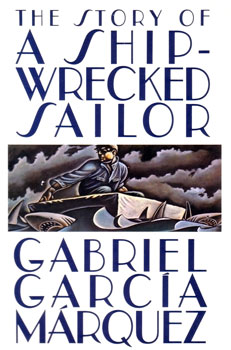
Content and themes
The book is based on extended interviews and describes the physical and psychological demands of surviving at sea. Central themes include endurance, isolation, chance, and the human instinct to tell one's story. García Márquez applies narrative techniques more commonly found in fiction to present facts with compelling pace and detail.
Publication history
The material first reached readers in serialized form in a Colombian newspaper in 1955. Those installments introduced the public to the sailor’s testimony and established the piece as an unusual hybrid of reporting and literature. The complete text was later issued as a book in 1970. The work is often described as a non-fiction narrative and is tied to the author’s early career in journalism; García Márquez would later receive the Nobel Prize in Literature.
Approach and structure
Rather than relying on dramatic embellishment, the narrative emphasizes careful, plain description and chronological reconstruction of events. It foregrounds the voice of the survivor—whose testimony García Márquez recorded at length—so the reader encounters the experience through a first-person perspective that preserves immediacy while shaping the account into a cohesive story. This method illustrates how reportage and literary craft can coexist.
Reception and legacy
The piece attracted attention for its vivid telling and for raising questions about accountability and the responsibilities of institutions when accidents occur. It has been studied as an example of literary journalism and remains part of discussions about García Márquez’s development as a writer. Readers interested in the author's life and methods will find in this work an early demonstration of his ability to humanize factual material. For further context on the author and the book, see resources linked to the writer's biography and critical studies: Gabriel García Márquez.
Notable aspects
- Blends factual reporting with narrative techniques.
- Emphasizes survivor testimony and close attention to detail.
- Serves as a bridge between García Márquez's journalism and his later literary fame.
Related articles
Author
AlegsaOnline.com The Story of a Shipwrecked Sailor (Relato de un náufrago) Leandro Alegsa
URL: https://en.alegsaonline.com/art/98911