
The Story of Mankind — Hendrik Willem van Loon's 1921 history for young readers
An illustrated, narrative history by Hendrik Willem van Loon (1921). Written for children, it traces human history through to the aftermath of World War I and won the first Newbery Medal in 1922.
The Story of Mankind is a narrative history first published in 1921 by Hendrik Willem van Loon. Intended for young readers and for his own grandchildren, the book presents a broad, chronological account of human events from prehistoric times to the era in which the author lived. In recognition of its importance to children’s literature it received the first-ever Newbery Medal in 1922.
Image gallery
1 Image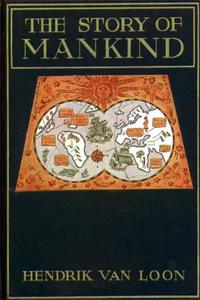
Purpose, scope and tone
Van Loon wrote with the explicit aim of making history approachable and morally instructive. The book covers early human communities, classical civilizations, medieval and modern developments, and concludes with the international situation following the First World War. Throughout, the tone is conversational and anecdotal: events are presented as stories about people and ideas rather than as abstract timelines. Van Loon also included drawings and map-like sketches to help readers visualize distant times and places.
Structure and notable features
Rather than a dense scholarly treatise, the work uses a straightforward, chronological narrative broken into readable sections. Its features include:
- short chapters that focus on key figures, inventions, or turning points;
- manual illustrations and simple maps that accompany the text;
- a didactic bent: the author often links historical episodes to lessons about civility, learning, and peace;
- clear explanations aimed at young or general readers rather than specialists.
Historical context and intent
Written in the aftermath of the Great War, the book reflects contemporary hopes that knowledge of the past could reduce ignorance and the likelihood of future conflict. Van Loon believed that educating children about the successes and mistakes of humanity would foster understanding and compassion. His perspective mirrors widespread postwar interest in international cooperation and reform.
Reception, influence and later view
The immediate reception was positive among educators and family readers; the Newbery recognition helped establish the book as a landmark in children’s nonfiction. Over time it became a popular classroom resource and a gateway for young readers to world history. Later editions and reprints kept the title in circulation, and it has been translated into several languages. Modern readers and scholars, however, often note its early-20th-century viewpoint: some narratives are simplified and Eurocentric by current standards, and commentators suggest using it alongside more recent, diverse histories.
Uses and legacy
Today the book is valued both as a historical artifact of how history was taught to children a century ago and as an example of popularizing complex material for a young audience. Teachers and parents still cite it for its engaging storytelling, while historians point to its role in promoting interest in the past. For further context on the author and the period, see resources about Hendrik Willem van Loon, the aims of history education, and the international aftermath of World War I.
Questions and answers
Q: When was The Story of Mankind first published?
A: The Story of Mankind was first published in 1921.
Q: What was significant about The Story of Mankind winning the Newbery Medal?
A: The Story of Mankind was the first book to ever win the Newbery Medal.
Q: Who wrote The Story of Mankind?
A: The Story of Mankind was written by Hendrik Willem van Loon.
Q: Why did Hendrik Willem van Loon write The Story of Mankind?
A: Hendrik Willem van Loon wrote The Story of Mankind for his grandchildren because he believed that all children need to know about history.
Q: What does The Story of Mankind tell readers about?
A: The Story of Mankind tells readers about how people have lived and what things people have done that made a big change in the world, starting with cave men and ending with the people of his time right after World War I.
Q: What was Hendrik Willem van Loon's hope for children who read The Story of Mankind?
A: Hendrik Willem van Loon hoped that if he taught children about history, they would not want to fight wars when they grew up.
Q: What did people want just after World War I, according to The Story of Mankind?
A: According to The Story of Mankind, just after World War I, lots of people wanted to make it so that there would never be another war.
Related articles
Author
AlegsaOnline.com The Story of Mankind — Hendrik Willem van Loon's 1921 history for young readers Leandro Alegsa
URL: https://en.alegsaonline.com/art/98912