
The Starry Night — Vincent van Gogh's 1889 painting
A concise encyclopedia article on Vincent van Gogh's The Starry Night (1889): its composition, style, historical context, legacy, and notable features, with links for further information.
Overview
The Starry Night is one of the most recognized paintings by Dutch artist Vincent van Gogh. Executed in 1889 while he was under care in a mental asylum, it depicts a nocturnal sky filled with luminous stars and a bright moon above a tranquil village. The work is celebrated for its dramatic, curling brushstrokes and bold, expressive use of color that transform a night scene into a vivid, emotional image. The painting is part of the collection at a major modern art museum; see the museum page for the current display and collection information.
Image gallery
10 Images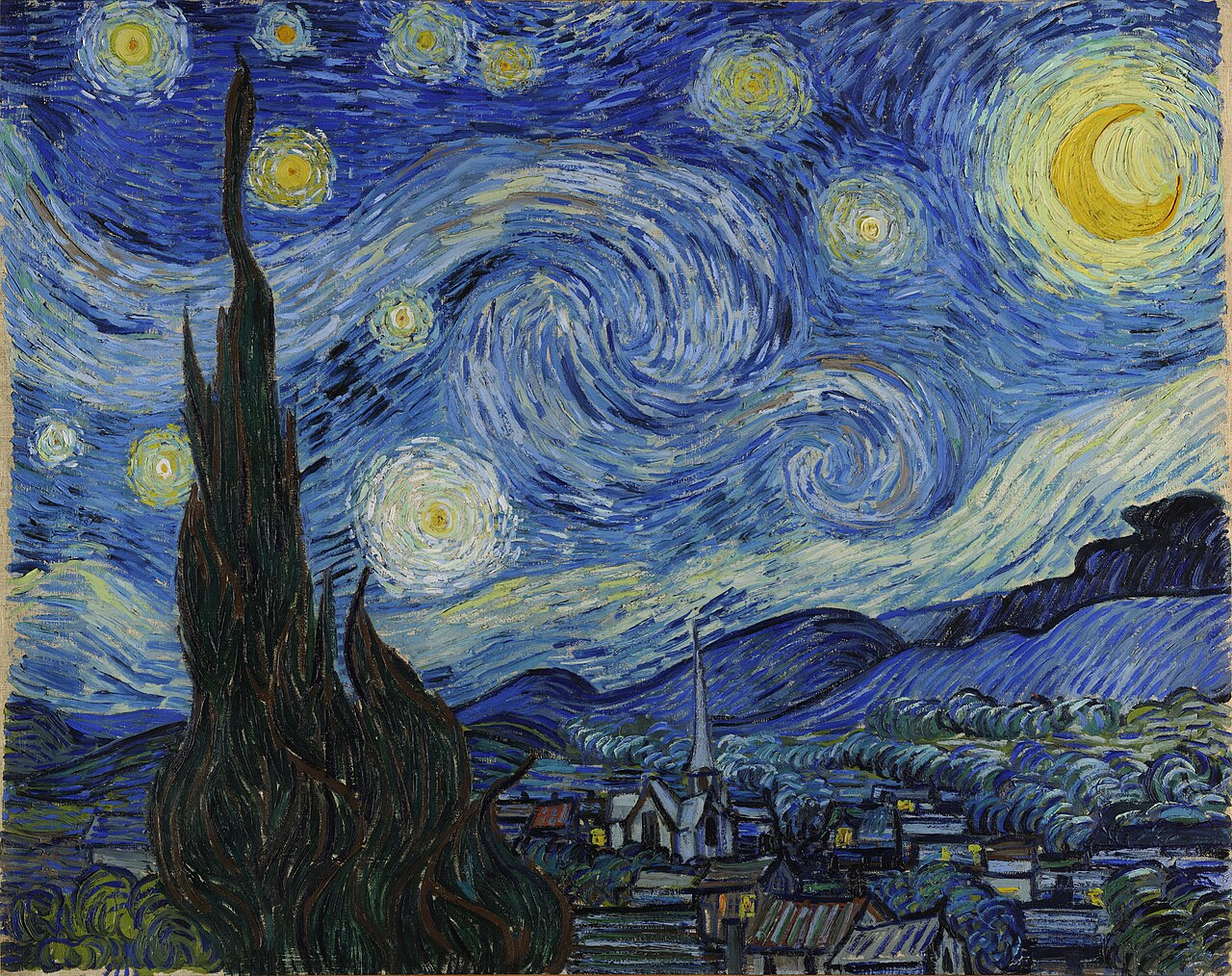



Composition and style
Van Gogh arranged the composition around a sweeping, energetic sky that dominates the upper two thirds of the canvas. Swirling forms and radiating halos of light give the impression of movement and turbulence, while a dark cypress tree rises at left to connect earth and sky. A small, quiet village with church spire anchors the lower portion, providing contrast to the celestial activity. The painting exemplifies late 19th‑century developments that emphasized personal expression and visible brushwork rather than photographic realism.
Materials and technique
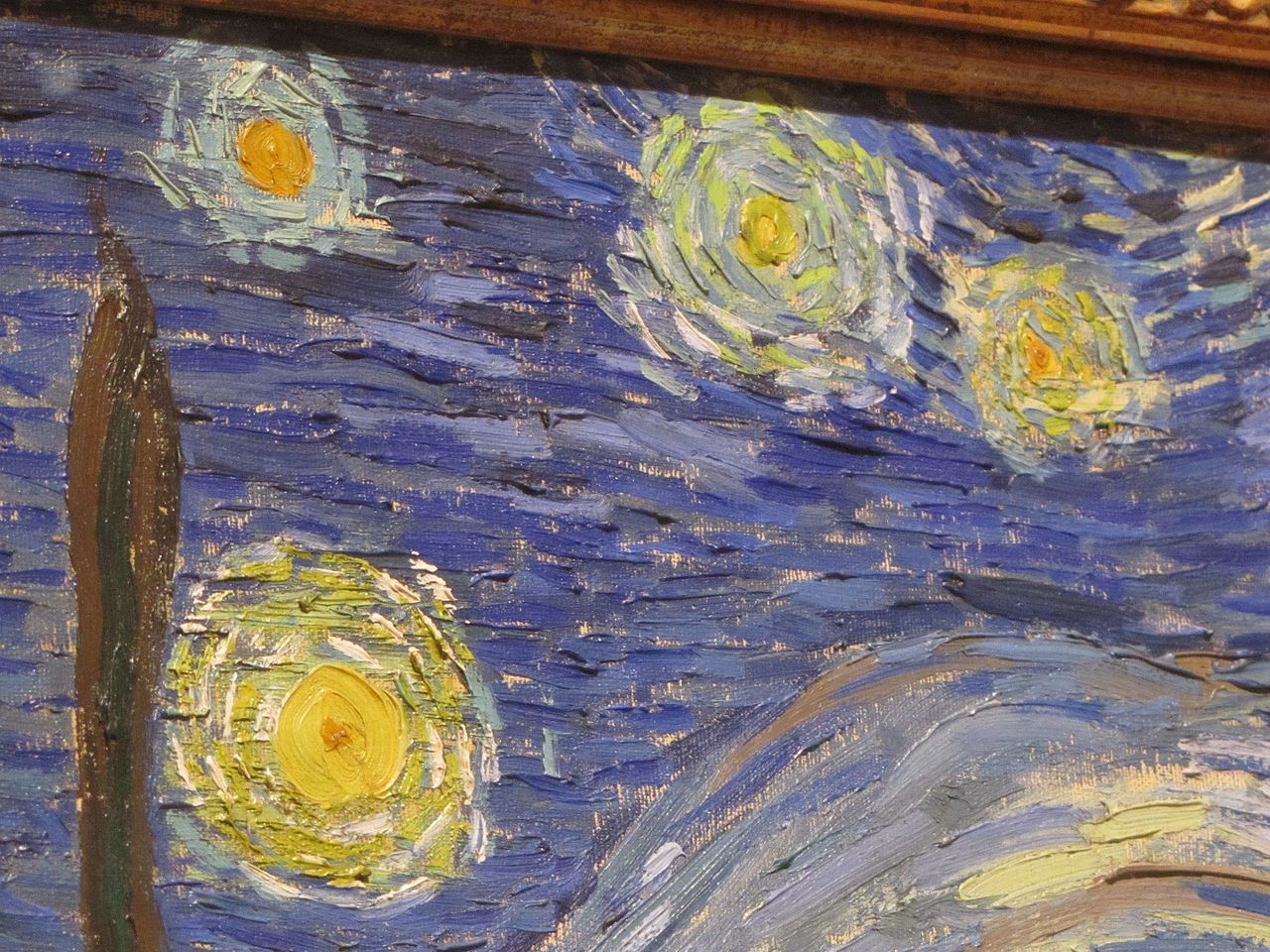
Executed in oil on canvas, the work displays thickly applied paint and short, rhythmic strokes. Van Gogh layered color to create luminosity and texture; blues and yellows play against each other to heighten contrast and emotional intensity. The surface is often cited as an example of how technique and temperament combine to produce a distinctive visual language.
History, context and significance
Painted during van Gogh’s time at an asylum in Saint-Rémy-de-Provence, the image is believed to be based partly on memory and partly on observations of the night sky seen from his window and the surrounding landscape. It belongs to his final productive period and has become emblematic of his artistic legacy. Scholars and the public alike find the work rich in interpretive possibilities; it has been studied for its artistic innovations as well as its reflections of the artist’s inner life. For more scholarly and public resources, consult further reading.
Legacy and notable facts
- The Starry Night is widely reproduced and referenced in literature, music, and popular culture.
- It is frequently discussed in studies of post‑impressionism and expressionist tendencies in modern art.
- The painting has inspired scientific and artistic investigations into its swirling patterns and color harmonies.
Because of its striking imagery and emotional power, The Starry Night remains a central work for understanding van Gogh’s contribution to modern painting and the broader shift toward art that emphasizes individual vision.
Related articles
Author
AlegsaOnline.com The Starry Night — Vincent van Gogh's 1889 painting Leandro Alegsa
URL: https://en.alegsaonline.com/art/98901
Sources
- webexhibits.org : Webexhibits.org