
The Phantom of the Opera
Gaston Leroux's 1910 gothic novel about a disfigured musical genius haunting the Paris Opera House, celebrated for its characters, themes of obsession and isolation, and many adaptations.
Overview
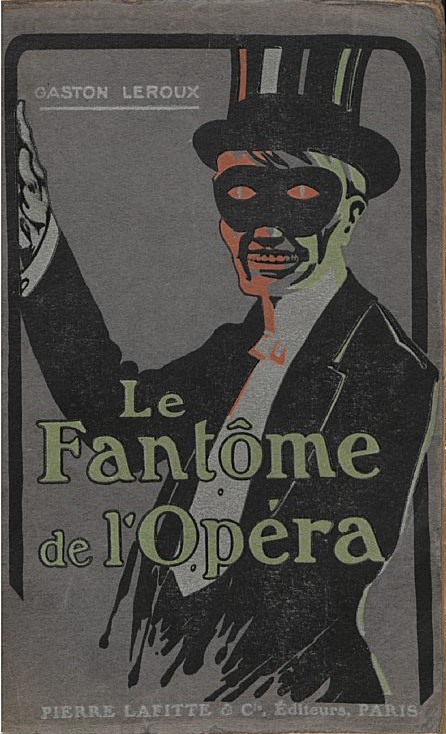
The Phantom of the Opera is a gothic novel by the French journalist and novelist Gaston Leroux, first published in 1910 under the French title Le Fantôme de l'Opéra. Leroux framed the narrative as a partly factual mystery set in the Palais Garnier, the Paris opera house, and populated it with vivid figures and dramatic episodes. The work blends elements of romance, detective fiction and horror, and has become one of the most enduring works of popular fiction from the early 20th century.
Image gallery
3 Images

Plot summary
The central story follows Christine Daaé, a young soprano whose talent and rise to prominence attract the attention of a mysterious, disfigured musical genius who lives beneath the opera house. Known to others as the Phantom and given the name Erik in many editions, he tutors Christine and exerts control over the theater through secret threats and sabotage. Christine is also loved by Raoul, a former childhood friend, and the resulting triangle of devotion, jealousy and violence drives the plot toward tragic and suspenseful confrontations. Key motifs include the Phantom's mask, his subterranean lair, and the contrast between outward beauty and inner humanity.
Main characters
- Erik (the Phantom) – a brilliant but disfigured musician and engineer who lives in hidden rooms beneath the opera house.
- Christine Daaé – an innocent and gifted young soprano whose voice and vulnerability attract the Phantom's protection and obsession.
- Raoul, Vicomte de Chagny – Christine's friend and romantic interest, who opposes the Phantom and seeks to rescue her.
- Supporting figures – company members, managers and patrons of the opera who respond in differing ways to the Phantom's interventions.
Publication and translations
Leroux published the novel in French in 1910; an English edition appeared soon after, helping the story reach an international readership. The narrative's mix of reportage and fiction encouraged many translators and editors to present editions with variant titles and introductions. For bibliographic and edition details see general references on the novel: novel edition information and for early English translations consult: English edition details.
Stage, film and other adaptations
The story has been adapted widely across media. The most commercially successful stage version is Andrew Lloyd Webber's 1986 musical, which emphasized romantic spectacle and memorable songs and remains a long-running international hit; further information is available on the musical page: Andrew Lloyd Webber's musical. Film adaptations date to the silent era, most famously Lon Chaney's 1925 performance, notable for its makeup and atmosphere (Lon Chaney 1925 film). Other film versions include a 1943 studio production starring Claude Rains, a 1962 Hammer Films interpretation with Herbert Lom, and the 2004 cinematic adaptation of Lloyd Webber's stage musical. The novel also inspired radio dramas, television movies, literary retellings, comics and loose reinterpretations such as the rock musical film The Phantom of the Paradise.
Themes and cultural legacy
The novel endures because it combines melodrama with archetypal characters: the tortured artist, the innocent ingenue and the rival lover. It explores themes of beauty and deformity, the social isolation of gifted outsiders, the nature of artistic genius and the ethics of control and revenge. Iconic images from the story—the mask, the underground lair, the falling chandelier in some adaptations—have entered popular culture and are frequently referenced or parodied in other works. The tale's influence extends across genres; for example, the heavy metal band Iron Maiden recorded a song titled "Phantom of the Opera" on their early self-titled album, showing the story's reach into music and subculture.
Interpretations and critical response
Critics and scholars have read the novel in multiple ways: as gothic melodrama, as a mystery with journalistic trappings, and as a study of social exclusion and bodily otherness. Different adaptations highlight different aspects—some emphasize horror and the Phantom's monstrous deeds, others stress tragic romance and psychological depth. The novel's flexible core has allowed creators to reinterpret characters and events according to changing tastes and cultural concerns.
Notable distinctions
- The original novel mixes detective-reporting techniques with gothic storytelling, which is often muted or reshaped in stage and screen versions.
- Adaptations vary in how sympathetic they make the Phantom; this affects tone from horror to tragic romance.
- The story's motifs and images have become part of broader popular culture, inspiring works in theater, film, literature, music and visual art.
The Phantom of the Opera remains a widely read and performed story whose combination of melodrama, mystery and music continues to invite new readings and adaptations.
Related articles
Author
AlegsaOnline.com The Phantom of the Opera Leandro Alegsa
URL: https://en.alegsaonline.com/art/98614