
The Pilgrim's Progress — John Bunyan's Christian allegory
John Bunyan's 1678 allegorical narrative of a pilgrim's journey toward the Celestial City. A foundational work of English devotional literature, widely translated and culturally influential.
Overview
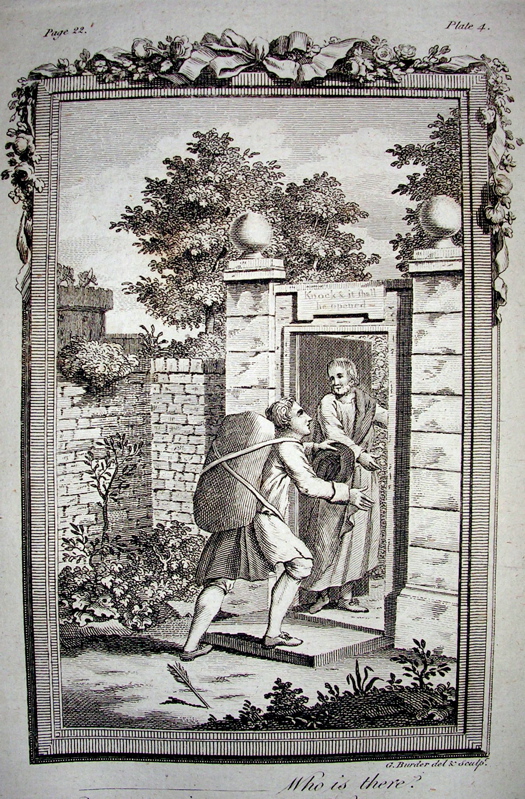
The Pilgrim's Progress is an English-language allegory written by John Bunyan and first published in two parts (the First Part, 1678; the Second Part, 1684). Its full title is The Pilgrim's Progress from this World to that which is to come. Presented as a dream narrative, it follows a protagonist named Christian as he leaves the City of Destruction and navigates spiritual and moral challenges on the road toward the Celestial City. The work is intentionally plain in language so that it could be read and understood by a wide audience, and it reflects Protestant, particularly Puritan, concerns about faith, repentance and perseverance. See a general introduction at The Pilgrim's Progress overview and an author biography at John Bunyan.
Image gallery
10 Images



Structure and main figures
The narrative is episodic, with each episode representing a moral, theological or psychological trial. Bunyan uses named places and characters as allegorical devices: the Slough of Despond, Vanity Fair, the Interpreter's House, and the Delectable Mountains appear alongside personified figures. Major characters include Christian (the pilgrim), Evangelist (the guide), Apollyon (an adversary), and companions such as Faithful and Hopeful. The Second Part introduces other journeys and perspectives, notably those of Christian's wife Christiana and her children.
- Christian — the principal pilgrim
- Evangelist — guide and moral instructor
- Interpreter — provides allegorical explanation
- Vanity Fair — a worldly distraction
- Celestial City — the ultimate goal
Historical background
Bunyan drew on his own life and the religious tensions of 17th‑century England. Born in Bedfordshire, he was a lay preacher and nonconformist whose activities brought him into conflict with the established church; he was imprisoned for several years for continuing to preach without a licence. The imagined journey in the book echoes both local geography and the spiritual landscape of the time. The First Part appeared while Bunyan was still alive and in the years after it was released the book circulated widely; the Second Part followed in 1684. Biographical context and trials of conscience are discussed in resources such as Bedfordshire and Bunyan and his imprisonment.
Themes, style and readership
The work explores conversion, sanctification, temptation, suffering, and assurance of salvation. Bunyan's style mixes plain speech with vivid imagery; its allegorical names and set pieces make theological points memorable. Because of its clear narrative and moral focus, the book was accessible to lay readers and used in devotional education. It has been significant in Protestant devotional practice and in the formation of popular ideas about spiritual progress and trial. For thematic studies see themes and literary style.
Reception, translations and influence
From the late 17th century onward, The Pilgrim's Progress achieved wide popularity. It has been translated into many languages, illustrated and adapted for stage, film, hymnody and children’s editions, and has been called one of the most important works in English devotional literature. It has had an enduring place in literary history and in the spiritual life of many Protestant communities. General reception history and adaptations are summarized at reception, translations, and adaptations.
Legacy and distinctions
Critics and readers often distinguish between the two parts: the First Part is usually praised for unity and imaginative power, while the Second Part expands the world and presents other perspectives, including female pilgrims, which was notable for the period. The book's allegorical method has influenced later writers and remains a key example of sustained Christian allegory. For further exploration, consult scholarly and public resources at studies and editions and modern readings.
Note: This article summarizes broadly known facts about the work and its author and points to general resources for readers seeking fuller historical, theological or literary discussion.
Questions and answers
Q: Who is the author of The Pilgrim's Progress?
A: The author of The Pilgrim's Progress is John Bunyan.
Q: When was The Pilgrim's Progress published?
A: The Pilgrim's Progress was published in two parts: the First Part in 1678, and the Second Part in 1684.
Q: What is the full title of The Pilgrim's Progress?
A: The full title of The Pilgrim's Progress is The Pilgrim's Progress from this World to that which is to come.
Q: What is The Pilgrim's Progress considered to be?
A: The Pilgrim's Progress is considered to be one of the most important books in English literature.
Q: What kind of book is The Pilgrim's Progress?
A: The Pilgrim's Progress is a Christian allegory.
Q: Where does the journey through The Pilgrim's Progress take place?
A: The journey through The Pilgrim's Progress takes place through the English county of Bedfordshire to London.
Q: Why was The Pilgrim's Progress written?
A: The Pilgrim's Progress was written to tell the idea of Christianity from a Protestant point of view and to illustrate the difficulties faced by a true Christian in keeping to the 'straight and narrow path'.
Related articles
Author
AlegsaOnline.com The Pilgrim's Progress — John Bunyan's Christian allegory Leandro Alegsa
URL: https://en.alegsaonline.com/art/98623
Sources
- bedfordmuseum.org : "Bedford Museum article on Pilgrim's Progress"
- gutenberg.org : gutenberg.org/ebooks/13240
- en.wikisource.org : The Pilgrim's Progress/Part II/Section 1: Go to section 1.2.3.1
- en.wikisource.org : The Pilgrim's Progress/Part I/Section 5
- oystermouthparish.com : "Hymns we love: Who would true valour see"
- hymnlyrics.org : "Who Would True Valor See?"