
The Great Wave off Kanagawa
Iconic ukiyo-e woodblock print by Katsushika Hokusai (c.1830–1833), showing a towering wave threatening boats with Mount Fuji in the background; a landmark of Japanese art and global influence.
The Great Wave off Kanagawa is a color woodblock print by the Japanese artist Katsushika Hokusai, created about 1830–1833. It is the best-known sheet from Hokusai's print series Thirty-six Views of Mount Fuji and has come to symbolize both the aesthetic of Edo-period Japan and the broader global interest in Japanese visual culture.
Image gallery
10 Images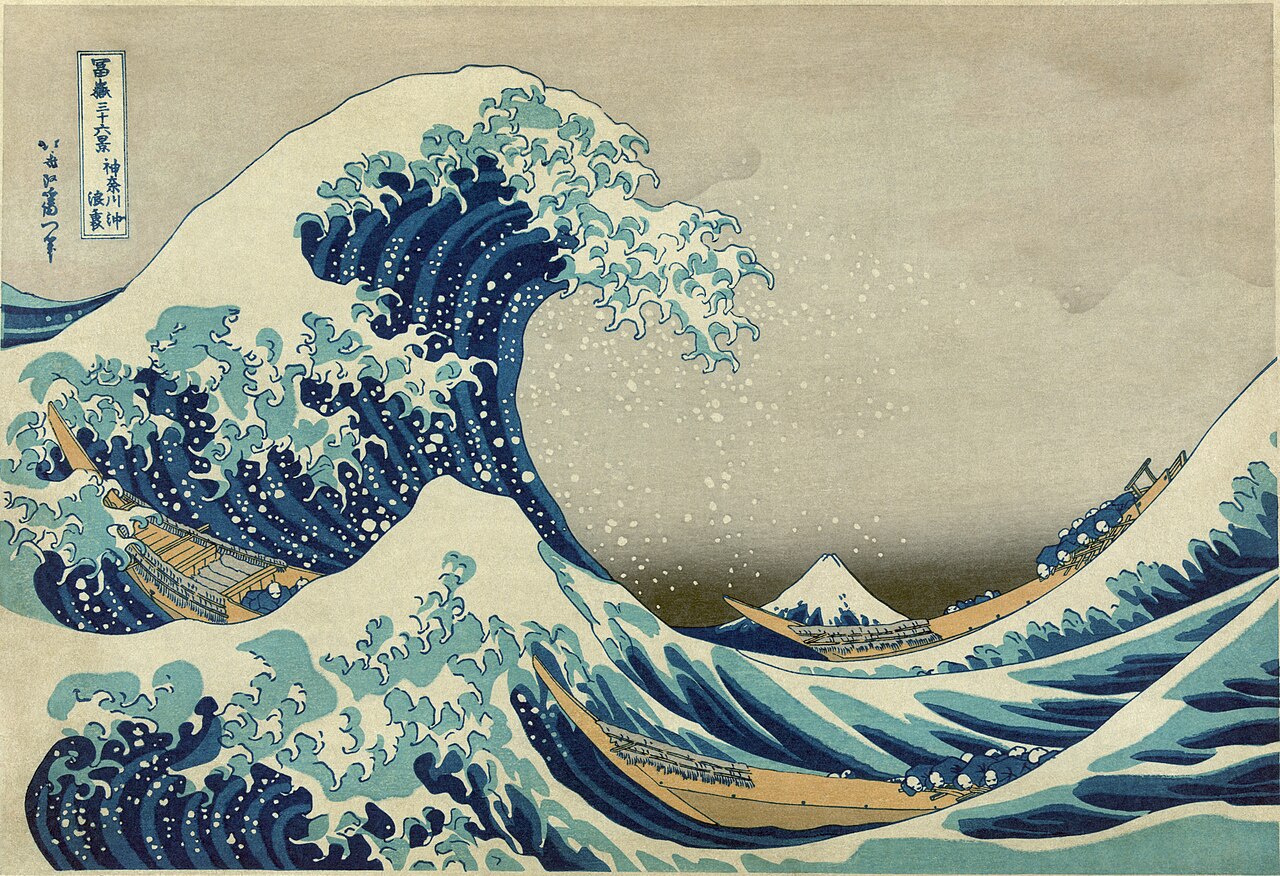


Overview
The image shows an enormous, cresting wave curling over several long, narrow boats while a small, snow-capped Mount Fuji appears in the distant background. The dramatic contrast between the powerful, animate sea and the small, impassive mountain is central to the print's visual impact. The work is commonly referred to in English as "The Great Wave" or "Under the Wave off Kanagawa." Its creation took place during the Edo period, a time of flourishing urban culture in Japan.
Technique and composition
Hokusai executed the print using the multi-block woodblock process typical of ukiyo-e prints. Multiple carved blocks were inked and pressed in register to produce distinct colors and fine outlines. The image is notable for its use of strong diagonal lines, rhythmic repetition of wave forms, and a limited but striking palette; the deep blue pigment—often identified as imported Prussian blue—reinforces the scene's cold intensity. Visually, the print combines close-up, almost sculptural detail of the wave with a distant, minimalist depiction of Mount Fuji, creating a layered sense of scale.
- Subjects: fishermen in oshiokuri-bune (fast boats) and Mount Fuji.
- Style: bold outlines, flat color areas, and stylized natural forms.
- Technique: polychrome woodblock print (nishiki-e).
The composition's energy derives from the interaction of motion and stillness: the wave appears ready to break, while the mountain remains unchanged, suggesting both the transitory and the enduring.
History, reception, and legacy
When produced, the print was part of a commercially successful series intended for an expanding urban audience. In the late 19th and early 20th centuries, prints like this became influential in Europe and North America as collectors and artists encountered Japanese art—an exchange often called "Japonism." Western painters admired the print's flat color areas, strong design, and novel perspectives; these elements informed developments in Impressionism and post-Impressionism.
Today the image appears widely in books, posters, merchandise, and scholarly discussions. Original impressions are considered valuable and are held in museum collections and archives around the world. The print's ubiquity has also made it a frequent subject for reinterpretation and parody, reflecting its enduring visual power and cultural resonance.
Notable distinctions include its role as a quintessential example of ukiyo-e landscape printmaking and its early, effective use of imported pigments. While masses of reproductions circulate, careful study of original impressions reveals subtle variations in color and registration that speak to the printmaking practices of Hokusai's workshop and its printers.
Related articles
Author
AlegsaOnline.com The Great Wave off Kanagawa Leandro Alegsa
URL: https://en.alegsaonline.com/art/98102
Sources
- books.google.com : Gardner's Art Through the Ages: Non-Western Perspectives, p. 115