
Prelude to The Afternoon of a Faun (Debussy)
Claude Debussy's Prélude à l'après-midi d'un faune is a landmark 1894 orchestral piece inspired by Stéphane Mallarmé, celebrated for its opening flute solo, innovative harmony, and its 1912 Nijinsky ballet adaptation.
Overview
Prélude à l'après-midi d'un faune is an orchestral prelude by Claude Debussy inspired by a symbolist poem by Stéphane Mallarmé. First performed in Paris on 22 December 1894, the work quickly became associated with the musical movement often called Impressionism, though Debussy himself resisted strict labels. Its dreamy atmosphere and novel harmonic language mark a break from many late-Romantic conventions.
Image gallery
4 Images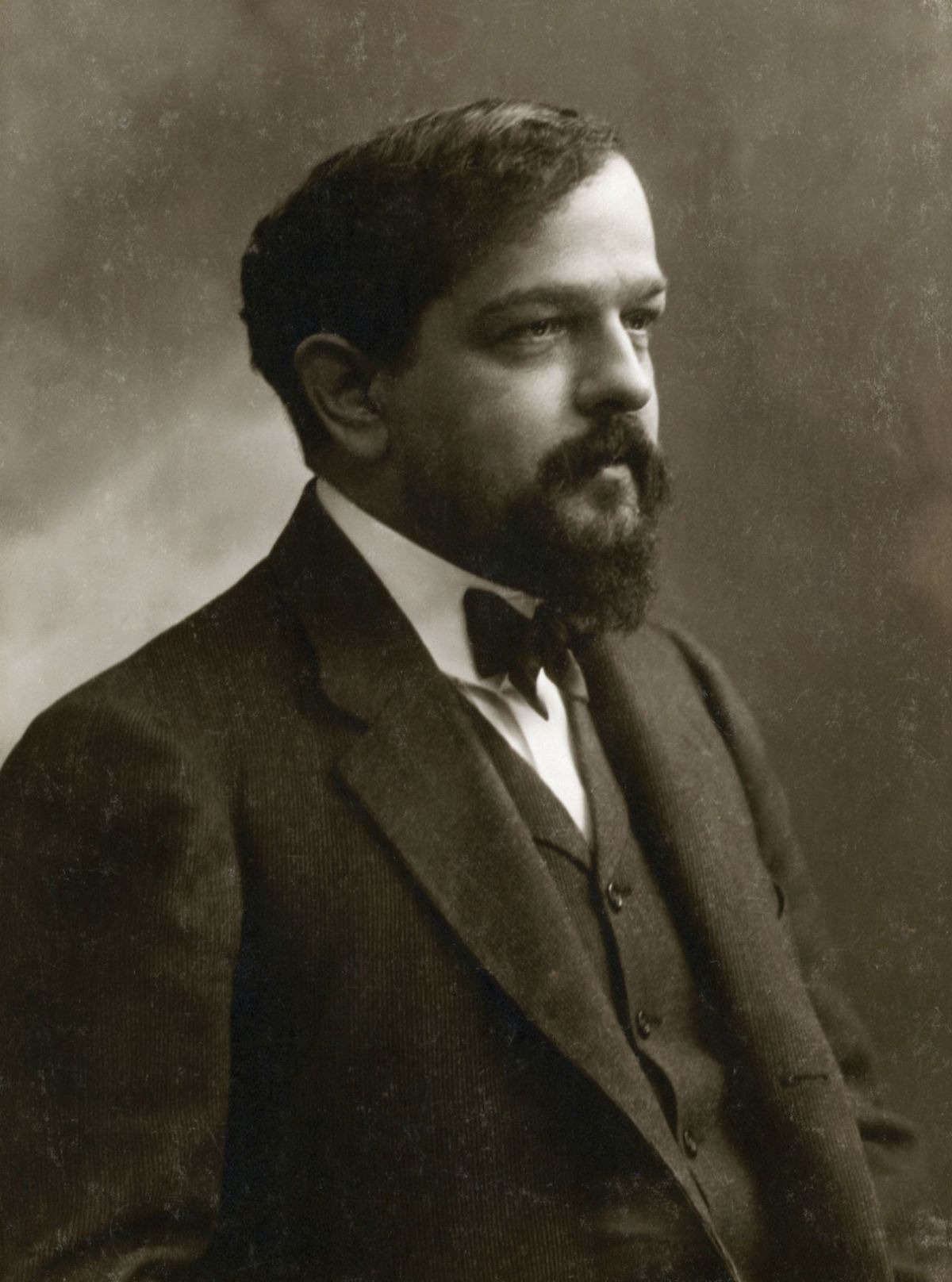


Musical characteristics
The piece opens with a famous flute solo that establishes a languid, sensuous mood. Debussy uses modal scales, whole-tone passages, and non-functional chord progressions to create color and ambiguity instead of traditional tonal direction. Melodic fragments recur and overlap, giving the music a sense of improvisatory reverie rather than a clearly driven narrative.
Orchestration and structure
Scored for a modest orchestra, the prelude relies on woodwinds, horns, and strings for transparent textures; the harp and muted strings contribute to the work's shimmering sonority. Its structure is free and rhapsodic: short motifs unfold, interweave, and dissolve rather than follow classical forms. Listeners often note how timbre and spacing of instrumental lines act as primary structural elements.
Premiere, poem and early reception
Debussy acknowledged the poem by Mallarmé as the starting point for the mood and imagery, but he did not attempt a literal musical retelling. Contemporary reaction mixed admiration for the work's color and novelty with puzzlement from critics expecting conventional development. Over time its reputation grew into one of the most influential orchestral miniatures of the turn of the 20th century.
Ballet adaptation and cultural impact
The music later gained further notoriety when it was used as the score for a ballet in 1912 choreographed by Vaslav Nijinsky. That production provoked controversy for its choreography and staging even as it introduced Debussy's sound world to new audiences. The score itself has been programmed continuously in concert halls and has inspired composers, choreographers, and filmmakers.
Performance notes and resources
Performers highlight balance, delicate phrasing, and careful control of dynamics to preserve the work's transparency. Modern recordings vary in tempo and emphasis, reflecting differing interpretive views on rhythm and rubato. For further reading on the piece's title and original French wording, see references to the French title, and for general catalogue entries and orchestral details consult materials describing it as an orchestral work and on its orchestration. Background on historical performances and staging can be found in studies of the 1912 ballet.
- Key points: notable flute opening, unconventional harmony, dreamlike mood.
- Context: late 19th century Parisian art and symbolist literature.
- Legacy: frequent concert programming, influence on modern music and dance.
Related articles
Author
AlegsaOnline.com Prelude to The Afternoon of a Faun (Debussy) Leandro Alegsa
URL: https://en.alegsaonline.com/art/97483