
Vaslav Nijinsky: pioneering dancer and choreographer of early 20th‑century ballet
Concise encyclopedia entry on Vaslav Nijinsky: life, technique, major works with Ballets Russes, later illness and long-term influence on dance and choreography.
Vaslav Nijinsky (12 March 1890, Kiev – 8 April 1950, London, England) was one of the most celebrated male performers in modern ballet and a formative choreographer of the early 20th century. Born to parents of Polish theatrical background, he trained at the Imperial theatre school and rose rapidly to international fame. Nijinsky’s combination of technical daring, expressive acting and unusual physical gifts challenged conventions and helped transform audiences’ expectations about what male dancers could do.
Image gallery
10 Images


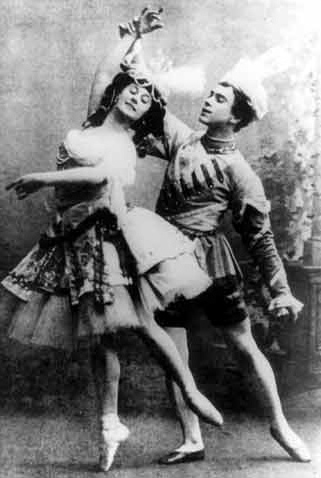


Artistry and technique
Nijinsky was renowned for his aerial leaps, extreme extensions and a capacity for theatrical characterization. Unusually for a man of his time, he mastered dancing en pointe and used the technique not merely for virtuosity but to deepen a role’s dramatic truth. Critics and colleagues admired his ability to disappear into a character: whether petulant, ecstatic or animalistic, his gestures and facial nuance were integral to his performance. He also worked closely with impresario Sergei Diaghilev and the Ballets Russes ensemble, bringing a new emphasis on psychological realism and bold physicality to the stage.
Career and major works
Nijinsky danced with the Imperial company at the Mariinsky Theatre before joining Diaghilev’s influential troupe in Paris. With the Ballets Russes he created, performed and sometimes staged landmark pieces that remain central to dance history. As a choreographer he produced innovative and controversial works such as L'Après‑midi d'un faune (The Afternoon of a Faun) and Le Sacre du printemps (The Rite of Spring), the latter provoking a famous outcry at its premiere for its radical rhythms and raw choreography. His sister, the ballerina and choreographer Bronislava Nijinska, shared the stage and artistic environment that shaped both siblings’ careers. The Ballets Russes itself was a vital incubator for their experiments in music, costume and movement (Ballets Russes).
Later life and decline
At the height of his powers Nijinsky’s public career was cut short by the onset of severe mental illness. He experienced a decline in behavior and perception that led to a diagnosis often described as schizophrenia; he spent many years in and out of institutional care. During this period he kept private notebooks and diaries that were later published and studied for the insight they give into his inner life and creative mind. His active performing career ended prematurely, yet his modest body of choreographic work continued to fascinate dancers, historians and composers.
Legacy and influence
Nijinsky’s legacy is evident in the 20th‑century evolution of ballet toward expressive, sometimes angular movement and in modern dance’s emphasis on individuality. Choreographers and performers cite his dramatic daring, use of nontraditional line and emotional frankness as foundational. Scholars continue to debate the intentions behind his most radical pieces and to reconstruct his choreography for contemporary stages. His life—marked by extraordinary artistic achievement and personal tragedy—remains a subject of biographies, exhibitions and critical reassessment.
Selected roles and works
- Le Spectre de la Rose – celebrated early role
- L'Après‑midi d'un faune (The Afternoon of a Faun) – choreographer and performer
- Le Sacre du printemps (The Rite of Spring) – choreographer; historic premiere
- Performances with the Imperial company at the Mariinsky Theatre and tours with Ballets Russes
Questions and answers
Q: Who was Vaslav Nijinsky?
A: Vaslav Nijinsky was a famous male ballet dancer of the early 20th century and an important choreographer. He was born to Polish parents, both of whom were dancers.
Q: What was Nijinsky famous for?
A: Nijinsky was famous for his dancing ability and of his ability to show the character of the part he was playing. He could dance en pointe, a rare skill among male dancers at the time. His ability to perform seemingly gravity-defying leaps was legendary.
Q: What was the profession of Nijinsky's parents?
A: Nijinsky's parents were dancers.
Q: Was Nijinsky the only famous dancer in his family?
A: No, Nijinsky's sister Bronislava Nijinska was also a famous ballerina and choreographer.
Q: Where did Nijinsky and his sister dance?
A: Nijinsky and his sister danced for the Imperial Ballet at the Mariinsky Theatre and later for the Ballets Russes of Serge Diaghilev.
Q: What was Nijinsky's nationality?
A: Nijinsky was born in Kiev, Ukraine, to Polish parents.
Q: When did Nijinsky die and where?
A: Nijinsky died on 8 April 1950 in London, England.
Related articles
Author
AlegsaOnline.com Vaslav Nijinsky: pioneering dancer and choreographer of early 20th‑century ballet Leandro Alegsa
URL: https://en.alegsaonline.com/art/104324
Sources
- 74.54.115.114 : Cached archive
- groningermuseum.nl : "Home"
- forum.llc.ed.ac.uk : Edinburgh Forum
- glbtq.com : "glbtq.com"