
The Afternoon of a Faun (Nijinsky)
Nijinsky's 1912 ballet set to Debussy's Prélude, inspired by Mallarmé. A landmark of modern dance noted for its stylized choreography, Bakst's designs, a scandalous ending, and contested authorship.
Overview
The Afternoon of a Faun is a short, modernist ballet created in 1912 that forever altered the language of theatrical dance. Nijinsky produced and famously danced the central role, setting his movements to Claude Debussy's symphonic poem Prélude à l'après-midi d'un faune. The score and the ballet draw from Stéphane Mallarmé's symbolist poem L'après-midi d'un faune, whose dreamlike sensuality shaped both sound and movement. The work was presented by Sergei Diaghilev's Ballets Russes and premiered in Paris at the Théâtre du Châtelet on 29 May 1912.
Image gallery
10 Images




Choreography and stylistic features
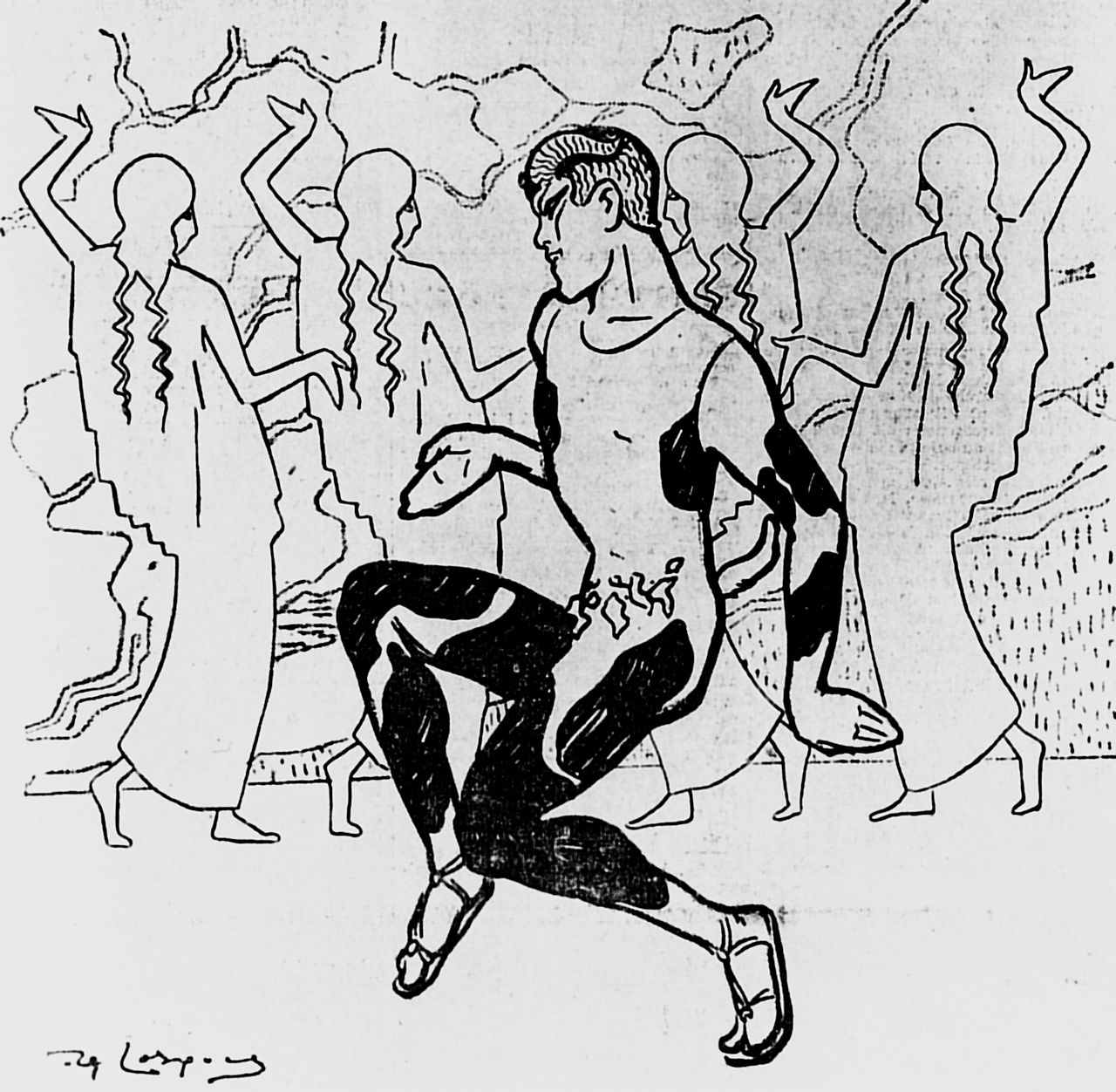
Nijinsky's choreography departed sharply from classical ballet technique. Movements emphasize two-dimensional profiles, turned-in feet, angular arm positions and a flattened stage picture reminiscent of ancient reliefs and decorative art. Poses often appear deliberately archaic or schematic rather than illusionistically three-dimensional. This reduction of classical virtuosity in favor of stylized, pictorial tableaux helped define a new modern dance aesthetic.
Design, collaborators and contested authorship
Costumes and sets were designed by Léon Bakst, whose vivid palettes and theatrical patterns contributed a striking visual identity to the production. Diaghilev produced the premiere as part of his forward-looking Ballets Russes seasons. Debate has long persisted over who precisely created the choreography. Some contemporaries and later writers attributed a large share of responsibility to Bakst or to directions from the company, while others — including Nijinsky's own circle — insisted he devised the steps. Because no definitive written score of Nijinsky's choreography survived, claims about sole authorship remain contested.
Premiere, scandal and critical reaction
The first performance in Paris shocked parts of the press and public. A focal point of controversy was the ballet's final sequence, in which the Faun's interaction with a nymph's scarf was perceived by some as sexually explicit. Outrage in newspapers led to moral denunciations from some critics, while other artists defended the work as a legitimate modern expression of classical myth. The publicity intensified public interest and secured the ballet's reputation as provocative and influential.
American showing and later revivals
The ballet reached the United States in 1916 with a New York presentation; local sensibilities prompted alterations to the controversial ending for certain audiences. Over the following decades the piece was revived and adapted in various forms. Because the original stage directions were not comprehensively recorded, later productions relied on photographs, eyewitness accounts, sketches and the memories of participants to reconstruct the choreography. In 1936 a close replica was mounted by a touring company of the Ballets Russes, and the work continued to be restaged in the 20th century by numerous companies and choreographers exploring modernist origins.
Music, literary source and legacy
Debussy's Prélude à l'après-midi d'un faune (itself inspired by Mallarmé's poem) provided a sensuous, harmonically innovative sound world that matched Nijinsky's emphasis on tone color over narrative momentum. The piece remains a landmark in the transition from 19th-century romanticism to 20th-century modernism in both music and dance. Its influence is felt in later experiments that move away from virtuosic display toward stylized gesture, stage picture and symbolic action.
Key characteristics and notable facts
- Premiere by Diaghilev's company at the Théâtre du Châtelet: Ballets Russes at Théâtre du Châtelet in Paris on 29 May 1912.
- Music: Debussy's Prélude à l'après-midi d'un faune, inspired by Mallarmé's poem L'après-midi d'un faune.
- Choreographic controversy: often credited to Nijinsky but sometimes linked with directions from designers or company leadership; documentation is incomplete (choreographed).
- Designs by Léon Bakst: visually striking costumes and sets credited with helping define the ballet's look (Bakst).
- Scandal over finale provoked press attacks and defenses, including notable reaction from figures such as Auguste Rodin and moral critique in leading newspapers.
- American premiere in New York in 1916; some performances altered the ending for local audiences (first performed).
For further reading about the work's music, poem, production history and cultural impact, consult archival materials and scholarly studies that trace early modern dance and the innovations of the Ballets Russes era. The short ballet continues to be studied for its radical staging choices, its uneasy blend of myth and eroticism, and its pivotal role in early 20th-century performing arts.
modern ballet | scandalous ending | French poem | choreography debate
Questions and answers
Q: What is the title of the ballet?
A: The Afternoon of a Faun.
Q: Who wrote the poem that inspired this ballet?
A: Stéphane Mallarmé wrote the poem L'après-midi d'un faune which inspired this ballet.
Q: Who composed the music for this ballet?
A: Claude Debussy composed Prélude à l'après-midi d'un faune, the symphonic work used in this ballet.
Q: Who choreographed The Afternoon of a Faun?
A: Nijinsky choreographed The Afternoon of a Faun.
Q: When was it first performed?
A: It was first performed by Diaghilev's Ballets Russes in Paris at the Théâtre du Châtelet on 29 May 1912.
Q: Who designed the costumes and sets for this performance?
A: Léon Bakst designed the costumes and sets for this performance.
Q: When did it have its first American performance?
A: Its first American performance occurred in New York City on January 17, 1916.
Tags
Related articles
Author
AlegsaOnline.com The Afternoon of a Faun (Nijinsky) Leandro Alegsa
URL: https://en.alegsaonline.com/art/1311