
Tetragonia tetragonoides — New Zealand spinach
Tetragonia tetragonoides, called New Zealand spinach or warrigal greens, is a succulent leafy plant in Aizoaceae grown as a heat‑tolerant summer vegetable, coastal groundcover and erosion-control species.
Tetragonia tetragonoides, commonly called New Zealand spinach, sea spinach or warrigal greens, is a succulent-leaved flowering plant in the fig‑marigold family (Aizoaceae). It is valued for edible, fleshy leaves and for tolerance of warm conditions, saline soils and exposed coastal sites. Gardeners cultivate it as a summer leafy vegetable and as a low-maintenance groundcover where common spinach performs poorly.
Image gallery
4 Images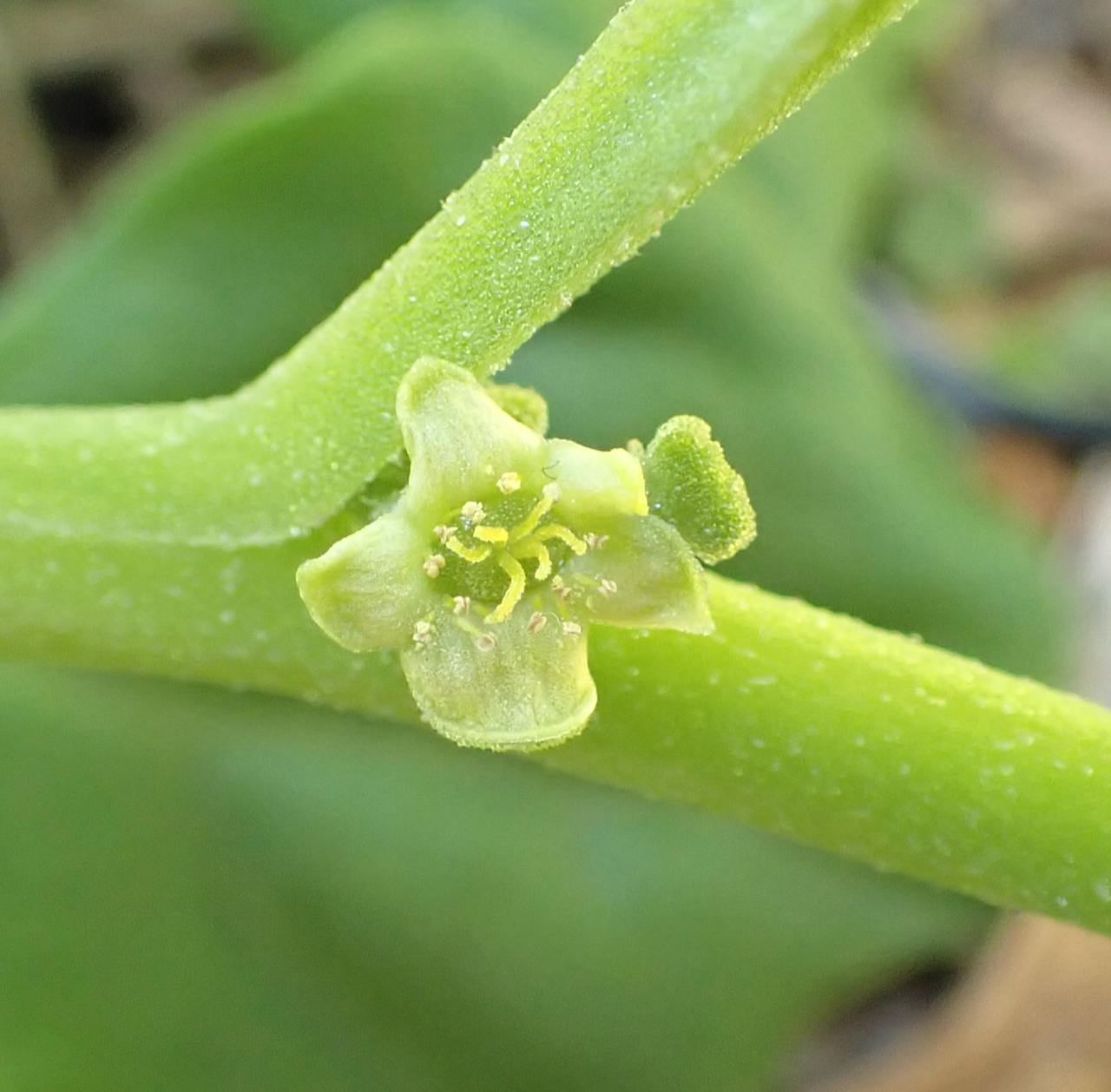


Description
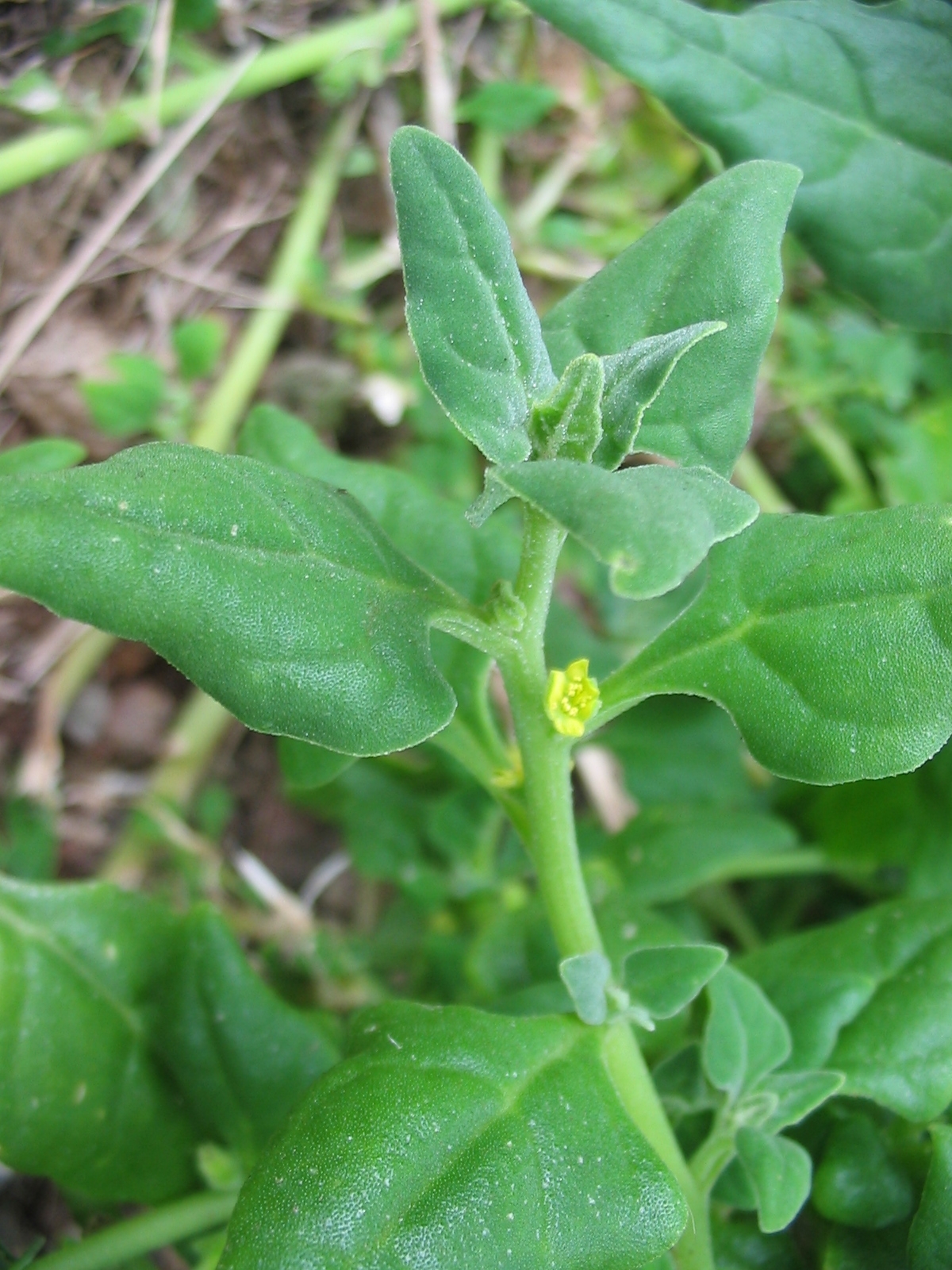
This species is typically prostrate to ascending with trailing stems that may root at the nodes. Leaves are succulent, triangular to broadly ovate and variable in size; young foliage is tender enough for raw use, while mature leaves are often cooked. Flowers are small and inconspicuous, borne in leaf axils, and fruits are dry capsules that release several seeds when ripe. Plants are often treated as annuals in cool climates but may persist as short‑lived perennials in milder areas.
Taxonomy and names
Although commonly called "spinach," Tetragonia tetragonoides is not closely related to true spinach (Spinacia oleracea). The species has a number of regional common names and has been used traditionally in coastal communities of the Pacific and southern hemisphere.
Distribution and habitat
Native to temperate coastal regions of the southern hemisphere, the species occurs naturally on shores and in disturbed coastal sites. It has been introduced and become naturalized in several temperate regions worldwide where it may self‑sow and persist beyond cultivation.
Cultivation and propagation
Propagation is usually by seed sown into warm, well‑drained soil. Plants prefer full sun to partial shade and tolerate sandy or saline soils better than many other leafy greens. Leaves are harvested progressively; removing outer leaves encourages continued growth. Seedheads can be allowed to mature for saving or removed to prevent unwanted self‑seeding.
Culinary use and nutritional notes
Young leaves are suitable for salads; older leaves are commonly blanched, sautéed or added to soups and stews as a substitute for spinach. Like several leafy vegetables, it contains naturally occurring oxalates; brief blanching and discarding the cooking water can reduce bitterness and soluble oxalates for sensitive individuals.
Pests, diseases and ecology
Plants are generally hardy but may suffer foliar diseases in persistently wet or humid conditions and can be browsed by herbivores. In some regions the species can escape gardens and behave weedy; monitoring seedlings and managing seed dispersal helps limit unintended spread.
Uses in landscaping and seed saving
Beyond culinary value, the plant is used for erosion control and as a drought‑ and salt‑tolerant groundcover in coastal and inland dry gardens. To save seed, allow fruits to dry on the plant, collect ripe capsules and store seeds in a cool, dry place; saved seed will generally breed true but local variation is common.
Related articles
Author
AlegsaOnline.com Tetragonia tetragonoides — New Zealand spinach Leandro Alegsa
URL: https://en.alegsaonline.com/art/97243
Sources
- bsbi.org.uk : "BSBI List 2007"
- plants.usda.gov : "Tetragonia tetragonioides"
- wikidata.org : Q278283
- species.wikimedia.org : Tetragonia tetragonoides
- florida.plantatlas.usf.edu : 1881
- ville-ge.ch : 202735
- id.biodiversity.org.au : 144782
- biolib.cz : 38459
- calflora.org : 13131
- eol.org : 595055
- gd.eppo.int : TEATE
- eunis.eea.europa.eu : 185114
- florabase.dpaw.wa.gov.au : 2824
- flora.org.il : TETTET