
Thistle: prickly flowering plants in the daisy family
Thistles are spiny flowering plants in the Asteraceae (daisy) family. This article explains their appearance, classification, ecology, uses, and cultural significance, with examples and notable distinctions.
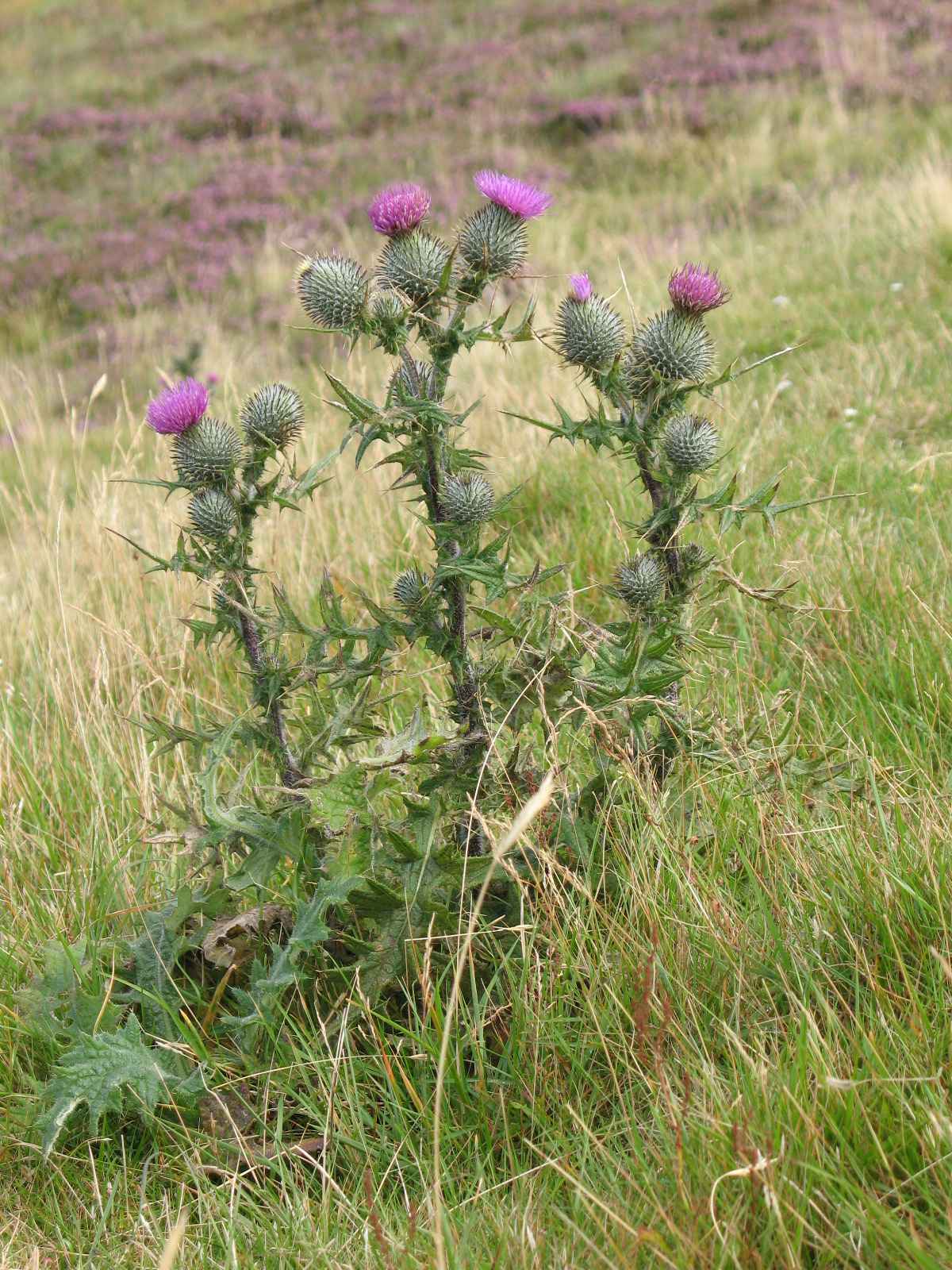
Thistle is a common name for a variety of spiny, flowering plants in the daisy family (Asteraceae). Many species are immediately recognizable by their dense clusters of tubular florets, often purple or pink, and by sharp prickles on stems and leaf surfaces that deter grazing animals. The word "thistle" is used both narrowly, for particular genera, and broadly for other unrelated plants that share a spiny habit.
Image gallery
10 Images




Characteristics and biology
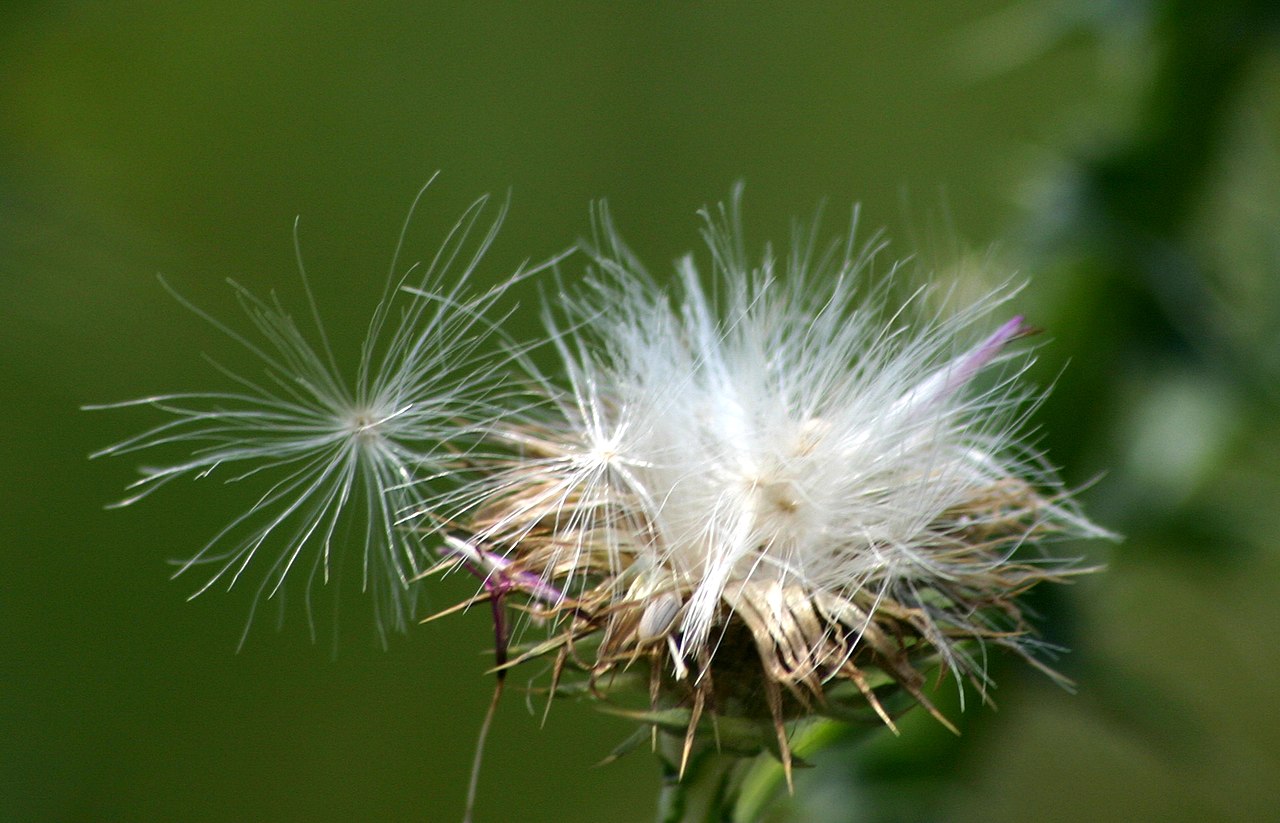
Thistles typically have a composite flower head (capitulum) made up of many small florets, and a pappus — a tuft of hairs — that aids wind dispersal of seeds. Their defensive structures are usually prickles (outgrowths of the epidermis) rather than true thorns or spines, which is an important botanical distinction. Many are biennial or perennial: they form a low rosette of leaves in the first year and send up a flowering stem in a later season. Pollinators such as bees and butterflies commonly visit thistle flowers for nectar and pollen.
Taxonomy and notable genera
Plants commonly called thistles are concentrated in the tribe Cardueae (sometimes listed under the older name Cynareae) within Asteraceae, which includes familiar genera such as Cirsium, Carduus and Onopordum. The family itself is large and diverse; readers can see an overview at Asteraceae. Because the name "thistle" is also applied to species outside Cardueae, the group called "thistles" is polyphyletic — assembled by similar form rather than single ancestry — which matters for classification and evolutionary study (polyphyletic).
Ecology, life cycle and interactions
- Life cycle: many thistles form a rosette year one and flower in year two or later; some are short-lived perennials.
- Seed dispersal: seeds (achenes) often have a pappus that enables wind dispersal across open habitats.
- Wildlife: they provide nectar and pollen for insects and seeds for some birds, while prickles reduce damage by large herbivores.
Some species thrive in disturbed ground and can become agricultural weeds; others are rare and valuable for pollinator support. Management techniques for problem species include mechanical removal, targeted grazing, and herbicidal control where appropriate.
Uses, economic importance and management
Thistles have diverse human uses and impacts. Certain species have been used traditionally for food (young leaves or stems after careful preparation) and medicine — for example, milk thistle (Silybum marianum) is known in herbal medicine for compounds investigated in liver-support contexts. Conversely, invasive thistles such as some Cirsium and related species can reduce pasture productivity and require management. Their importance for pollinators has led to conservation interest in retaining native thistle populations in some landscapes.
Cultural significance and notable facts
The thistle is a national symbol of Scotland and appears in emblems and folklore; one popular legend links its emblematic use to a historic night-time raid, though accounts vary and should be treated as tradition rather than documented fact. For general reference on symbolic uses see the entry on floral emblems and for information specific to the country see Scotland. For botanical terminology and broader context within the daisy family consult Asteraceae and related resources.
Questions and answers
Q: What is a thistle?
A: A thistle is a group of flowering plants that have sharp prickles around the flower and are in the Asteraceae family.
Q: What is the purpose of the prickles on thistles?
A: The prickles protect the plant from herbivorous animals and stop them from eating the plant.
Q: Are all thistles in the Cynareae group?
A: No, thistles outside of the Cynareae group are sometimes called thistles, which would make thistles a polyphyletic group.
Q: Which plants are sometimes called thistles?
A: Plants outside of the Cynareae group are sometimes called thistles.
Q: What are some genera within the Cynareae (synonym: Cardueae) group?
A: Some genera within the Cynareae group include Carduus, Cirsium, and Onopordum.
Q: What is the floral emblem of Scotland?
A: The thistle is the floral emblem of Scotland.
Q: Are all thistles in the Asteraceae family?
A: Yes, all thistles are in the Asteraceae family.
Related articles
Author
AlegsaOnline.com Thistle: prickly flowering plants in the daisy family Leandro Alegsa
URL: https://en.alegsaonline.com/art/99461
Sources
- bioimages.org.uk : "Cardueae ("thistles")"
- m-w.com : "thistle"
- scotshistoryonline.co.uk : Scots History Online
- twocrows.co.uk : Flowers of Scotland: Thistle
- ormiston.com : Why is the THISTLE a Scottish national symbol?
- visitscotland.com : Scotland Fact File: The Thistle
- botanical.com : "A Modern Herbal"