
Thunbergia: tropical vines and flowering ornamentals
Thunbergia is a genus of tropical Acanthaceae vines and herbs, prized for showy tubular flowers (clockvine, black-eyed Susan vine) and used widely in gardens; some species can naturalize outside their native range.
Overview
Thunbergia Retz. is a genus of flowering plants in the family Acanthaceae. The group comprises mostly climbing or sprawling herbs and subshrubs native to tropical Africa, Madagascar and parts of southern Asia. Species are cultivated worldwide for their conspicuous trumpet- or funnel-shaped flowers and rapid growth. The name commemorates the Swedish botanist Carl Peter Thunberg; the botanical name and circumscription are treated in regional floras and plant databases (genus, flowering plants).
Image gallery
9 Images


Characteristics
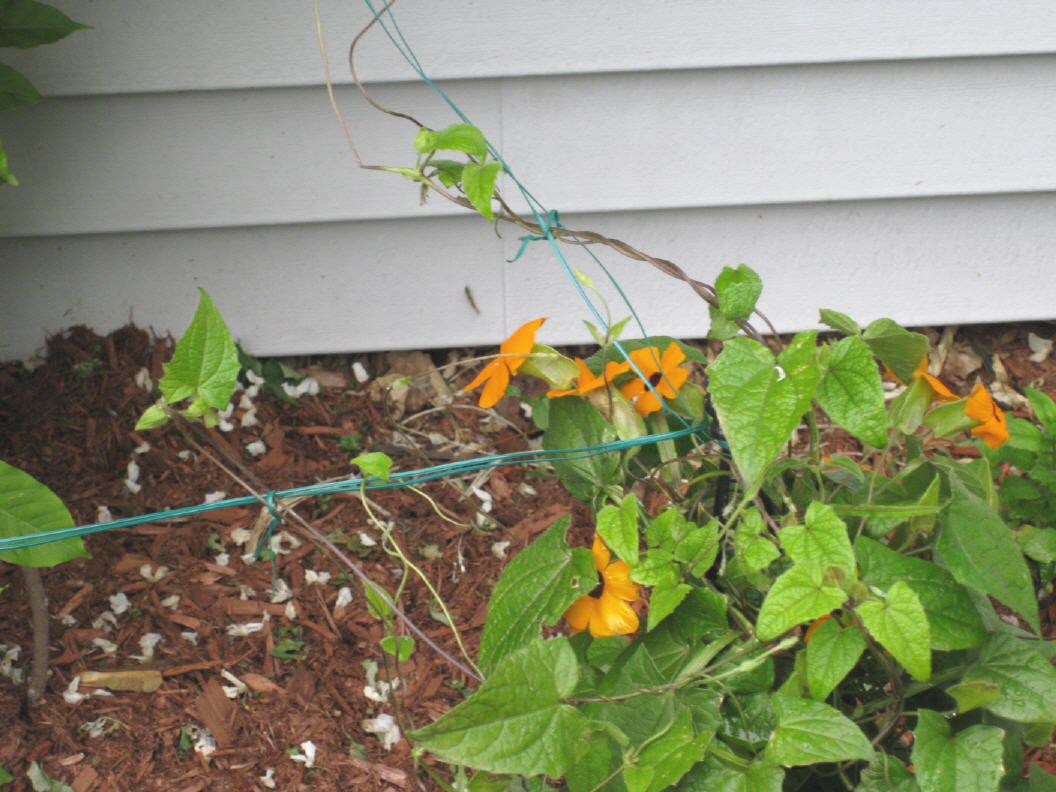
Plants in the genus typically have opposite leaves that may be simple or cordate (heart-shaped). Flowers are usually zygomorphic (bilaterally symmetric), borne singly or in small clusters, and form a tubular corolla with five lobes. Colouration ranges from deep blues and purples to white, yellow and orange, often with contrasting throat markings. Fruit is commonly a two-chambered capsule that releases seeds when ripe; several species also display vigorous vegetative growth.
Distribution and ecology
Natural distribution centers on tropical Africa, including islands such as Madagascar, and regions of southern Asia. In native habitats Thunbergia species occupy forest margins, thickets, riverbanks and disturbed sites. Their flowers attract a variety of pollinators, including bees, butterflies and nectar-feeding birds. Seed dispersal and vegetative vigour allow some species to establish readily beyond their native range (Africa, Madagascar, southern Asia).
Taxonomy and naming
The genus was described in the 18th century and remains a well-recognized group within the Acanthaceae. Species concepts and the number of accepted taxa vary among authorities; many regional checklists and horticultural sources provide species lists and identification keys. Common names include thunbergias, clockvine (often for Thunbergia grandiflora), black-eyed Susan vine (for Thunbergia alata) and orange clockvine (Thunbergia gregorii)—the same common name may be used for different plants in different places (Acanthaceae overview).
Cultivation and propagation
Thunbergias are widely grown on trellises, arbors, fences and in containers. They prefer warm, frost-free conditions, moderate to rich, well-drained soil and a sunny to partially shaded position. Many species are tolerant of a range of moisture levels but perform best with regular water. Propagation is commonly by seed or stem cuttings; training, regular pruning and removal of spent flowers prolong flowering and control bulk in vigorous types. In temperate climates some are treated as annuals or grown in sheltered summer displays.
Uses
- Ornamental screening and rapid coverage of structures.
- Container and hanging-basket plants for cascading forms.
- Attracting pollinators to gardens; some species used in mixed borders or as bedding plants.
Invasiveness and management
Several Thunbergia species have become naturalized in regions outside their native ranges. Where free-seeding, rooting from stem fragments or aggressive climbing allow them to outcompete local vegetation, they can be considered invasive. Management approaches include routine pruning, removal of seed capsules before dispersal, and restricting planting in vulnerable habitats. Local weed authorities and horticultural guides give regional advice on control measures.
Pests, diseases and care
Common cultivation problems include fungal leaf spots and root-rot in poorly drained soils, occasional sap-sucking insects and caterpillars on foliage. Good cultural practice—well-drained soil, air circulation, appropriate fertilization and timely pruning—reduces pest and disease pressure. For diagnosis and treatment consult regional horticultural extension resources or specialist guides (garden sites).
Notable species
- Thunbergia alata — black-eyed Susan vine, popular for its dark-centred blooms and often grown as an annual.
- Thunbergia grandiflora — clockvine, with large blue to lavender flowers and vigorous climbing habit.
- Thunbergia gregorii — orange clockvine, valued for warm orange flowers and a more compact form.
For further botanical detail, distribution records and cultivation tips consult authoritative floras, regional plant databases and horticultural literature (taxonomic databases, family treatments, and practical guides at nursery and garden resources).
Questions and answers
Q: What is Thunbergia?
A: Thunbergia is a genus of flowering plants.
Q: Where are Thunbergia plants native to?
A: Thunbergia plants are native to tropical regions of Africa, Madagascar, and southern Asia.
Q: What family do Thunbergia plants belong to?
A: Thunbergia plants belong to the family Acanthaceae.
Q: What are some common names for Thunbergia plants?
A: Thunbergias are known by various names, including clockvine, Black-eyed Susan vine, and Orange clockvine.
Q: Which species is usually known as Black-eyed Susan vine?
A: Thunbergia alata is often known as Black-eyed Susan vine.
Q: Who is Thunbergia named after?
A: Thunbergia was named for Carl Peter Thunberg.
Q: What is Thunbergia grandiflora?
A: Thunbergia grandiflora is a species of Thunbergia commonly known as clockvine.
Related articles
Author
AlegsaOnline.com Thunbergia: tropical vines and flowering ornamentals Leandro Alegsa
URL: https://en.alegsaonline.com/art/99703
Sources
- lakecounty.typepad.com : A Tale of Two Susans