
Tethys — Titaness of Fresh Water in Greek Mythology
Tethys, a Titaness in Greek myth, daughter of Gaia and Uranus, consort of Oceanus and mother of river gods and Okeanids; a primordial personification of fresh water with genealogical importance.
Overview
Tethys is a Titaness of ancient Greek religion and myth, traditionally associated with fresh water and the origins of rivers and springs. As a figure of the generation before the Olympian gods, she functions mainly as a cosmological and genealogical presence rather than as an active heroine of stories. Classical authors present her as a vast maternal presence whose primary role is to link many local waters to a common divine ancestry.
Image gallery
4 Images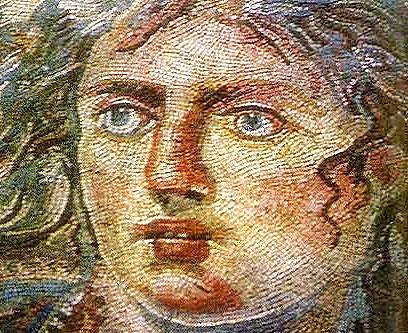
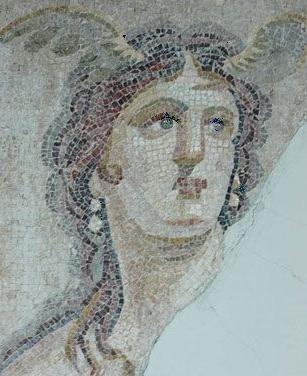


Parentage and family
According to early sources, Tethys is a child of Gaia and Uranus. She is the consort of her brother Oceanus, another primordial figure who personifies the encircling ocean. Together they are counted among the Titans and are credited with a very large progeny: the river gods (the Potamoi) and the many sea and spring nymphs called the Okeanids. These offspring represent specific rivers, springs, and coastal features and provide mythic ancestors for regional waterways.
Role in cosmogony and literature
In works that preserve early Greek cosmogony, Tethys appears as part of the ordered world created by the older generation of gods. Hesiodic and genealogical lists emphasize her reproductive and naming function: naming and stemming the sources of fresh water in the human landscape. Surviving poems and fragments rarely feature her in independent action; her importance is largely structural, providing a divine pedigree for many minor deities and local cults.
Iconography and cult
Depictions of Tethys in ancient art are infrequent compared with later sea-deities. When shown, she may appear as a serene, matronly woman associated with water motifs—reclining, holding water vessels, or accompanied by aquatic creatures. Evidence for a dedicated, widespread cult of Tethys in the archaic and classical Greek world is limited; she more commonly appears in literary and genealogical contexts than as the focus of regular public worship.
Distinctions and common confusions
Tethys is often confused with other water figures, especially the sea-nymph Thetis, who belongs to a later generation of deities and is the mother of the hero Achilles. The two are distinct: Tethys is a primordial Titaness tied to freshwater and genealogical functions, while Thetis is a Nereid-like sea deity active in epic narratives.
Later reception and namesakes
Although her mythic role is relatively static, the name Tethys has been reused in later scholarship and in scientific nomenclature. Natural philosophers and modern scientists have applied the name to large ancient seas in geological reconstructions and to an icy moon of Saturn, reflecting the long-standing cultural habit of borrowing mythic names for natural phenomena. Scholarly work on Tethys focuses on her place among the Titans, the symbolic role of water deities in Greek mythology, and the ways local communities gave divine ancestry to rivers and springs.
Further reading
Primary ancient references are fragmentary and concentrated in genealogical lists and Hesiodic passages; modern treatments usually situate Tethys within discussions of Titan genealogy and the function of elemental deities. For related figures and topics see entries on Oceanus, the Okeanids, and the wider class of Titans.
Related articles
Author
AlegsaOnline.com Tethys — Titaness of Fresh Water in Greek Mythology Leandro Alegsa
URL: https://en.alegsaonline.com/art/97226