
Terrapin (small brackish- and freshwater turtles)
Terrapin is a common name for several small turtles that live in fresh or brackish water. The term is not a taxonomic group and is applied to species across different families; notable example: the diamondback terrapin.
Terrapin is a common name applied to several small species of turtle that live primarily in fresh and brackish water. The word is most closely associated with the diamondback terrapin (Malaclemys terrapin) but is used informally for other small aquatic turtles as well. Because "terrapin" is a vernacular label rather than a scientific classification, animals called terrapins are not necessarily closely related and may belong to different families such as Geoemydidae and Emydidae. The name is used in different ways in various English-speaking regions.
Image gallery
10 Images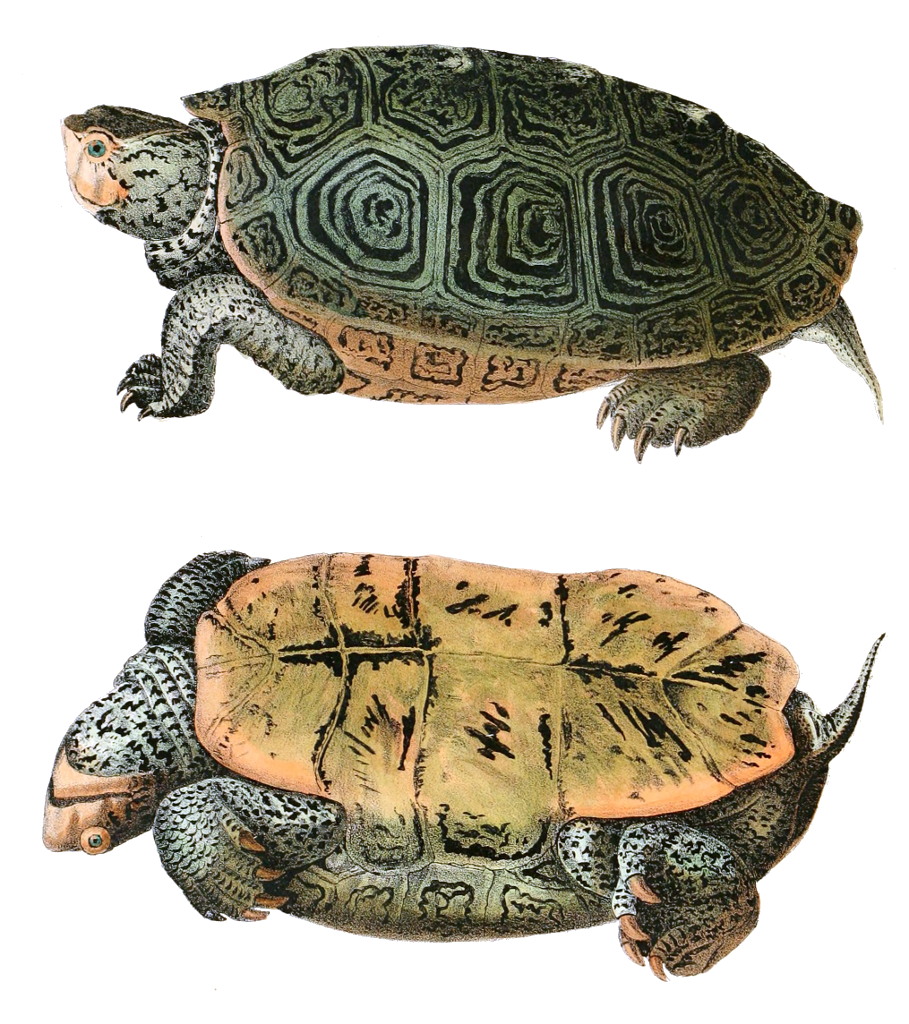


Physical characteristics
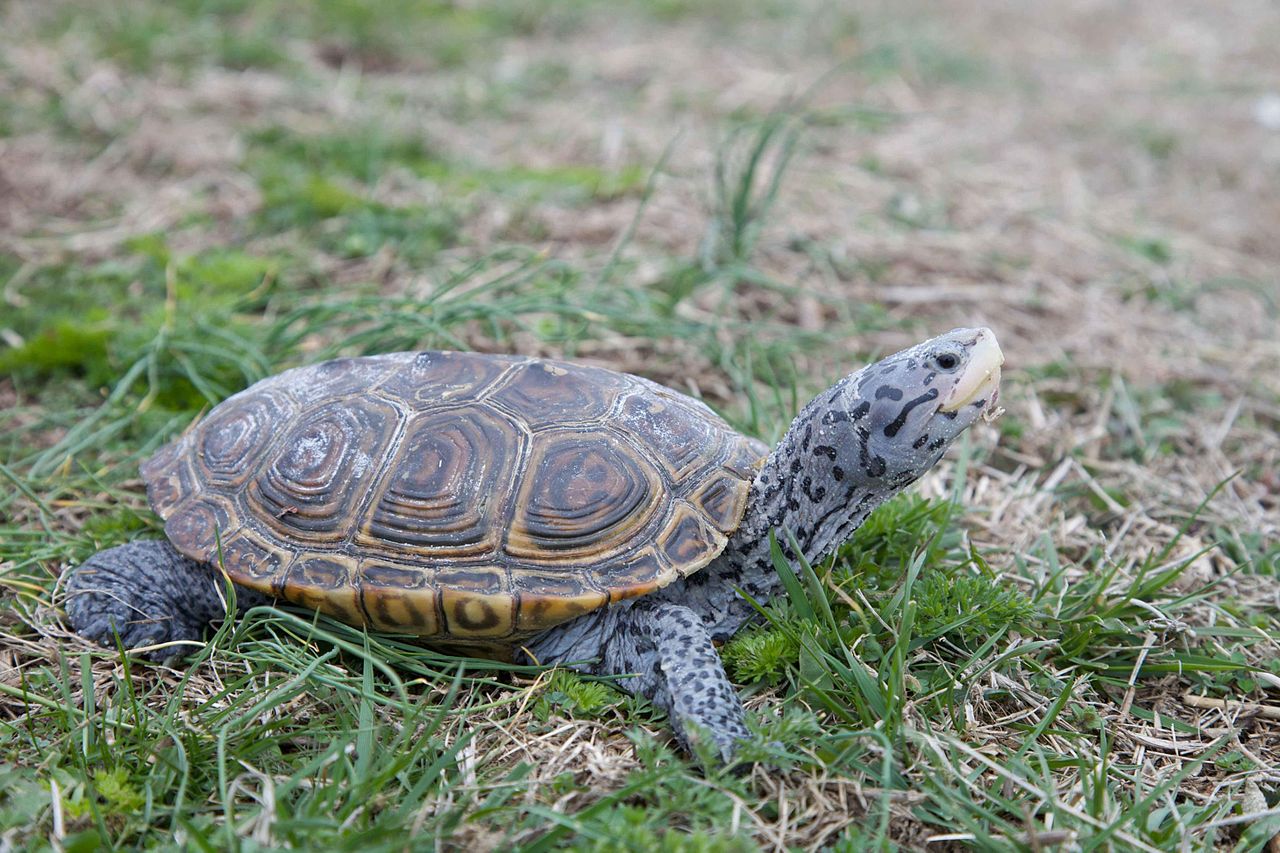
Terrapins tend to be relatively small compared with many other turtles. Sexual dimorphism is common: females are often noticeably larger than males. For example, males of some terrapin species commonly measure about 4–5 inches (10–13 cm), while females average near 7 inches (18 cm); unusually large females have been recorded at about 9 inches (23 cm). Shells sometimes show distinctive patterns, including diamond-like markings on the carapace that gave rise to the common name for the diamondback terrapin. Diet typically includes hard-shelled prey such as mollusks and crabs, as well as small fish and other aquatic invertebrates.
Habitat and behaviour
Many terrapins are adapted to brackish estuaries, salt marshes and tidal wetlands where rivers meet the sea, though the term is also used for small freshwater species kept in ponds and rivers. These habitats provide both aquatic feeding opportunities and terrestrial sites for basking and nesting. Breeding behaviour, nesting season and dietary preferences vary by species and location. Some terrapins tolerate varying salinity, using mangrove and marsh habitats, while others live entirely in freshwater environments.
History of the name
The English word "terrapin" is derived from an Algonquian language term (recorded historically as torope) that referred to the diamondback terrapin. European colonists in North America adopted the name and later carried it back to Britain, where it entered general usage. In British English the word has sometimes been applied broadly to small pet turtles, and species such as the red-eared slider are commonly called "red-eared terrapins" in that context.
Human interactions and conservation
Terrapins have long been part of local diets and cultures in some regions and are also popular in the pet trade. Because many species occupy coastal wetlands and estuaries, they can be vulnerable to habitat loss, pollution, road mortality during nesting migrations, and overharvesting. Conservation concerns and legal protections differ among species and jurisdictions; some terrapin populations are monitored or managed to reduce human impacts. For further reading on general turtle biology and habitat issues, see resources on turtles, estuarine ecology at brackish water habitats, and typical terrapin diets such as mollusks, crabs, and fish.
Notable distinctions
- "Terrapin" is a common name, not a taxonomic rank; species so called may belong to different families.
- Diamondback terrapin (Malaclemys terrapin) is the species most closely associated with the name in North America.
- Regional usage varies: in some places "terrapin" implies brackish-water habitat, while in others it is a general term for small aquatic turtles.
Understanding terrapins requires attention to local usage, species identity and habitat. When discussing a particular animal, scientific names and family placement give the most reliable information about biology and conservation needs.
Related articles
Author
AlegsaOnline.com Terrapin (small brackish- and freshwater turtles) Leandro Alegsa
URL: https://en.alegsaonline.com/art/97115