
Tern — slender seabirds: appearance, behavior, and conservation
Terns are slender, long-winged seabirds in the family Laridae, found near coasts, rivers and wetlands. This article covers their appearance, nesting, feeding, migrations, notable species and conservation issues.
Overview
Terns are a group of medium to small sea-associated birds placed in the family Laridae. They are typically associated with marine and freshwater shores and are encountered along coasts, estuaries and inland waterways. Many accounts describe terns as graceful fliers that spend much of their life on or above open water; they are commonly grouped with other seabirds in field guides and natural history references.
Image gallery
10 Images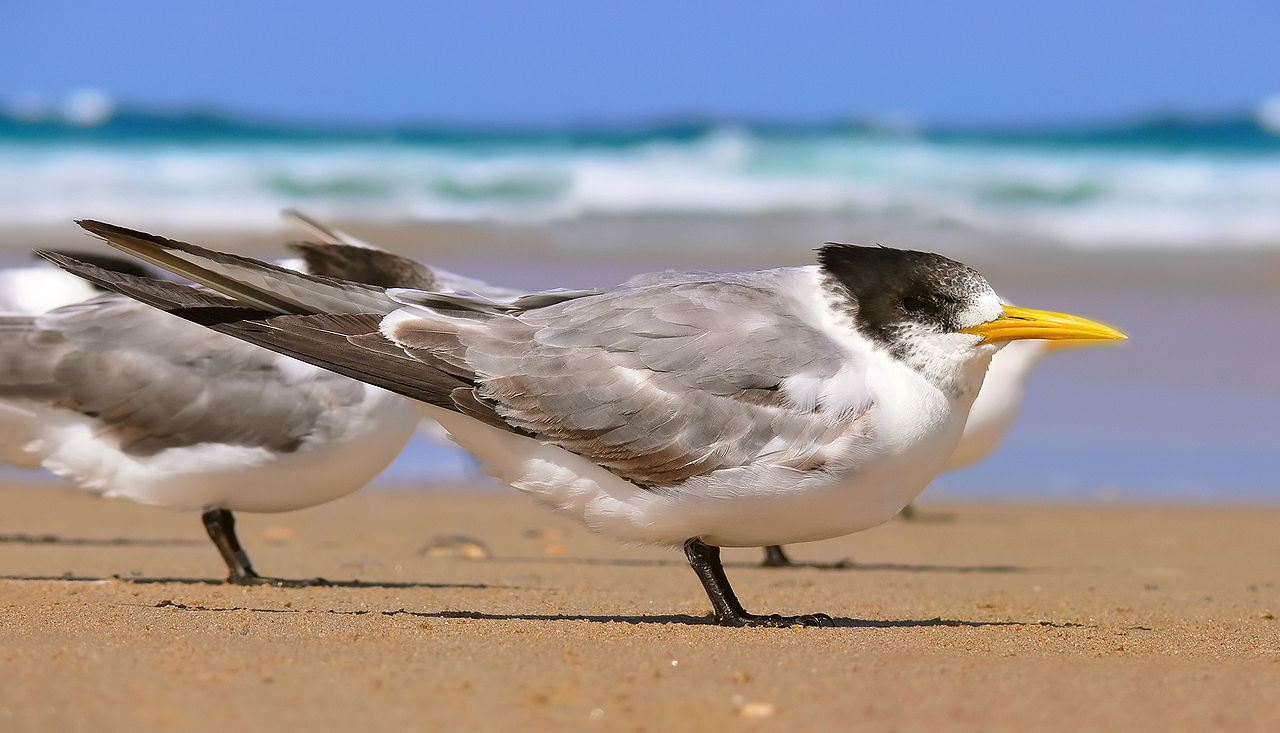


Physical characteristics
Terns are lightly built, with a distinctive silhouette that separates them from gulls and similar birds. Typical features include a streamlined body, long narrow wings, a deeply forked tail, and a straight, often pointed bill. Plumage across many species is pale grey above and white below, with a dark cap on the head during the breeding season; however, a few species show darker or mottled phases at certain times of year.
- Body shape: slender and aerodynamic, suited to agile flight.
- Wings and tail: long wings for gliding and a forked tail for maneuvering.
- Bill and legs: bills vary from fine and dagger-like to thicker in larger species; legs are short and generally not used for walking long distances.
Habitat and nesting
Terns occupy a range of watery habitats, from open sea and rocky shores to coastal flats, riverbanks and marshes. They are frequently observed on beaches and islands, and some species specialize in freshwater wetlands and reedbeds. Many terns breed in dense, noisy colonies, laying one to a few eggs directly on bare ground or gravel. Marsh or wetland terns build floating platforms of vegetation in their wetland environments, while a minority nest on cliffs, in crevices or in low shrubs.
Feeding and behavior
The majority of tern species feed by hovering or quartering above water before plunging to catch fish; this plunge-diving behavior, often performed with remarkable precision, is their most familiar feeding technique. Marsh terns tend to take insects and other small invertebrates, and some of the larger tern species will opportunistically capture small vertebrates on land or at the water’s edge, such as small mammals, amphibians or shorebirds' chicks (small land vertebrates).
Migration and notable species
Many tern species undertake extensive seasonal movements. Some are partial migrants, while others travel between hemispheres. The Arctic tern is a well-known example: it breeds in polar regions and migrates long distances toward the opposite pole, a pattern that results in remarkably high annual exposure to daylight and extensive lifetime travel. Broad patterns of long-distance migration make terns important indicators of marine and coastal ecosystem health.
Conservation and human interactions
Terns face threats common to many shorebirds: habitat loss and alteration, disturbance at breeding colonies, predation by introduced mammals, and pollution including oil and plastic debris. Coastal development and changes to wetland hydrology can reduce available nesting sites. Conservation efforts typically focus on protecting breeding colonies, managing disturbance, and restoring key habitats. Citizen science, monitoring programs and protected areas play roles in understanding and conserving tern populations.
For more information on their taxonomy, identification and regional species lists, consult specialist guides and resources that cover Laridae and coastal birdlife—many of which provide detailed accounts of tern species, their seasonal movements and local conservation status (rivers, wetlands, marine sites can each host distinct tern communities). Additional general references and databases are available online and through bird conservation organizations (seabirds, Laridae).
Questions and answers
Q: What type of birds are terns?
A: Terns are seabirds in the family Laridae.
Q: Where are terns usually found?
A: Terns are normally found near the sea, rivers, or wetlands.
Q: What is the physical appearance of terns?
A: Terns are slender, lightly built birds with long, forked tails, narrow wings, long bills, and short legs. Most species are pale grey above and white below, with a contrasting black cap to the head, but some have dark plumage for part of the year.
Q: How do terns breed and where do they lay their eggs?
A: Terns breed in noisy colonies and lay their eggs on bare ground with little or no nest material. Marsh terns make floating nests from the vegetation in their wetland habitats, and a few species build simple nests in trees, on cliffs or in crevices.
Q: What do most species of terns eat?
A: Most species of terns feed on fish caught by diving from flight.
Q: Do all tern species migrate?
A: Many terns are long-distance migrants, but not all tern species migrate.
Q: Why is the Arctic tern special?
A: The Arctic tern may see more daylight in a year than any other animal.
Related articles
Author
AlegsaOnline.com Tern — slender seabirds: appearance, behavior, and conservation Leandro Alegsa
URL: https://en.alegsaonline.com/art/97093