
Tellurium(IV) oxide (tellurium dioxide, TeO2)
Tellurium(IV) oxide (TeO2) is a white crystalline inorganic oxide of tellurium in the +4 state. It appears in two polymorphs, is used in optics and glass, and is chemically amphoteric and moderately toxic.
Overview
Tellurium(IV) oxide, commonly called tellurium dioxide and written TeO2, is the principal oxide of the element tellurium. It contains tellurium in the +4 oxidation state and oxygen in oxide form. In its pure form it is a white to colorless crystalline solid with limited solubility in water; it is more reactive in strong acids or bases. For basic reference materials see TeO2 data.
Image gallery
2 Images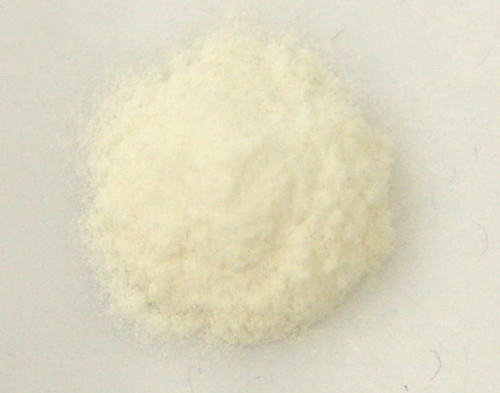

Structure and properties
TeO2 exists in more than one crystalline form; the most frequently encountered polymorph is often described as a tetragonal phase, while another is orthorhombic. The local geometry around the tellurium atom is influenced by the stereochemically active lone pair on Te(IV), giving distorted coordination environments and substantial covalent character to the Te–O bonds. The oxide behaves as an amphoteric oxide: it can form tellurite salts in basic solution and coordinate with acids or other electrophiles. Additional technical descriptions are available at structural references and bonding discussions.
Preparation and chemical behavior
TeO2 is commonly prepared by controlled oxidation of tellurium metal or by thermal decomposition of some tellurium(IV) salts. Chemically it can be reduced to elemental tellurium or oxidized further under strong conditions to higher oxides; it also reacts with alkalis to give tellurite anions and with complexing agents to form coordination compounds. Practical handling and materials safety notes can be found via material safety resources.
Uses and applications
- Optical materials: TeO2 and tellurite-based glasses are notable for high refractive index and nonlinear optical properties, and bulk crystals are used in acousto-optic devices and modulators.
- Glass and ceramics: as a component in specialty glasses that transmit in the infrared and for other electronic or optical ceramics.
- Chemical synthesis: as an intermediate to prepare tellurium-containing salts and coordination compounds used in research and some industrial processes.
Further application summaries and suppliers’ information may be consulted at technical summaries.
Safety, distinctions and notable facts
Like many tellurium compounds, TeO2 is considered toxic and should be handled with appropriate protective measures; prolonged exposure can cause characteristic odors and biological effects. Distinguish TeO2 (tellurium in +4 state) from tellurium(VI) oxides and from elemental tellurium: oxidation state and structure strongly influence reactivity and applications. Historically, study of TeO2 and related compounds followed the discovery and early chemistry of tellurium in the late 18th and 19th centuries, and modern interest continues in optics and materials science.
Related articles
Author
AlegsaOnline.com Tellurium(IV) oxide (tellurium dioxide, TeO2) Leandro Alegsa
URL: https://en.alegsaonline.com/art/96873