
Television licence (broadcast receiving fee)
A recurring fee charged in many countries to fund public-service broadcasters. It typically covers access to live television services and helps limit commercial advertising in funded channels.
Overview
A television licence is a statutory fee levied on households or individuals for the reception of television services. In many countries the licence is used to finance a national public broadcaster so it can provide news, education and entertainment without relying primarily on commercial advertising. The licence concept is sometimes called a TV licence or television tax and is distinct from subscriptions for pay-TV or streaming platforms. For a concise definition see official explanations in countries that operate the scheme, and for the basic consumer notion of paying to watch television see public guidance materials.
Image gallery
4 Images

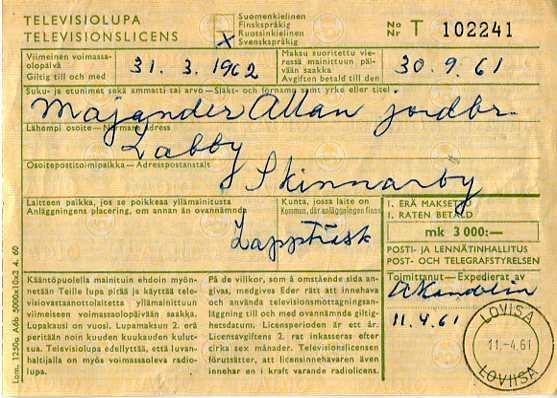

How it works and what it covers
Frameworks vary by country, but licences are typically enforced by law and payable by the occupier of premises where receiving equipment is used. The charge often applies to devices capable of receiving live broadcast signals (traditional televisions, set-top boxes and, in many jurisdictions, devices used to view live simulcasts online). Many administrations publish detailed rules clarifying which devices and services are included and which are exempt.
Functions and typical features
Primary purposes of the fee include funding the national public broadcaster, underwriting original programming and maintaining regional services. In return, public-service channels commonly carry little or no commercial advertising during programming. The licence therefore supports editorial independence and wide availability of non-commercial content, although the degree of independence depends on governance arrangements.
- Common uses: financing public broadcasting, local news, educational content and minority-language services.
- Typical exemptions or concessions: seniors, people with disabilities, low-income households, institutional settings and diplomatic missions (rules differ by country).
- Enforcement: ranges from registration and billing to fines or prosecution for non-payment in jurisdictions that apply criminal penalties.
History and geographic distribution
The television licence evolved from earlier radio licence systems introduced in the early 20th century to fund public radio services. Over time many nations extended the model to television as broadcasting expanded. The mechanism remains common in parts of Europe, East Asia and some African countries; it is less prevalent in places where public broadcasting is funded through general taxation or commercial means. Fee levels vary widely across jurisdictions — from a few euros a year in some states to several hundred euros in others (for example, about 350 euros a year in Iceland) — and are periodically reviewed by governments or broadcasters.
Debate, reform and alternatives
The licence model attracts both support and criticism. Proponents argue it secures stable funding for programmes that serve the public interest and helps preserve editorial independence from commercial pressures. Critics point to its regressive effects, collection costs and the difficulty of applying a single charge across changing viewing habits, especially with internet streaming. As a result, some countries have reformed the system, replaced the licence with direct funding from general taxation, or considered hybrid models combining licence income with other sources.
Notable distinctions and related forms
Although often referred to as a tax, a television licence is usually described in law as a specific fee or charge for receiving broadcast services. It is distinct from subscription services and from the earlier radio licence, which performed a similar role for audio broadcasting. The licence commonly supports a national broadcaster such as the BBC in the United Kingdom. It persists across different regions including Europe, East Asia and parts of Africa, and fees are commonly quoted in euros or local currency; for a specific national example see the arrangements in Iceland.
For further reading on policy choices, international comparisons and practical guidance on compliance, readers can consult government and broadcaster resources that explain eligibility, payment methods and exemptions.
Related articles
Author
AlegsaOnline.com Television licence (broadcast receiving fee) Leandro Alegsa
URL: https://en.alegsaonline.com/art/96844