
Takin (Budorcas taxicolor): The Himalayan goat-antelope
The takin is a large, stocky ungulate of the Eastern Himalayas and adjacent China and Myanmar. Known for its unusual head and thick coat, it is the national animal of Bhutan and a conservation concern.
Overview
The takin (Budorcas taxicolor) is a distinctive hoofed mammal native to the eastern Himalaya and nearby mountain ranges. It occurs in highland and subalpine zones across areas such as Sikkim, northern Assam, parts of northern Myanmar (Burma) and throughout central and southern regions of China (see range). The animal is widely referred to as a goat-antelope because it shares characteristics with both goats and antelopes. The takin is the national animal of Bhutan, where it is culturally important.
Image gallery
3 Images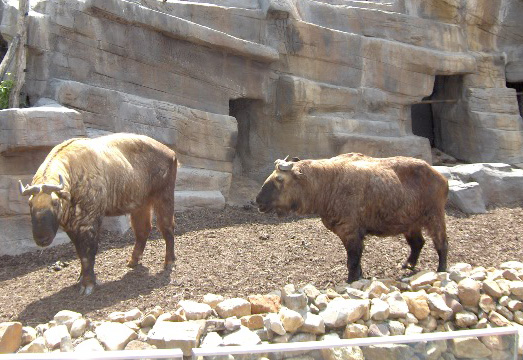


Physical characteristics
Takins are heavy-bodied, with short, powerful legs, a bulky neck and a large, blunt muzzle. Both males and females have stout, horned ridges that grow upward and backward. Their dense, oily winter coat and thick skin help them withstand cold, wet mountain climates. Coat color and markings vary among populations; this variation has led to recognition of several regional forms.
Diet, behavior and life history
Primarily browsers and grazers, takins feed on leaves, shoots, grasses, bamboo and shrubs, and are known to eat a wide variety of plant species available in their habitat. They often move seasonally, descending to lower elevations in winter and returning to higher pastures in summer. Takins are social animals, forming small to large groups outside the breeding season. Females typically give birth to a single calf, and young are mobile soon after birth.
Conservation status and threats
The takin faces threats from habitat loss and fragmentation, hunting for meat and traditional uses, and disturbance from development and livestock competition. Conservation assessments classify the species as of conservation concern, and it benefits from protection in national parks, reserves and community-managed areas across its range. Captive management and public education in zoos have also raised awareness of the species.
Notable facts and cultural importance
- Often described as looking like a cross between a goat, muskox and cow, the takin's unusual appearance has attracted attention from naturalists and visitors alike.
- It plays a role in local folklore and is protected as a national symbol in Bhutan.
- Several protected areas and international breeding programs aim to maintain wild populations and genetic diversity.
Because the takin inhabits remote, rugged country, many aspects of its ecology are still being studied. Ongoing field research, habitat protection and community engagement remain important to secure its future in the eastern Himalayan landscape.
Related articles
Author
AlegsaOnline.com Takin (Budorcas taxicolor): The Himalayan goat-antelope Leandro Alegsa
URL: https://en.alegsaonline.com/art/96071