
Tagus River
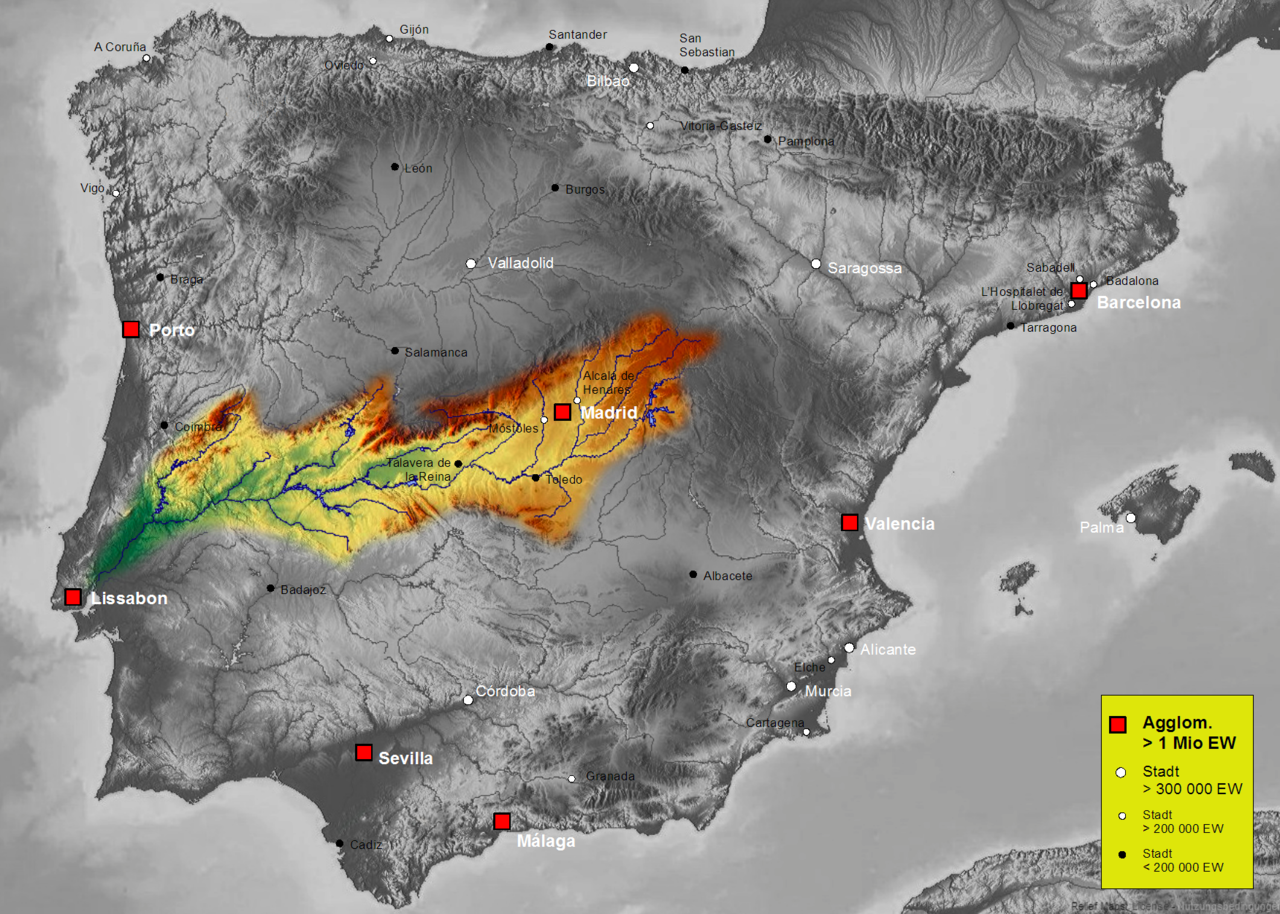
The Tagus (Spanish: Tajo; Portuguese: Tejo) is the longest river on the Iberian Peninsula, flowing from central Spain westward through Portugal to the Atlantic Ocean near Lisbon.
Overview
The Tagus is the longest river of the Iberian Peninsula and one of the major waterways of southwestern Europe. Known in Spanish as Tajo and in Portuguese as Tejo, it rises in central Spain and runs westward across varied landscapes before reaching the Atlantic Ocean at the Portuguese capital, Lisbon. Historical names include the Latin Tagus and the Ancient Greek Τάγος — see the Greek name Tagos.
Image gallery
6 Images




Course and characteristics
The river begins in the highlands of central Spain and crosses a sequence of plateaus, gorges and fertile plains. Along its course it receives numerous tributaries and passes several important urban centres. Its lower reaches form a broad estuary as it approaches the Atlantic. The Tagus basin supports agriculture, towns and ecosystems that rely on its seasonal flows.
Major cities and tributaries
- Notable cities on or near the Tagus include Toledo and Lisbon, among others.
- Major tributaries drain surrounding mountain ranges and plateaus, contributing to the river’s discharge and seasonal variation.
History and cultural significance
The Tagus has been a strategic and cultural axis since ancient times, shaping settlement patterns, trade and military routes. Its estuary provided access to the Atlantic and played a role in the maritime expansion of Portugal. The river appears in literature, art and local traditions on both sides of the border.
Uses, management and environment
The Tagus is used for irrigation, hydroelectric power, urban water supplies and limited navigation. Reservoirs and dams regulate flows but also alter habitats and sediment transport. Water management is coordinated across Spain and Portugal because the river crosses national boundaries and its basin supports agriculture, industry and urban populations. For regional context see the Iberian Peninsula overview.
Notable facts
Besides its length and transnational course, the Tagus estuary near Lisbon is an important ecological and economic zone, combining ports, protected wetlands and urban development. Ongoing conservation and water management efforts aim to balance human use with the health of the river’s ecosystems.
Related articles
Author
AlegsaOnline.com Tagus River Leandro Alegsa
URL: https://en.alegsaonline.com/art/95898