
Svealand — central region of Sweden
Svealand is the historical and geographical core of Sweden, containing several provinces including Uppland, Södermanland and Dalarna; it is the location of Stockholm and the early Swedish kingdom.
Svealand is the central part of Sweden and one of the country's traditional lands. It forms the historical heartland where the early Swedish polity developed and today contains Sweden's capital and largest city. The name is linked to the Old Norse word for the Svear (the Swedes), a people who played a central role in the nation's early state formation. For a general overview see Svealand.
Image gallery
2 Images
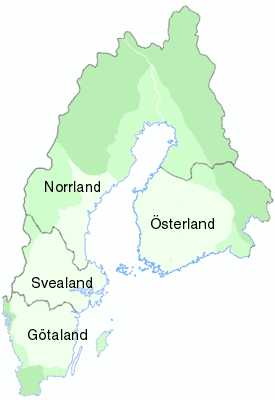
Geography and landscape
Svealand occupies a varied landscape of forests, lakes and low mountains. Large fresh-water bodies and river systems, together with fertile plains around Mälaren and other lakes, shape the region. The terrain supported both agriculture in the lowlands and forestry and mining in upland areas, contributing to its long-term settlement and economic importance.
Constituent provinces
- Dalarna — a province known for cultural traditions, crafts and inland lakes.
- Närke — a smaller province with agricultural plains and historic market towns.
- Södermanland — coastal and lake-rich, part of the Stockholm hinterland.
- Uppland — contains parts of the Stockholm archipelago and important archaeological sites.
- Värmland — wooded and lake-filled, bordering Norway in the west.
- Västmanland — historically linked to Sweden's early mining and iron-working districts.
History and development
Svealand is often described as the cradle of the Swedish kingdom: medieval sources record the power of the Svear in this area, and many early royal seats and religious centers were located here. Over centuries the region developed trade routes, towns and industrial districts — notably the historical mining zone known as Bergslagen, which overlaps parts of Svealand.
Modern role and distinctions
Today Svealand is not an administrative unit but a cultural and geographic region. Its territory is divided among several modern counties (län) and municipalities; the region hosts a large share of Sweden's population and economic activity because of Stockholm and surrounding urban areas. Svealand remains important for archaeology, historical research and Swedish identity as the nucleus of early state formation.
Notable facts: Stockholm, Sweden's capital, lies within Svealand; the region blends urban centers, agricultural plains and forested highlands; and its historical provinces continue to inform local culture and traditions.
Related articles
Author
AlegsaOnline.com Svealand — central region of Sweden Leandro Alegsa
URL: https://en.alegsaonline.com/art/95366