
Suzhou — historic canals, classical gardens, and modern industry
Suzhou is a major city in Jiangsu province, China, famed for its classical gardens and canals, an important silk and cultural center, and a modern manufacturing and high‑tech hub near Shanghai.
Suzhou is a major city in eastern China, located in Jiangsu Province on the lower reaches of the Yangtze River and the shores of Lake Tai. It lies roughly 100 km northwest of Shanghai and is one of the Yangtze River Delta’s principal urban centers. Suzhou speaks a variant of Wu Chinese and has long combined waterways, historic neighborhoods and garden landscapes with modern industry. Administratively it is a prefecture-level city whose wider area has more than ten million residents (estimates from the 2010s).
Image gallery
10 Images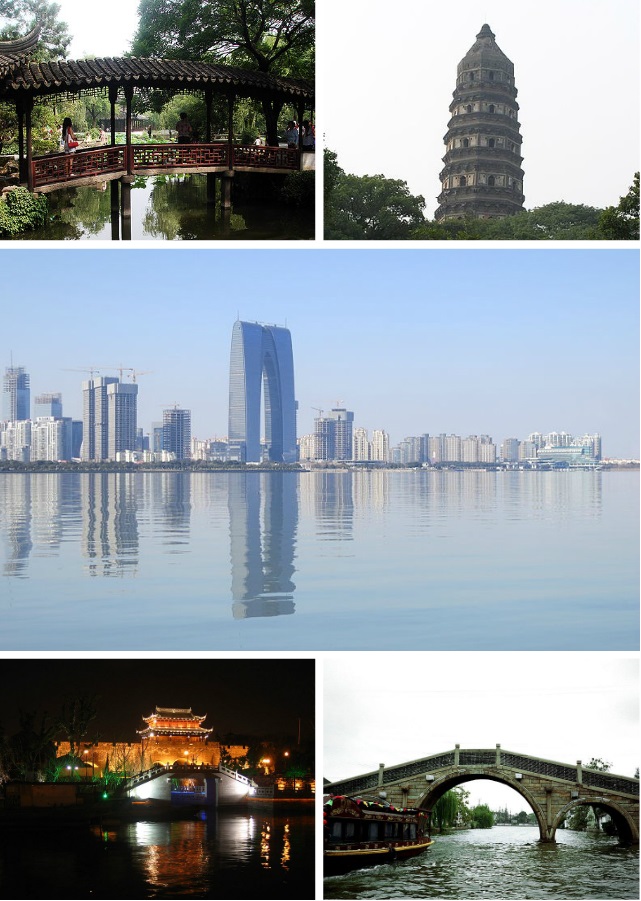


Overview and character
Suzhou is widely known for its network of canals and stone bridges, which gave it the nickname "the Venice of the East." The city’s compact historic core preserves traditional lanes, riverfront promenades and a series of renowned private gardens. These elements coexist alongside extensive new districts and industrial zones that developed rapidly in the late 20th and early 21st centuries due to domestic growth and foreign investment.
History and development
Founded more than a thousand years ago as a regional center, Suzhou’s prosperity historically derived from silk production, waterways and commerce. Over many dynasties the city became a cultural and artistic hub, attracting scholars, painters and garden designers. In the 20th century and especially since the 1990s Suzhou expanded into a major manufacturing and technology base, strengthened by planned developments such as the Suzhou Industrial Park and other economic zones that drew multinational firms and exporters.
Cityscape and notable sites
The cityscape balances preserved historical sites with modern architecture. A UNESCO designation groups several of Suzhou’s private gardens as exemplary Chinese garden design. Important visitor sites include:
- The Humble Administrator’s Garden and the Lingering Garden, two classical gardens recognized for their layout, pavilions and ponds.
- Historic canal streets such as Pingjiang Road, where narrow alleys run beside waterways and traditional houses remain.
- Tiger Hill with its leaning pagoda and long historical associations, plus local temples and museums that interpret the city’s past.
Economy, transport and modern role
Suzhou is a major manufacturing and export center, with strengths in electronics, precision equipment, chemicals, and logistics. The city’s economic rise has been catalyzed by close links to Nanjing, Shanghai and broader Yangtze Delta integration. Transport connections include high-speed rail, expressways, waterways and local transit, which support commuting and freight movements across the delta.
Culture and distinctions
Cultural traditions associated with Suzhou include silk weaving and Suzhou embroidery, distinctive local cuisine and regional opera forms. The Suzhou dialect (a branch of Wu) and refined garden aesthetics contribute to the city’s cultural identity. Suzhou’s juxtaposition of ancient gardens and bustling new districts makes it a frequent subject in studies of urban preservation and economic transformation.
For more detailed information about history, cultural sites and visitor planning, consult regional guides and official resources. The city remains one of China’s clearest examples of a place where centuries-old urban fabric continues to shape life amid rapid modernization.
Suzhou dialect and language • Jiangsu province context • Proximity to Shanghai • Relation with Nanjing • Yangtze River and waterways
Related articles
Author
AlegsaOnline.com Suzhou — historic canals, classical gardens, and modern industry Leandro Alegsa
URL: https://en.alegsaonline.com/art/95346
Sources
- suzhou.sz2500.com : "Table showing land area and population"
- sztjj.gov.cn : 2016年苏州市情市力
- js.qq.com : 新建改扩建410所学校 苏州教育有"国际范"
- news.2500sz.com : 苏州人均期望寿命高于北京上海 癌症仍是"头号杀手"
- js.xhby.net : 苏U号牌来了!苏州将成江苏首个启用双号牌的城市
- esa.un.org : "World Urbanization Prospects: The 2014 Revision"
- nbr.com : "Keep an eye on these emerging market cities"