
Wu Chinese dialects
Wu is a major branch of Sinitic languages spoken in the Yangtze Delta around Shanghai and Zhejiang. It includes Shanghainese, Suzhou and Wenzhou varieties and is known for voiced initials and diverse local forms.
Wu Chinese denotes a cluster of related Sinitic speech varieties traditionally spoken in the lower Yangtze River region of eastern China. These dialects form one of the principal groups of Chinese languages and are centered on areas of modern Jiangsu, Zhejiang and the municipality of Shanghai. Native speakers use Wu varieties in daily life, local media, and cultural activities, and the group displays substantial internal diversity.
Image gallery
10 Images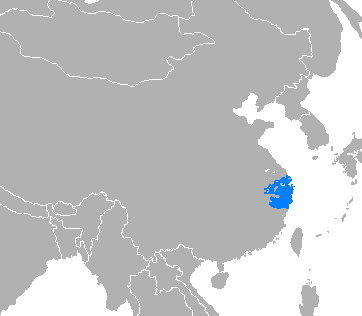


Distribution and main varieties
Wu covers a geographic band from the city of Shanghai westward into parts of southern Jiangsu and most of Zhejiang province. Major subgroups commonly distinguished by linguists include Northern Wu (e.g., Shanghainese, Suzhou dialect), Southern Wu (including Wenzhounese and areas around Taizhou), and several transitional forms. A useful overview can be found in general references to Wu dialects.
Distinctive features
Phonologically, many Wu varieties preserve voiced obstruent initials historically lost in Mandarin, and they often have a rich vowel and consonant inventory. Tone systems vary: some Wu dialects retain multiple tonal contrasts including so-called "entering" or checked categories, while others show tone splits conditioned by voicing. Grammatically, Wu shares core Sinitic structure but has local syntactic and lexicon differences, such as distinctive pronouns, aspect markers, and colloquial particles.
History and development
The Wu group developed from regional speech in the Jiangnan plain and shows continuities with certain features of Middle Chinese. Over centuries, political, commercial and cultural exchanges in the Yangtze Delta promoted local standardization around urban centers, producing well-known literary and theatrical traditions in Wu-speaking areas. Migration and urbanization, especially the growth of Shanghai, have influenced both the spread and the decline of local Wu usage in some places.
Uses, cultural importance and mutual intelligibility
Wu varieties function as vehicles of local identity and appear in popular music, theater, and regional broadcasting. Shanghainese has become a prominent urban variant with recognizable prestige but has also been affected by the dominance of Mandarin. Mutual intelligibility across Wu is uneven: speakers of geographically close dialects may understand one another, but distant varieties—particularly Wenzhounese—can be difficult for other Chinese speakers to follow.
Notable distinctions and facts
- Wu is not a single language but a group of related varieties with varying degrees of mutual comprehension.
- Some Wu dialects conserve phonological contrasts that Mandarin lacks, contributing to their distinct sound.
- Urbanization, education policies favoring Mandarin, and internal migration have reshaped Wu usage in the 20th and 21st centuries.
For readers seeking an introduction to regional speech types, entries on Wu dialects and overviews of Yangtze Delta linguistics are useful starting points. Scholarly works and regional language surveys provide more detailed descriptions and maps of local varieties.
Related articles
Author
AlegsaOnline.com Wu Chinese dialects Leandro Alegsa
URL: https://en.alegsaonline.com/art/109257