
Supreme Court of Pakistan: role, structure, history and functions
The Supreme Court of Pakistan is the country's highest judicial body. This article outlines its jurisdiction, composition, powers, historical development, and its role in constitutional and political affairs.

Overview
The Supreme Court of Pakistan is the highest court in the nation's judicial system and serves as the final arbiter of legal and constitutional disputes. It is charged with interpreting the Constitution, resolving conflicts among federal and provincial authorities, and ensuring the supremacy of the law. The court hears appeals from lower courts, exercises original jurisdiction in certain intergovernmental disputes, and can advise the executive on legal questions when the Constitution permits.
Image gallery
5 Images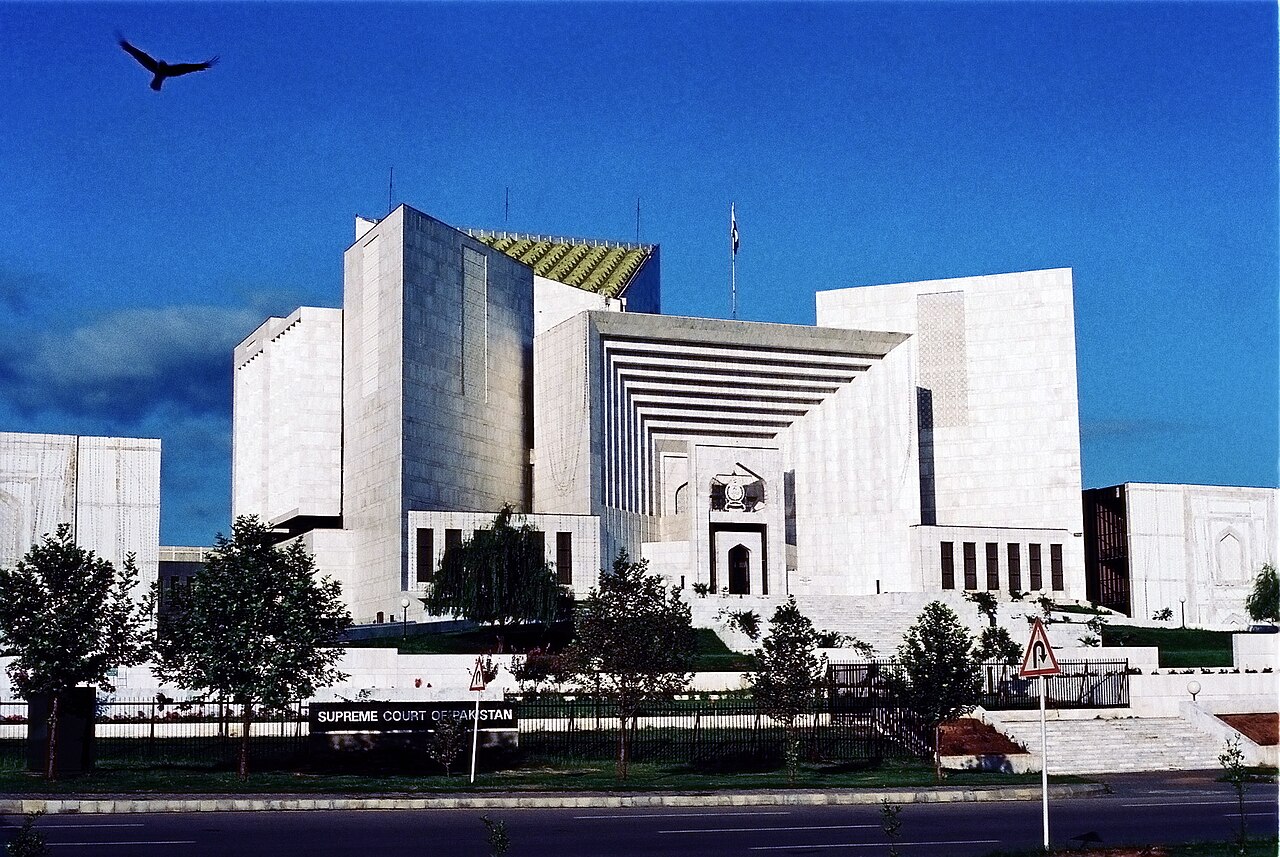


Seat and offices
The court has its principal seat in the federal capital, Islamabad, where its principal bench and administrative offices are located. In addition to the main building, which is often used for full-bench hearings and constitutional matters, the Supreme Court maintains branch registries in several major cities to hear cases and manage filings closer to litigants and lower courts. These regional registries help the court deal with its nationwide docket and make access to the highest court more practical for citizens throughout the country.
Composition and appointment
The bench is headed by the Chief Justice and includes other judges whose number is determined by law. Judges of the Supreme Court are appointed under constitutional procedures designed to balance judicial independence with accountability. Appointments typically involve a judicial commission or consultative body and formal appointment by the head of state. Judges serve until an age limit set by law and may be removed only for stated causes following a prescribed procedure, which preserves tenure and impartiality.
Powers and functions
The Supreme Court exercises a range of powers central to the administration of justice:
- Constitutional interpretation: The court resolves questions about the meaning and application of the Constitution and constitutional amendments.
- Appellate jurisdiction: It reviews decisions from high courts and other tribunals in civil and criminal matters where a substantial question of law arises.
- Original jurisdiction: In disputes between federal and provincial governments or among provinces, the court may hear matters directly.
- Advisory jurisdiction: The head of state may refer legal questions to the court for opinion where the Constitution permits.
- Judicial review and fundamental rights: The court enforces fundamental rights, can declare laws invalid if they are unconstitutional, and supervises lower courts and public authorities.
- Suo motu powers: In practice the court has at times taken up matters on its own motion to address violations of the law or public interest.
History and judicial development
The court's contemporary role developed over decades of constitutional change and political upheaval. While the Constitution establishes its formal powers, the institution's practical authority has evolved through landmark judgments and the court's responses to periods of emergency or suspension of constitutional rule. At various times the Supreme Court has been called upon to adjudicate issues arising from military interventions, contested transitions of government, and disputes over the scope of executive power. Over time, successive benches have clarified procedural practices, strengthened the doctrine of judicial review, and in some periods asserted the court's independence from other branches of government.
Public role, controversies and impact
The Supreme Court plays a prominent role in the country's political and civic life. It has acted as a check on corruption and maladministration by hearing public interest litigation and prosecutorial matters. At the same time, its interventions—especially in politically sensitive cases—have drawn debate about judicial activism and separation of powers. Critics caution against overreach into policy areas best handled by elected institutions, while supporters contend that robust judicial oversight is essential to protect rights and uphold constitutional norms.
Distinctive features and practical considerations
Several distinctive elements characterize the court's operation: its combination of appellate, original, and advisory functions; the presence of regional registries to manage a national caseload; and the use of suo motu actions in matters deemed to affect the public interest. Information about the court's procedures, recent rulings, and administrative announcements can often be found through official channels and legal repositories. For general information about Pakistan and its institutions see Pakistan, and for documents concerning the court's statutory foundations consult authoritative legal sources such as the constitutional text and official publications here.


Related articles
Author
AlegsaOnline.com Supreme Court of Pakistan: role, structure, history and functions Leandro Alegsa
URL: https://en.alegsaonline.com/art/95121