
Adelaide River (Northern Territory, Australia)
A tidal river in the Northern Territory of Australia, rising in Litchfield National Park and flowing to Clarence Strait; known for its wildlife, crocodiles, wetlands and regional history.
Overview
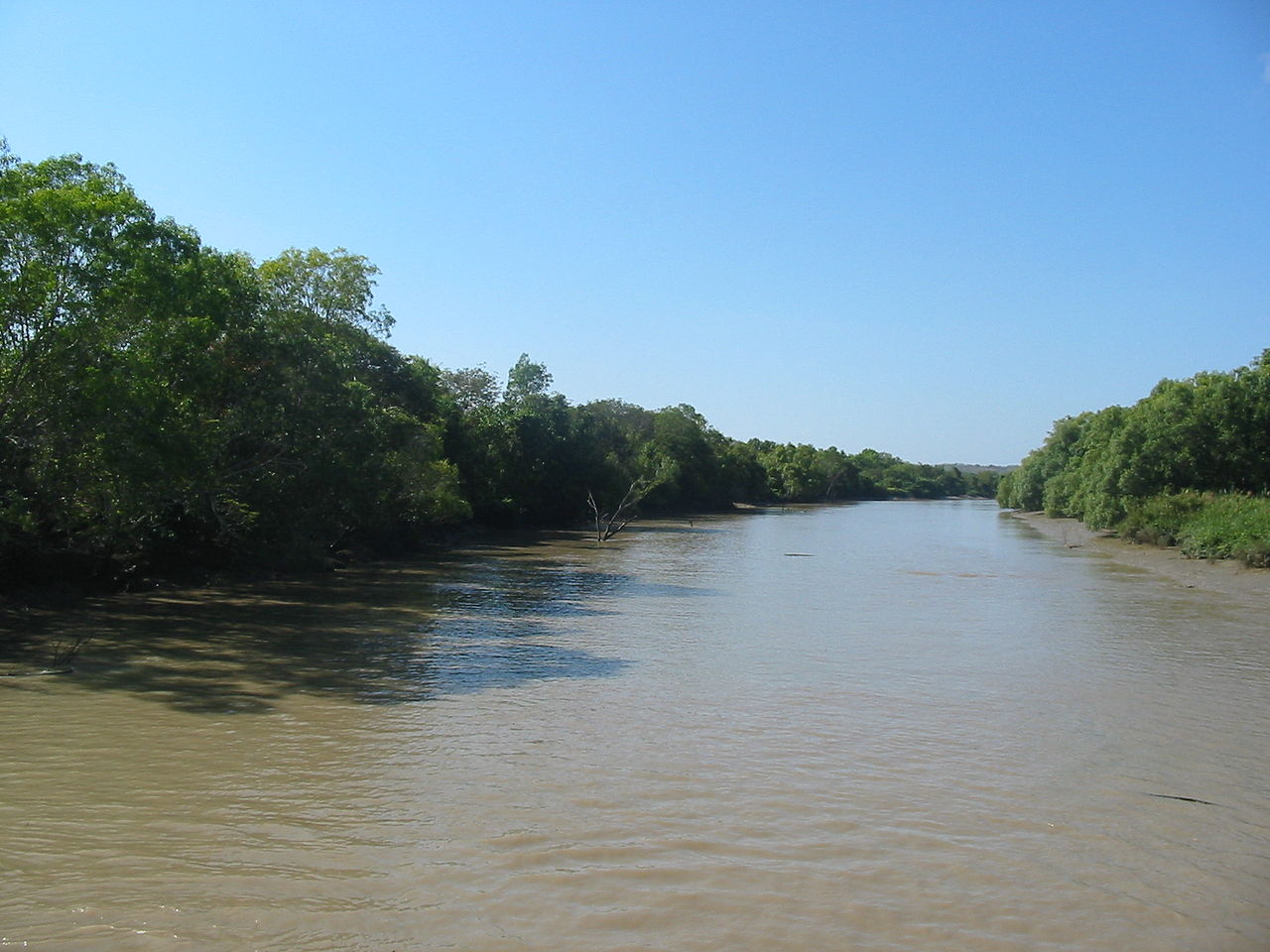
The Adelaide River is a prominent waterway in the Northern Territory of Australia. It rises on the sandstone plateau and woodlands around Litchfield National Park and follows a generally northward course before entering the sea at Clarence Strait, approximately 50 km northeast of Darwin. Its total length is commonly given as about 253 km. The river drains a mixture of savanna, open woodland and coastal wetlands and is shaped by tropical seasonality and tidal influence in its lower reaches.
Image gallery
6 Images



Physical characteristics
The Adelaide is a partly tidal river with a broad estuary and extensive floodplains. During the wet season, heavy monsoonal rains swell the river and inundate adjacent plains; in the dry season flows reduce and many shallow channels retreat. The lower river supports mangrove communities and tidal wetlands that buffer storm surge and provide nursery habitat for fish. Its tributary network and surrounding catchment sustain a mosaic of freshwater billabongs, swamps and riparian woodlands.
Ecology and wildlife
The river and its floodplain are important habitat for a range of native species. The Adelaide River is particularly well known for its large saltwater crocodiles (Crocodylus porosus), which attract wildlife tourism and require active management where people access the water. The wetlands also support waterbirds, fish, and estuarine invertebrates, while riparian zones harbour reptiles and mammals adapted to the tropical environment.
Human use, history and notable facts
Local Aboriginal groups have long used the river and its resources; the river forms part of traditional country for Indigenous communities in the region. European contact and recorded exploration of the waterway date from 1839, after which the area gradually saw pastoral settlement and later infrastructure development. The township of Adelaide River lies near the river and is associated with regional services and heritage sites. During World War II the area served strategic functions and there are memorials and a war cemetery that record that history.
Today the Adelaide River supports tourism (including crocodile-spotting cruises), recreational fishing and conservation activities. Management priorities include balancing visitor use with safety around crocodiles, maintaining wetland health, and protecting habitat for birds and aquatic species. The river's combination of tidal estuary, floodplain wetlands and tropical ecology makes it a distinctive and ecologically valuable feature of the Top End.
- Source: Litchfield National Park region.
- Mouth: Clarence Strait, near Darwin.
- Length: approximately 253 km.
- Notable: abundant saltwater crocodiles and seasonal floodplain dynamics.
Related articles
Author
AlegsaOnline.com Adelaide River (Northern Territory, Australia) Leandro Alegsa
URL: https://en.alegsaonline.com/art/949
Sources
- au.totaltravel.yahoo.com : "Adelaide River, Northern Territory Australia -"
- maps.bonzle.com : "Frequently asked questions about Adelaide River in the Northern Territory"