
Stoke-on-Trent
Stoke-on-Trent is a city and unitary authority in Staffordshire, England, historically renowned as 'The Potteries' and formed from six towns with a distinct industrial and cultural heritage.
Overview
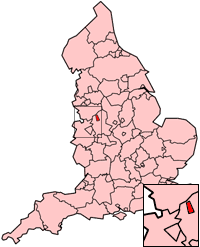
Stoke-on-Trent is a city and unitary authority in Staffordshire, within the broader West Midlands region of England. Often called "The Potteries," it grew into an industrial centre during the 18th and 19th centuries and later became a modern municipal city combining several formerly independent towns under a single civic structure (unitary authority).
Image gallery
10 Images


Industrial character and pottery
The city's identity is closely tied to the ceramic and pottery trades. For generations pottery production was the dominant industry, supplying domestic and export markets across the United Kingdom and beyond. Techniques and styles developed locally, and numerous manufacturers and workshops clustered in the area. The industry relied on local resources such as clay and fuel: coal mining and other extractive trades supplied energy for bottle kilns and production processes (coal, kilns). From the late 18th century through much of the 19th and early 20th centuries, pottery manufacture defined employment, trade and civic life.
Geography and urban form
Stoke-on-Trent is unusual in England because it is a polycentric city made up of six towns that were brought together as a single borough and later city. The six towns are:
Each town retains its own character — commercial centres, industrial sites, and residential districts — but together they form the modern conurbation commonly referred to as Stoke-on-Trent.
History and change
During the industrial revolution and into the 20th century the city's output made it one of Britain’s best-known industrial centres. Over time, the pottery trade confronted overseas competition and changes in consumer habits; lower-cost imports and new materials reduced local production from its peak. Coal mining and heavy industry also declined, prompting economic restructuring and efforts at regeneration. The legacy of those industries remains visible in historic factory buildings, museums and place names.
Culture, notable people and institutions
The city has a rich cultural life shaped by its industrial past. Museums and galleries preserve pottery collections and local archives, while food traditions such as the Staffordshire oatcake are celebrated locally. Several well-known figures are associated with the area, either by birth, childhood or family roots:
- Robbie Williams (singer and entertainer)
- Arnold Bennett (novelist and chronicler of local life)
- Captain Smith (noted maritime figure linked in family origins)
- Slash (musician who has personal connections to the area)
During wartime and periods of heavy engineering the locality also contributed parts and labour to national projects; the famous Supermarine Spitfire is sometimes cited when describing the wider Midlands' wartime manufacturing network. Sports are prominent too: Stoke City F.C., nicknamed "The Potters," is one of the oldest professional football clubs in England and remains a focus of civic identity.
Modern economy and significance
Today Stoke-on-Trent balances heritage tourism and cultural projects with modern manufacturing, ceramics innovation, logistics and service industries. Regeneration programmes have repurposed former industrial sites for creative businesses, education and cultural venues, while local institutions keep the pottery story alive for visitors and scholars. The city’s distinctive polycentric layout, industrial archaeology and cultural traditions contribute to its continuing significance in the Midlands and to the history of British manufacturing.
Further information and resources are available through local museums, council archives and regional transport and tourism guides.
Staffordshire | West Midlands | England | Unitary authority | Pottery | United Kingdom | Coal | Kilns | Burslem | Tunstall | Spitfire | Robbie Williams | Slash | Arnold Bennett | Captain Smith | Stoke City F.C.
Related articles
Author
AlegsaOnline.com Stoke-on-Trent Leandro Alegsa
URL: https://en.alegsaonline.com/art/94021