
Stollberg (Saxony)
Stollberg is a town in the Free State of Saxony, Germany. Located between Zwickau and Chemnitz, it has regional administrative history, local industry, and cultural ties to the Ore Mountains.
Overview
Stollberg is a small town in the Free State of Saxony in eastern Germany. For many years it served as the administrative centre, often described as the administrative centre of the former Stollberg Rural District. It lies in the foothills of the Ore Mountains and functions today as a local service hub for surrounding villages and small industrial sites.
Image gallery
2 Images
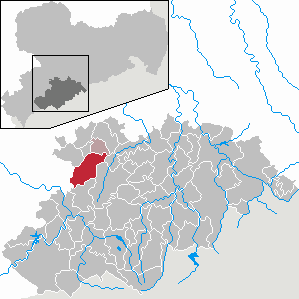
Location and geography
The town stands roughly 20 kilometres (12.4 miles) east of Zwickau and about 17 kilometres (10.6 miles) southwest of Chemnitz. Its position between these larger urban centres places Stollberg within a transitional landscape of low hills, mixed farmland and wooded slopes that lead toward the Erzgebirge (Ore Mountains).
History
Like many towns in the region, Stollberg developed from medieval market settlements and later gained market and administrative functions. Over the centuries it has reflected broader regional changes: shifting territorial administrations, the industrialisation of Saxony, and the economic transformation after German reunification. Administrative reforms in the late 20th and early 21st centuries changed its district status but it remains a recognised municipal centre.
Economy and transport
The local economy combines small manufacturing, craft enterprises and services for the rural hinterland. Stollberg is served by regional roads and public transport links that connect it with Chemnitz and Zwickau; rail and bus services provide commuting and freight options suitable for local businesses. Agriculture and forestry in surrounding areas also contribute to the town’s economy.
Culture, landmarks and community life
Stollberg shares cultural traditions common to the Ore Mountain region, including seasonal festivals, folk crafts and community events. Important town features typically include an historic church, a market area and municipal facilities such as schools and cultural centres. Local associations and clubs play an active role in civic life.
Notable aspects
- Regional role: historically an administrative centre for its district.
- Location: situated between two larger cities, facilitating regional connections.
- Cultural ties: links to Ore Mountains traditions and crafts.
Related articles
Author
AlegsaOnline.com Stollberg (Saxony) Leandro Alegsa
URL: https://en.alegsaonline.com/art/94027
Sources
- destatis.de : "Alle politisch selbständigen Gemeinden mit ausgewählten Merkmalen am 31.12.2018 (4. Quartal)" · web.archive.org
- statistik.sachsen.de : "Aktuelle Einwohnerzahlen nach Gemeinden 2016] (Einwohnerzahlen auf Grundlage des Zensus 2011)"
- commons.wikimedia.org : Stollberg (Erzgebirge)