
Sterile neutrino
A hypothetical neutrino that does not interact via Standard Model forces; proposed to explain neutrino masses, cosmological phenomena, and experimental anomalies.
Overview
A sterile neutrino is a hypothetical type of neutrino that does not participate in the Standard Model's weak, electromagnetic, or strong interactions. Often called a right-handed neutrino, heavy neutral lepton (HNL), or neutral heavy lepton, it would be a gauge singlet under the Standard Model and so would interact with ordinary matter only through gravity and via mixing with the known "active" neutrinos. Because of this limited coupling, sterile neutrinos are challenging to detect and remain speculative, but they are widely discussed in particle physics and cosmology as simple extensions that can address several open questions.
Image gallery
2 Images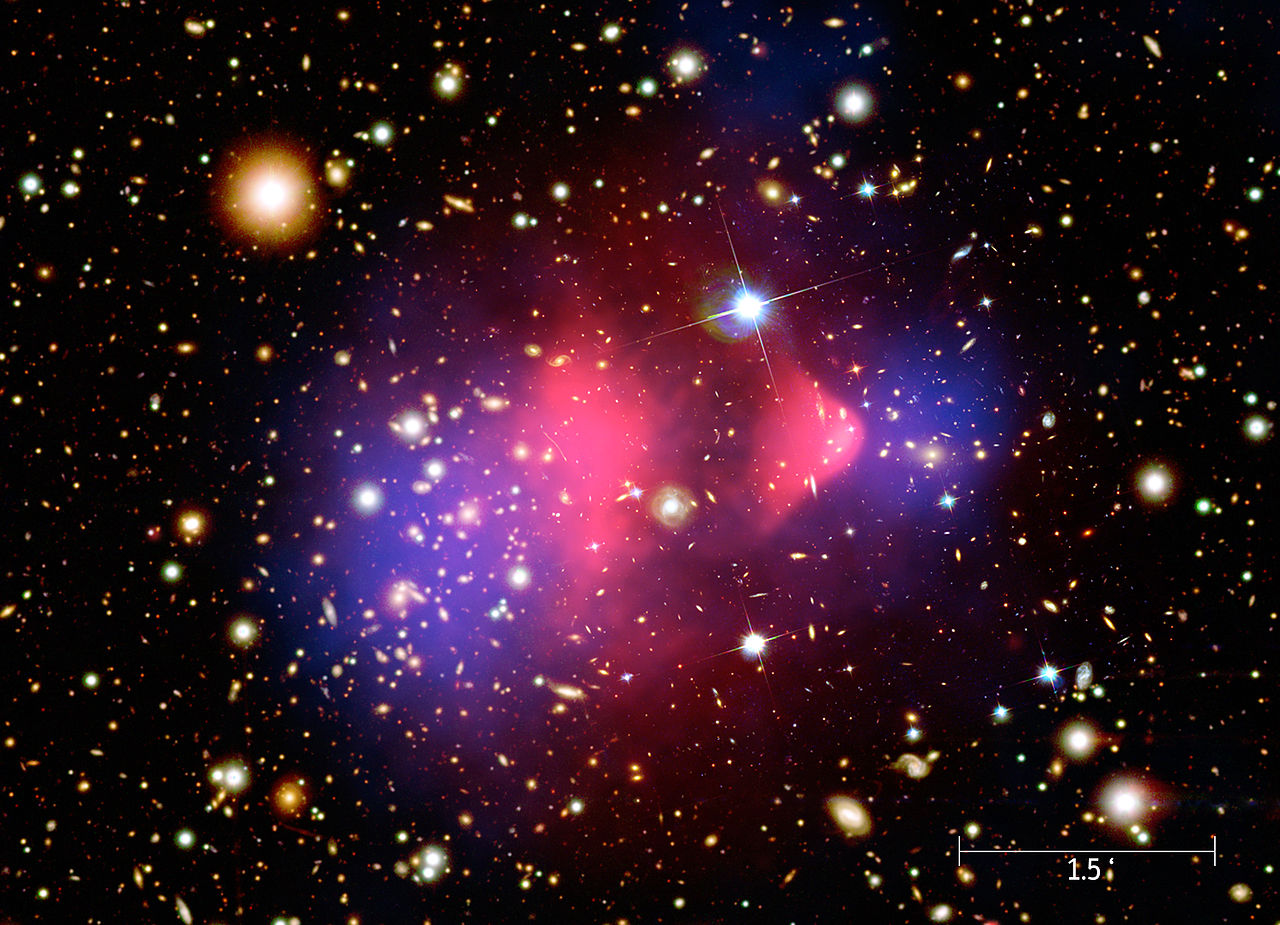
Characteristics and theoretical role
In theory, sterile neutrinos differ from the three active neutrino flavors by lacking weak interactions. They can be introduced as additional right-handed components in the neutrino sector. Through mixing with active neutrinos, sterile states can alter oscillation probabilities and generate small masses for active neutrinos via mechanisms such as the type-I seesaw. Depending on their mass and mixing parameters, sterile neutrinos are classified into different phenomenological regimes (e.g., eV-scale, keV-scale, GeV–TeV-scale), each with distinct implications for experiments and cosmology.
Seesaw mechanism and mass generation
The seesaw mechanism is a common framework that links sterile neutrinos to the small masses of active neutrinos. In the simplest picture, adding heavy sterile states allows the neutrino mass matrix to produce very light active neutrinos and much heavier sterile partners: the heavier the sterile state, the lighter the corresponding active neutrino. This qualitative inverse relation explains why neutrino masses are many orders of magnitude smaller than charged-lepton masses without requiring tiny fundamental parameters. For accessible reviews see introductory material and technical summaries such as specialized reviews.
Experimental searches and anomalies
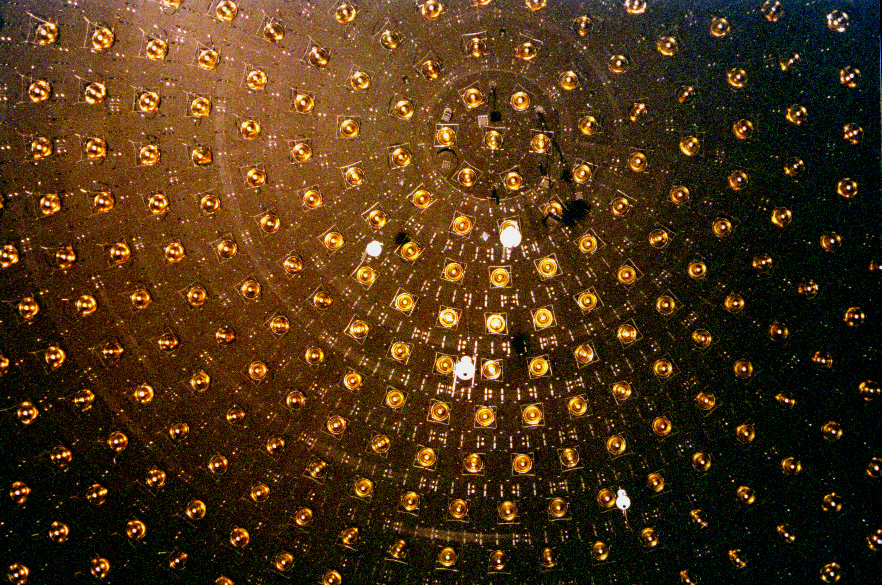
Searches for sterile neutrinos proceed along several experimental strategies because their signatures depend on mass and mixing. Oscillation experiments look for deviations from three-flavor mixing, especially at short baselines. Beta-decay and neutrinoless double-beta decay experiments can probe kinematic effects and Majorana properties. Accelerator-based beam-dump and collider experiments seek heavy neutral leptons that decay visibly. Some persistent experimental anomalies — for example, results from short-baseline oscillation experiments and reactor or gallium source deficits — have been interpreted as possible hints of eV-scale sterile neutrinos, but these interpretations remain unsettled and constrained by other data. Further experimental programs and reanalyses aim to clarify these tensions; for updates see ongoing experimental efforts.
Cosmological and astrophysical implications
Sterile neutrinos can influence the early universe and astrophysical systems. A keV-scale sterile neutrino is often discussed as a warm dark matter candidate: it would be produced in the early universe and could affect structure formation on small scales. Such candidates are actively searched for by looking for X-ray photons from radiative decays; some analyses reported unexplained X-ray features that prompted discussion, but these findings are debated and not conclusive. More massive sterile states can participate indirectly in baryogenesis through leptogenesis, where CP-violating decays of heavy neutrinos generate a lepton asymmetry that is converted to the observed baryon asymmetry. Cosmological observations, including the cosmic microwave background and big-bang nucleosynthesis, provide strong constraints on sterile neutrino properties and help delimit viable parameter space.
Types of searches and notable distinctions
- Oscillation experiments: short-baseline neutrino beams and reactor experiments testing active-sterile mixing.
- Direct searches: beam-dump, fixed-target, and collider experiments looking for HNL production and decay signatures.
- Astrophysical searches: X-ray and structure-formation probes for dark-matter–scale sterile neutrinos.
- Laboratory precision: beta-decay and neutrinoless double-beta decay sensitivity to kinematic and Majorana effects.
For accessible summaries of motivations and search strategies consult review articles and experiment pages, for example survey articles. Overall, sterile neutrinos remain one of the simplest and most versatile hypotheses for physics beyond the Standard Model: they can account for neutrino masses, offer dark matter candidates in certain mass ranges, and provide mechanisms for generating the matter-antimatter asymmetry. However, their existence is not established, and many proposed mass ranges face strong experimental and cosmological constraints.
Related articles
Author
AlegsaOnline.com Sterile neutrino Leandro Alegsa
URL: https://en.alegsaonline.com/art/93794