
Stator: the stationary element of rotary electrical machines
A stator is the stationary component of an electric motor or generator. It supports windings or magnets, provides the magnetic field or armature, and works with the rotor to convert electrical and mechanical energy.
Overview
The stator is the fixed, non-rotating part of a rotary system such as an electric motor or generator. It forms one half of the electromagnetic interaction that produces torque or electrical output: the stator either carries field windings that create a magnetic field or houses the armature windings that cut the rotating magnetic flux produced by the rotor (rotor). In many machines the stator and rotor have complementary roles that depend on design, size, and application.
Image gallery
5 Images


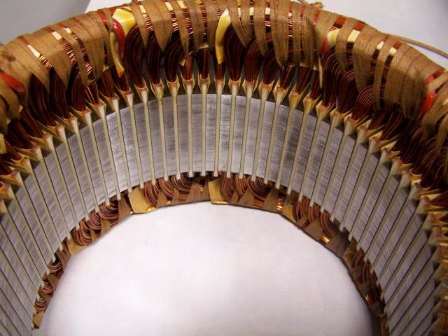
Construction and components
Typical stator construction includes a laminated iron core, insulated conductors, and a housing or frame. The core is built from thin electrical steel laminations to reduce eddy current losses. Slots in the core accept copper or aluminum windings, which may be arranged as coils or distributed windings. Outside the core, a frame provides mechanical support and mounting points, and ducts or fans can be integrated for cooling.
- Core: laminated magnetic material to guide flux.
- Windings: coils that form the armature or field.
- Insulation and end turns: to prevent shorts and protect conductors.
- Cooling and enclosure: internal channels, fans, or liquid cooling in large machines.
History and development
Stators were developed alongside early electrical machines in the 19th century as engineers moved from stationary electromagnets and rotating conductors to more efficient arrangements. Improvements in magnetic materials, winding techniques, and insulation systems over the 20th century allowed stators to carry higher currents and operate at greater efficiency, enabling the wide range of motors and generators used in industry, transport, and power generation today.
Types and applications
Design choices vary with the application. Small brushless DC motors have stators with concentrated windings; industrial induction motors use distributed windings in three phases; large turbine generators often place the main armature in the stator to simplify current collection. Stators are central to appliances, electric vehicles, industrial drives, power plant alternators and renewable-energy generators, where they either produce a steady magnetic field or serve as the stationary electrical output element.
Notable distinctions and maintenance
The stator contrasts with the rotor by remaining stationary; however, both influence electromagnetic performance. Key concerns for stator longevity include insulation aging, contamination, and overheating. Because the stator does not rotate, it generally experiences less mechanical wear, but insulation or winding failures are common service issues. Modern diagnostic techniques—such as insulation-resistance testing, partial-discharge measurement and thermal imaging—help detect deterioration before catastrophic failure.
For more technical detail and design examples, consult specialist references or the machine manufacturer's documentation via related resources.
Related articles
Author
AlegsaOnline.com Stator: the stationary element of rotary electrical machines Leandro Alegsa
URL: https://en.alegsaonline.com/art/93565